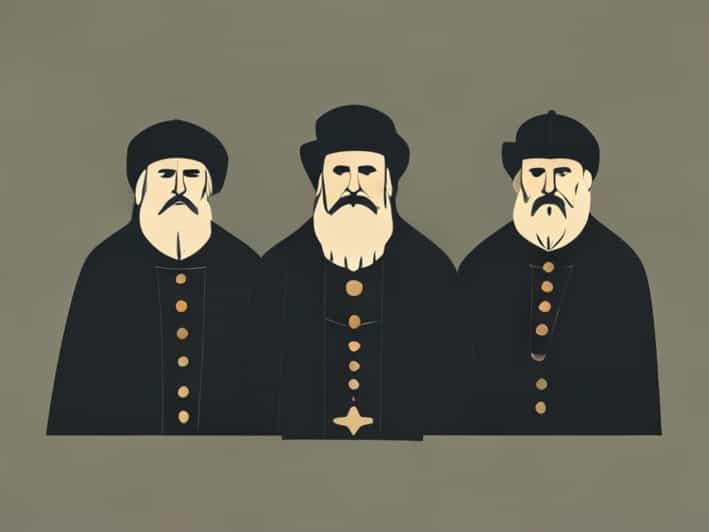
The rise and spread of Puritanism was not a sudden event but a long and complex process shaped by religious tension, political struggle, and influential leadership. Emerging in the late sixteenth and early seventeenth centuries, Puritanism reflected a desire to further reform the Church of England and remove practices seen as too close to Roman Catholicism. While the movement was rooted in shared beliefs, it was the actions, writings, and authority of key leaders that allowed Puritan ideas to spread across England and eventually to the American colonies. Understanding these leaders helps explain why Puritanism became such a powerful force in early modern history.
The Origins of Puritan Leadership
Puritanism developed during a period of religious uncertainty following the English Reformation. Although England had broken from the Catholic Church, many believers felt that the reforms did not go far enough. Puritan leaders emerged from within the Church of England, often as ministers, theologians, and scholars who believed in a more disciplined and scripture-centered form of worship.
These leaders were not unified under a single organization. Instead, they were connected through shared ideas, correspondence, and sermons. Their influence grew because they spoke to widespread concerns about morality, authority, and the role of religion in daily life.
Education and Religious Authority
Many early Puritan leaders were highly educated, often trained at universities such as Cambridge. Their academic background gave them credibility and allowed them to shape theological debates. Through preaching and teaching, they reached both common people and members of the ruling class.
John Calvin and the Foundations of Puritan Thought
Although not English himself, John Calvin played a crucial role in shaping the beliefs that later defined Puritanism. His theological writings emphasized the sovereignty of God, the authority of the Bible, and the idea of predestination. These ideas strongly influenced Puritan leaders in England.
Calvin’s work provided an intellectual framework that Puritans used to argue for stricter moral discipline and simpler forms of worship. His influence spread through translated texts and the training of English clergy who studied his teachings.
Lasting Influence on Puritan Leaders
Puritan leaders adopted Calvin’s emphasis on moral responsibility and community discipline. This focus helped them argue that religious reform was not just a church issue but a social obligation.
William Perkins and Popular Puritan Teaching
William Perkins was one of the most influential English Puritan leaders. As a preacher and writer, he played a major role in making Puritan ideas accessible to ordinary people. His sermons focused on practical religious living, stressing personal faith, repentance, and moral behavior.
Perkins believed that theology should guide everyday life. His clear and direct style made Puritan beliefs easier to understand and follow, helping the movement spread beyond academic circles.
Shaping Everyday Religious Practice
Through widely read books and sermons, Perkins encouraged self-examination and spiritual discipline. This approach strengthened Puritan influence within families and local communities.
Richard Baxter and Moral Reform
Richard Baxter was another key leader responsible for the spread of Puritanism, particularly through his emphasis on pastoral care. He believed that ministers had a duty to guide their congregations closely and address moral failings directly.
Baxter’s writings focused on practical Christianity, urging believers to live disciplined and responsible lives. His influence extended well beyond his own congregation.
Community and Responsibility
Baxter promoted the idea that a godly society required collective effort. This belief encouraged Puritan leaders to engage actively in social reform.
Political Leaders and Puritan Influence
Puritanism did not spread through religious leaders alone. Political figures also played an important role. Some members of Parliament supported Puritan reforms, using their positions to challenge church authority and promote religious change.
These leaders saw Puritanism as a moral solution to political corruption and social disorder. Their support allowed Puritan ideas to reach the highest levels of government.
Oliver Cromwell and Puritan Power
Oliver Cromwell is one of the most well-known figures associated with Puritanism. As a military and political leader during the English Civil War, he supported Puritan values and protected Puritan ministers.
Cromwell’s leadership helped transform Puritanism from a religious movement into a political force. Under his influence, Puritan ideals shaped laws, governance, and public behavior.
Puritan Leaders and the American Colonies
Facing persecution and limited reform in England, many Puritan leaders looked to the New World as an opportunity to build a godly society. Leaders such as John Winthrop played a central role in this migration.
In the American colonies, Puritan leaders had greater freedom to shape religious and social structures according to their beliefs.
John Winthrop and Moral Vision
John Winthrop, a prominent Puritan leader in Massachusetts, promoted the idea of a community guided by shared religious values. His vision emphasized moral responsibility, cooperation, and obedience to divine law.
This leadership helped establish Puritanism as a defining influence in early American society.
Methods Used to Spread Puritanism
Puritan leaders used several methods to spread their beliefs effectively. Their strategies combined religious teaching with social organization.
- Powerful preaching and sermons
- Publication of religious texts and pamphlets
- Education and training of ministers
- Community discipline and moral oversight
These methods allowed Puritanism to grow steadily and influence multiple generations.
Challenges and Opposition Faced by Puritan Leaders
Not everyone welcomed Puritan ideas. Church authorities and monarchs often viewed Puritan leaders as disruptive. Their calls for reform threatened established traditions and power structures.
Despite opposition, Puritan leaders persisted through persistence, adaptability, and strong networks of support.
Persecution and Persistence
Some leaders faced imprisonment, exile, or loss of position. These challenges strengthened their resolve and contributed to the spread of Puritanism abroad.
The Lasting Impact of Puritan Leadership
The leaders responsible for the spread of Puritanism left a lasting legacy. Their emphasis on discipline, education, and moral responsibility shaped religious culture in England and America.
Puritan ideas influenced later movements focused on reform, personal faith, and community ethics.
The spread of Puritanism was driven by a diverse group of leaders, including theologians, preachers, and political figures. From the intellectual influence of John Calvin to the practical teachings of William Perkins, the moral leadership of Richard Baxter, and the political power of Oliver Cromwell, these individuals shaped the movement’s direction and reach. Their combined efforts transformed Puritanism into a force that reshaped religion, society, and governance. By examining these leaders, it becomes clear that Puritanism spread not only through belief, but through determined and influential leadership.