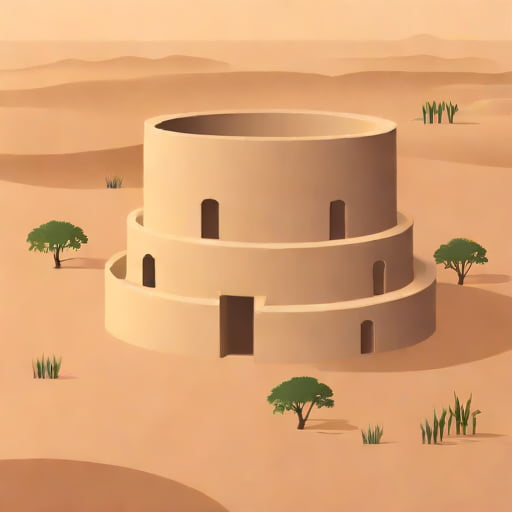
The Indus Valley Civilization, one of the earliest urban civilizations in the world, flourished around 3300 to 1300 BCE in what is now Pakistan and northwest India. Among its many remarkable achievements, the civilization is renowned for its advanced urban planning, sophisticated drainage systems, and large-scale storage facilities. One of the most intriguing aspects of this ancient society is its granaries, which were crucial for managing food supplies and supporting large urban populations. The largest granary discovered in the Indus Valley Civilization offers valuable insights into their agricultural practices, economic organization, and administrative capabilities, reflecting a level of societal complexity that was unprecedented for its time.
Introduction to Indus Valley Granaries
Granaries in the Indus Valley Civilization served as storage centers for surplus agricultural produce, mainly grains like wheat and barley. These structures were strategically located within major urban centers such as Harappa and Mohenjo-daro, allowing the population to have access to essential food resources throughout the year. The presence of such large granaries indicates a highly organized society with advanced knowledge of agriculture, storage techniques, and centralized control. Surplus storage also suggests that the civilization was capable of planning for food security, trade, and redistribution of resources during lean periods or emergencies.
Characteristics of Indus Valley Granaries
The granaries of the Indus Valley Civilization were architectural marvels for their time. They were typically rectangular, constructed using baked or unbaked bricks, and elevated on high platforms to protect the stored grain from moisture and pests. The floors were often plastered and had ventilation systems to maintain proper airflow, preventing spoilage. Evidence suggests that these granaries were carefully maintained and operated under some form of centralized authority, highlighting the administrative sophistication of the Indus Valley people.
The Largest Granary Harappa
The largest granary discovered in the Indus Valley Civilization is located in the ancient city of Harappa, one of the major urban centers. This granary, covering several thousand square feet, demonstrates the scale at which the civilization could store and manage food. Archaeologists have found that it was divided into multiple compartments, each capable of holding large quantities of grain. The structural design, including thick walls and raised platforms, indicates that the builders prioritized durability and protection against environmental factors.
Architectural Features of Harappa Granary
- Raised platforms to prevent flooding and water damage.
- Compartmentalized storage areas for different types of grains.
- Plastered floors and walls to maintain hygiene and prevent pest infestation.
- Strategic placement within the city to facilitate access for distribution and trade.
The Harappa granary’s size and complexity imply the presence of organized labor and skilled craftsmen. It also reflects the city’s ability to support a large population, possibly numbering in tens of thousands, by ensuring a steady food supply throughout the year.
Function and Importance
The primary function of the largest granary in Harappa was to store surplus agricultural produce to manage food security. By maintaining large reserves, the Indus Valley civilization could withstand periods of poor harvest, natural disasters, or other disruptions. The granary also likely played a role in the city’s economy, enabling trade of surplus grain with nearby settlements and supporting craft specialization by freeing some population segments from food production duties.
Administrative Implications
The scale of the granary suggests that its operation required a high level of administrative control. Officials would have been responsible for recording quantities, organizing distribution, and preventing theft or spoilage. The granary may have also functioned as a hub for taxation in kind, where farmers contributed a portion of their harvest as a tax, which could then be redistributed or used for public projects. This system indicates that the Indus Valley Civilization had a structured governance model capable of managing resources efficiently.
Comparison with Other Granaries in the Civilization
While the Harappa granary is the largest, other Indus Valley cities such as Mohenjo-daro and Dholavira also had significant storage facilities. These granaries varied in size but shared similar architectural features like raised floors, ventilation systems, and compartmentalization. The uniformity in design across different cities suggests that the techniques for constructing and managing granaries were widely known and possibly standardized, reflecting shared knowledge and cultural practices across the civilization.
Evidence from Archaeological Excavations
- Excavations at Mohenjo-daro revealed granaries with similar raised platforms and plastered floors.
- Dholavira granaries were carefully aligned and included large reservoirs nearby, highlighting integrated water management for agriculture and storage.
- Artifacts such as measuring tools, storage jars, and seals indicate the regulation and control of stored grains.
Technological and Agricultural Insights
The largest granary provides valuable information about agricultural and technological capabilities. The ability to store and preserve large quantities of grain required knowledge of drying, ventilation, and pest control. This implies that the Indus Valley people were not only skilled builders but also proficient in agricultural science. Moreover, the presence of such granaries indicates that the civilization produced surplus crops, suggesting effective farming techniques and irrigation systems capable of sustaining large urban populations.
Grain Storage and Preservation
To prevent spoilage, grains had to be stored under conditions that minimized moisture and pest infestation. The use of raised platforms and plastered floors helped achieve these goals. Ventilation systems may have included small channels or openings to allow airflow, reducing humidity levels. These techniques demonstrate an advanced understanding of food preservation that was essential for the survival and growth of the civilization.
Legacy and Significance
The largest granary of the Indus Valley Civilization represents more than just a storage facility; it symbolizes the sophistication and organizational capabilities of one of the world’s earliest urban societies. Its existence highlights the civilization’s ability to manage resources, support large populations, and maintain economic stability. Studying these granaries offers valuable insights into the social, economic, and technological achievements of the Indus Valley people, shedding light on how early humans developed complex urban societies and sustainable agricultural practices.
Impact on Understanding Ancient Civilizations
Archaeologists and historians study these granaries to better understand urban planning, resource management, and governance in ancient societies. The Harappa granary, as the largest known example, provides a concrete example of how the Indus Valley Civilization achieved food security, economic organization, and technological innovation. Its design and function also offer clues about societal hierarchy, labor organization, and the importance of agriculture in shaping the civilization’s success.
The largest granary of the Indus Valley Civilization, located in Harappa, stands as a testament to the ingenuity, organization, and foresight of one of the world’s earliest urban societies. Its architectural sophistication, capacity for storage, and role in resource management highlight the advanced agricultural and administrative systems of the Indus Valley people. By examining this granary and its counterparts across other cities, researchers gain valuable insights into the economic, social, and technological achievements of this remarkable civilization. These structures not only supported urban life but also provide modern scholars with a window into the complexity and resilience of early human societies.