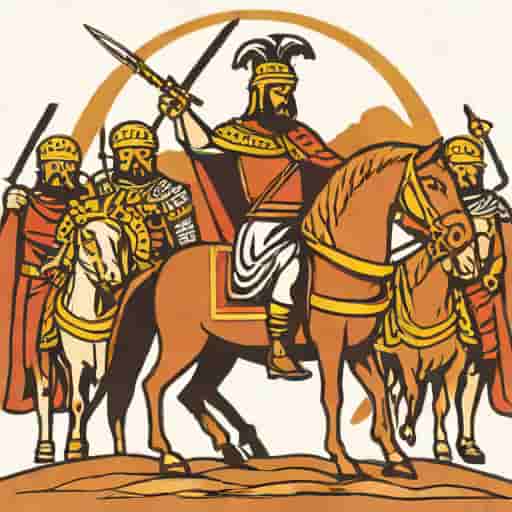
The Maccabean Revolt against the Seleucid Empire is one of the most significant events in Jewish history, symbolizing the fight for religious freedom and cultural identity. Taking place in the 2nd century BCE, this revolt was sparked by the oppressive policies of the Seleucid king Antiochus IV Epiphanes, who sought to impose Hellenistic practices on the Jewish population. The rebellion, led by the Maccabees, not only restored Jewish autonomy but also left a lasting cultural and religious legacy, celebrated annually during the festival of Hanukkah. Understanding the causes, events, and outcomes of the Maccabean Revolt provides insight into the resilience of the Jewish people and the struggle for self-determination in the ancient world.
Historical Background
Before the Maccabean Revolt, Judea was under the control of the Seleucid Empire, one of the successor states of Alexander the Great’s vast empire. The Seleucid rulers attempted to unify their territories through Hellenization, promoting Greek language, customs, and religion. While some segments of the Jewish population adopted these practices, many resisted, viewing them as a direct threat to their faith and traditions. Antiochus IV’s policies intensified tensions by banning key Jewish religious practices, desecrating the Second Temple in Jerusalem, and enforcing the worship of Greek gods.
Seleucid Rule and Religious Oppression
Antiochus IV Epiphanes ascended to the Seleucid throne in 175 BCE and sought to strengthen his empire through uniform cultural and religious practices. Jewish religious laws were ignored, and traditional rituals such as circumcision and Sabbath observance were prohibited. The imposition of Greek sacrifices at the Jewish Temple represented a profound violation of Jewish religious life, leading to widespread anger and unrest. These policies ultimately ignited the uprising that would become the Maccabean Revolt.
The Outbreak of the Revolt
The revolt began in 167 BCE when Mattathias, a Jewish priest from the town of Modi’in, refused to perform sacrifices to Greek gods as required by the Seleucid authorities. Mattathias killed a Hellenistic Jew who stepped forward to comply with the king’s orders, and he, along with his five sons, fled to the hills, rallying other Jews who opposed Hellenistic oppression. This small but determined group became known as the Maccabees, named after Judah Maccabee, one of Mattathias’s sons, who would later become the key military leader of the revolt.
Guerrilla Warfare and Early Successes
The Maccabees relied on guerrilla tactics, using their knowledge of the local terrain to launch surprise attacks against Seleucid forces. Despite being outnumbered and less equipped, their determination and strategic use of hit-and-run tactics allowed them to gain initial victories. These successes helped to inspire Jewish communities throughout Judea, encouraging more people to join the fight for religious freedom and national autonomy.
Key Figures of the Revolt
Several key figures played a pivotal role in the Maccabean Revolt. Mattathias provided the initial leadership and inspiration, while his son Judah Maccabee became the most celebrated military commander, known for his tactical skill and courage in battle. Other brothers, including Eleazar, Jonathan, and Simon, also contributed to the military campaigns and later helped establish governance in liberated areas. Their leadership emphasized both religious devotion and national pride, uniting disparate Jewish groups under a common cause.
Judah Maccabee
Judah Maccabee emerged as the central figure of the revolt after his father’s death. He organized the Jewish fighters into a disciplined army, capturing key cities and fortresses from Seleucid control. His victories, including the recapture and rededication of the Second Temple in Jerusalem, became defining moments in the struggle. The rededication of the Temple is commemorated by the festival of Hanukkah, symbolizing the triumph of faith and resilience against oppression.
The Recapture and Rededication of the Temple
One of the most celebrated achievements of the Maccabean Revolt was the recapture of Jerusalem and the purification of the Second Temple in 164 BCE. The Maccabees removed the Hellenistic symbols and reestablished traditional Jewish worship. This event reinforced the spiritual and cultural identity of the Jewish people, demonstrating that religious devotion could withstand foreign domination. The rededication involved lighting the menorah, an act that has become central to the modern celebration of Hanukkah.
Significance of the Temple Rededication
The rededication of the Temple represented more than a military victory; it was a symbolic affirmation of Jewish identity, faith, and autonomy. Despite the Seleucid Empire’s power, the Maccabees demonstrated that organized resistance and commitment to cultural values could restore religious practices and inspire generations. This moment highlighted the intertwined nature of religion and national identity in ancient Judea.
Aftermath and Establishment of the Hasmonean Dynasty
Following the success of the revolt, the Maccabees continued to fight to secure Jewish autonomy in Judea. By 141 BCE, Simon, the youngest of Mattathias’s sons, became the leader of an independent Jewish state, marking the beginning of the Hasmonean dynasty. This period saw the consolidation of political power, expansion of territory, and the establishment of governance that integrated religious and civic leadership. The Hasmonean dynasty lasted nearly a century, providing stability and reinforcing the independence achieved through the revolt.
Political and Cultural Legacy
The Maccabean Revolt and the Hasmonean dynasty had a lasting impact on Jewish history. Politically, the revolt demonstrated that Judea could resist foreign domination and maintain autonomy. Culturally, it reaffirmed Jewish religious practices and identity in the face of assimilation pressures. The revolt also inspired later generations to value religious freedom and cultural preservation, influencing Jewish thought and historical consciousness.
Lessons from the Maccabean Revolt
The revolt illustrates the power of resistance against oppression and the importance of cultural and religious identity. It shows how a small, determined group can challenge a larger empire through strategic action, unity, and commitment to shared values. For historians and scholars, the Maccabean Revolt offers insights into the dynamics of Hellenistic empires, the impact of cultural imposition, and the role of faith in political resistance.
Enduring Symbolism
- Religious freedom The revolt underscores the importance of protecting spiritual practices against external pressures.
- Cultural identity Maintaining traditions and beliefs can unify communities in times of crisis.
- Resistance and resilience Strategic action, courage, and leadership can overcome even powerful adversaries.
- Legacy of hope The story of the Maccabees continues to inspire generations around the world.
The Maccabean Revolt against the Seleucid Empire is a story of faith, courage, and perseverance. It began as a response to religious oppression and evolved into a broader struggle for political autonomy and cultural preservation. Through the leadership of Mattathias, Judah Maccabee, and their family, the Jewish people achieved victories that restored their traditions and sovereignty. The revolt’s legacy is remembered not only in history books but also in the annual celebration of Hanukkah, symbolizing triumph over adversity. Understanding this revolt provides valuable lessons about the power of unity, resilience, and the enduring importance of cultural and religious identity.