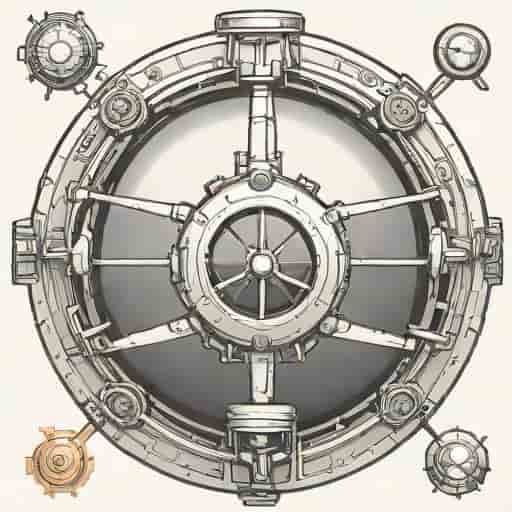
When people talk about deep-sea exploration, they often mention two iconic types of submersible vessels the bathysphere and the bathyscaphe. Although their names sound similar, these underwater machines were developed in different eras, built with different technologies, and designed to handle the extreme conditions of the deep ocean in their own unique ways. Understanding how a bathysphere and a bathyscaphe are different helps reveal the evolution of human attempts to explore the deepest parts of the sea, long before modern submersibles became common.
Understanding the Origins of Deep-Sea Submersibles
The bathysphere and bathyscaphe both played important roles in the history of oceanography. Even though both vessels were created to withstand high underwater pressure, they were designed for very different purposes and operated in unique ways. Learning the differences between these two vessels gives a clearer picture of how deep-sea science has progressed.
The Birth of the Bathysphere
The bathysphere emerged in the early 20th century as one of the first tools ever used for direct human observation of the deep sea. Its design was extremely simple a heavy steel sphere with small windows, suspended from a ship by a long cable. Scientists used the bathysphere mainly for observation rather than traveling long distances underwater. The cable limited mobility, but it allowed researchers to descend to impressive depths for its time.
The Development of the Bathyscaphe
The bathyscaphe appeared later and represented a major step forward in underwater engineering. Unlike the bathysphere, the bathyscaphe was not dependent on a cable. Instead, it used gasoline tanks for buoyancy and steel weights to descend. This made it free-moving, allowing it to travel independently through deep waters. The bathyscaphe helped explorers reach some of the deepest places in the ocean, including the Mariana Trench.
Main Differences Between Bathysphere and Bathyscaphe
Although both vessels were used for deep-sea exploration, the differences between them are significant. These differences involve their structure, purpose, mobility, and overall capabilities. Each one reflects the technological possibilities of its time and the scientific goals it was built to achieve.
1. Structural Design
The bathysphere relied on a spherical steel hull that could withstand the crushing pressure of the deep ocean. Its shape helped spread pressure evenly, which was essential for survival at great depths. However, this design had limitations because it could not carry many instruments or support long-term missions.
In contrast, the bathyscaphe featured a combination of float tanks and a pressure sphere. The upper portion used gasoline because gasoline is lighter than water and compresses very little under pressure. The lower part housed the crew inside a strong pressure-resistant compartment. This dual structure gave it more flexibility and made it suitable for extended dives.
2. Method of Operation
A critical difference between a bathysphere and a bathyscaphe lies in how they move. The bathysphere had no engines or propulsion. It simply hung from a cable, which limited how far it could travel horizontally. The crew depended entirely on the ship above to raise or lower the sphere.
The bathyscaphe operated independently. It used ballast weights to descend and released them when it needed to ascend. This autonomous design allowed it to reach deeper waters and explore larger areas. It was an early example of self-guided underwater technology.
3. Depth Capabilities
The bathysphere reached impressive depths for its time, but it was still limited. Its maximum depth was constrained by the strength of the cable and the stability of the supporting ship. Any rough sea conditions could endanger the mission or damage the equipment.
The bathyscaphe set world records for deep-sea diving. Without a dependency on cables, it could descend much deeper. Its design made it safe to explore the most extreme depths known on Earth. This capability made it a groundbreaking tool in ocean exploration.
4. Crew Safety and Comfort
Inside the bathysphere, conditions were very cramped. The interior space allowed room for only a couple of people, and movement was extremely limited. There was also little protection if something went wrong with the cable or the hull.
The bathyscaphe offered improved safety, though still far from comfortable by modern standards. The pressure sphere provided better protection, and the ability to navigate independently reduced many of the risks that faced bathysphere operators. These improvements opened the door to deeper and more ambitious scientific missions.
Scientific Impact of the Bathysphere and Bathyscaphe
Beyond their physical differences, both vessels influenced marine science in their own ways. The bathysphere introduced the world to the idea of direct deep-sea observation. Scientists used it to catalog species, study underwater geology, and capture early footage of marine life in its natural environment.
The bathyscaphe expanded these possibilities dramatically. Its ability to move freely across the ocean floor allowed for long-distance observation, sampling, and documentation. It helped researchers gather information that was previously impossible to obtain. Many modern submersibles owe their core design principles to what the bathyscaphe demonstrated.
Comparing Their Purposes in Exploration
Knowing how the bathysphere and bathyscaphe differ gives insight into how each one contributed to exploration. The bathysphere served as a starting point. Its purpose was mainly observational, providing a window into a world humans had never seen before. Although its capabilities were limited, its historical importance cannot be overstated.
The bathyscaphe was designed for deeper, longer, and more flexible missions. It acted not only as a viewing platform but also as a vehicle capable of traveling through the dark, high-pressure environment of the deep ocean. For marine science, this leap was transformative.
Key Purposes of Each Vessel
- Bathysphere short-term observation, early deep-sea research
- Bathyscape long-distance travel, extreme-depth exploration
- Bathysphere documentation of early deep-sea species
- Bathyscaphe advanced sampling, ocean-floor study, scientific breakthroughs
How These Technologies Paved the Way for Modern Submersibles
Today’s submersibles are far more advanced, equipped with cameras, manipulators, advanced sensors, and life-support systems that allow for safe, extended exploration. The foundation for these modern vehicles can be traced back to the difference between the bathysphere and bathyscaphe. Each model solved different problems and revealed new possibilities.
The bathysphere taught scientists how to protect humans from deep-sea pressure. The bathyscaphe demonstrated how to navigate these depths freely. Modern research vessels combine these lessons with new technologies to explore oceans more safely and efficiently than ever.
The bathysphere and bathyscaphe may share similar names, but they represent two distinct stages in the history of deep-sea exploration. The bathysphere introduced humanity to the hidden world beneath the waves, while the bathyscaphe allowed explorers to reach the deepest known points on Earth. Understanding how these vessels differ helps highlight the remarkable progress made in marine technology and the ongoing desire to explore the planet’s most mysterious environments.