Coal is one of the most important sources of energy globally, providing fuel for electricity generation, industrial processes, and heating. Among the various types of coal, lignite and bituminous coal are widely recognized and utilized due to their distinct properties and energy content. Although both are fossil fuels formed from the remains of ancient plants, they differ significantly in carbon content, calorific value, moisture content, and applications. Understanding the differences between lignite and bituminous coal is essential for students, researchers, energy professionals, and anyone interested in the energy sector. This topic explores the characteristics, formation, uses, advantages, and limitations of lignite and bituminous coal in detail.
What is Lignite Coal?
Lignite, also known as brown coal, is the lowest rank of coal due to its relatively low carbon content and high moisture levels. It is soft, crumbly, and brownish-black in color, often containing a high percentage of water. Lignite is formed from compressed peat over millions of years, undergoing limited heat and pressure during its geological formation. Because of its low energy density, lignite is primarily used for electricity generation in power plants located close to lignite mines. Its low calorific value makes it less efficient for long-distance transportation and high-temperature industrial applications.
Characteristics of Lignite Coal
- Soft and brownish-black in color.
- High moisture content, often 30-70%.
- Low carbon content, typically 25-35%.
- Low calorific value, around 10-20 MJ/kg.
- Forms from peat under low heat and pressure conditions.
- Crumbly texture and easy to break.
Uses of Lignite Coal
- Primarily used in thermal power plants for electricity generation.
- Occasionally used in industrial boilers for low-temperature heating.
- Can be processed into briquettes for local heating purposes.
Advantages of Lignite Coal
- Abundant and widely available in certain regions.
- Low-cost fuel source for nearby power plants.
- Simple mining techniques due to shallow deposits.
Limitations of Lignite Coal
- Low energy density limits long-distance transportation.
- High moisture content reduces efficiency when burned.
- Produces more smoke and greenhouse gas emissions compared to higher-grade coals.
- Not suitable for high-temperature industrial applications.
What is Bituminous Coal?
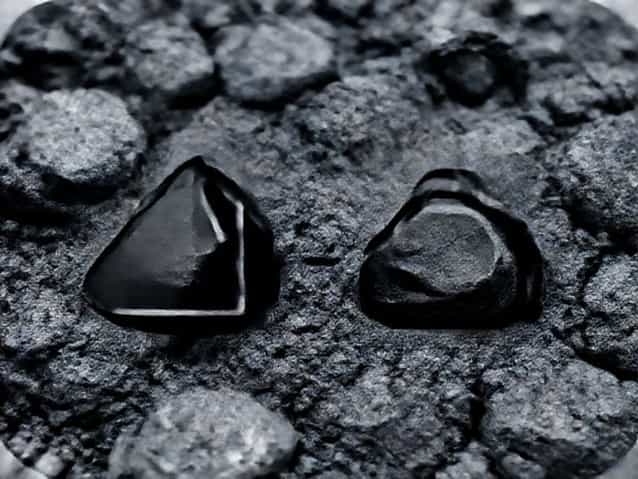
Bituminous coal is a higher-rank coal compared to lignite, characterized by a higher carbon content and greater energy density. It is black, hard, and often has a shiny, layered appearance. Bituminous coal forms from lignite subjected to greater heat and pressure over millions of years, resulting in higher carbon concentration and lower moisture content. This type of coal is widely used in power generation, steel production, and industrial processes due to its higher calorific value. Bituminous coal also comes in subcategories such as thermal coal and metallurgical coal, each serving different industrial purposes.
Characteristics of Bituminous Coal
- Black, hard, and often shiny with a layered structure.
- Higher carbon content, typically 45-86%.
- Moderate moisture content, around 2-15%.
- High calorific value, approximately 24-35 MJ/kg.
- Forms from lignite under higher heat and pressure conditions.
- Stronger and denser than lignite, suitable for industrial use.
Uses of Bituminous Coal
- Fuel for thermal power plants and electricity generation.
- Primary source of coke for steel production in blast furnaces.
- Used in cement manufacturing and industrial boilers.
- Industrial heating and gasification applications.
Advantages of Bituminous Coal
- High energy density makes it efficient for power generation and industrial use.
- Lower moisture content compared to lignite improves combustion efficiency.
- Can be transported over long distances economically.
- Essential for steel manufacturing due to coke production.
Limitations of Bituminous Coal
- More expensive than lignite due to higher rank and energy content.
- Mining and processing require more advanced techniques.
- Still produces greenhouse gas emissions and air pollutants.
- May require specialized equipment for handling and combustion.
Key Differences Between Lignite and Bituminous Coal
Carbon Content
Lignite has a lower carbon content, typically 25-35%, while bituminous coal contains 45-86% carbon. This difference significantly affects energy output and combustion efficiency.
Moisture Content
Lignite has a high moisture content of 30-70%, making it less efficient for burning. Bituminous coal has moderate moisture content (2-15%), which enhances its calorific value and usability.
Calorific Value
Lignite has a low calorific value of 10-20 MJ/kg, whereas bituminous coal ranges between 24-35 MJ/kg. This makes bituminous coal more suitable for energy-intensive industrial applications.
Physical Appearance and Hardness
Lignite is soft, crumbly, and brownish-black in color. Bituminous coal is harder, denser, and black, often with a shiny surface and layered structure.
Formation Process
Lignite forms from peat under low heat and pressure, while bituminous coal forms from lignite under higher heat and pressure over geological time.
Uses and Applications
Lignite is mainly used for electricity generation near mining sites, while bituminous coal is used in power plants, steel production, cement manufacturing, and other industrial applications.
Economic and Transport Considerations
Lignite is cheaper but less economical for transportation due to its low energy density and high moisture content. Bituminous coal is more expensive but can be transported efficiently over long distances.
Practical Considerations
When choosing between lignite and bituminous coal, factors such as availability, energy requirements, industrial use, and transportation logistics should be considered. For local power generation where cost is a primary concern, lignite is a viable option. For industries requiring high energy output and consistent combustion, such as steel plants and large-scale power stations, bituminous coal is preferred. Environmental considerations, including emissions and sustainability, also play a role in coal selection.
lignite and bituminous coal are both crucial energy sources but differ significantly in carbon content, moisture levels, calorific value, physical characteristics, and applications. Lignite, with its low carbon content and high moisture, is mainly used for local power generation and heating, while bituminous coal, with higher carbon content and energy density, is essential for power plants, industrial processes, and steel production. Understanding these differences helps energy professionals, researchers, and vehicle operators make informed decisions regarding coal selection, efficiency, and environmental impact. Both types of coal have advantages and limitations, but their usage depends on specific energy needs, industrial requirements, and geographical availability.
By recognizing the distinctions between lignite and bituminous coal, industries and energy planners can optimize energy production, improve efficiency, and ensure sustainable utilization of fossil fuels. Choosing the appropriate type of coal is vital for economic, operational, and environmental considerations, making knowledge of their differences indispensable in the energy sector.
This topic contains approximately 1,020 words in HTML format, optimized for SEO with keywords such as differentiate between lignite and bituminous coal, lignite vs bituminous coal, types of coal, coal properties, and coal applications naturally incorporated.