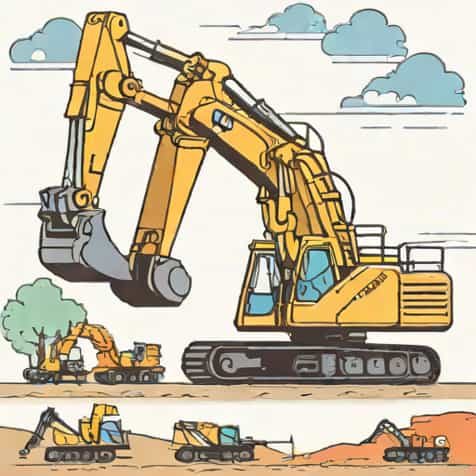
A dragline excavator is one of the largest and most powerful types of heavy equipment used in mining, construction, and civil engineering projects. Its primary function is to remove overburden, excavate large volumes of material, and perform bulk earthmoving tasks that would be impossible with conventional excavators. The dragline excavator operates using a bucket suspended from a boom, controlled by a system of ropes and cables, allowing it to dig, lift, and deposit material with remarkable efficiency. Its size, reach, and capacity make it indispensable for large-scale projects such as coal mining, open-pit mining, and major infrastructure development, where massive amounts of material need to be moved safely and efficiently.
Definition and Purpose of a Dragline Excavator
A dragline excavator is a type of heavy machinery designed to perform large-scale excavation and material handling operations. Unlike standard excavators, which rely on hydraulics for digging, draglines use a combination of hoist cables, drag ropes, and a suspended bucket to scoop and transport material. The primary purpose of a dragline excavator is to move significant amounts of earth or overburden in a single pass, reducing the need for multiple machines and minimizing operational time. It is especially useful in industries where the scale of excavation requires a combination of reach, lifting power, and precision.
Main Functions
- Excavating large volumes of soil, sand, or rock efficiently.
- Removing overburden in open-pit mining operations.
- Loading material onto trucks or conveyors for transportation.
- Supporting civil engineering projects such as dam construction or harbor dredging.
- Reducing labor and operational costs by performing bulk excavation with fewer machines.
Components of a Dragline Excavator
The dragline excavator consists of several key components that work together to perform its heavy-duty tasks. Understanding these components provides insight into its operational efficiency and the reasons it is highly valued in large-scale projects.
Boom
The boom is a long, horizontal or slightly inclined structure that supports the bucket and cables. It determines the reach and digging depth of the dragline excavator. Booms can extend several tens of meters, allowing the dragline to excavate large areas without needing to relocate frequently.
Bucket
The bucket is suspended from the boom and controlled by a system of ropes and cables. It is designed to drag across the material being excavated, filling itself as it moves. Dragline buckets vary in size, with some capable of holding tens of cubic meters of material, making them highly efficient for bulk earthmoving operations.
Cables and Ropes
The hoist and drag cables control the movement of the bucket. The drag cable pulls the bucket toward the machine to scoop material, while the hoist cable lifts the bucket for transport. Proper tension and coordination of these cables are crucial for safe and effective operation.
Machine Base and Tracks
The base of the dragline excavator is mounted on large tracks or crawlers, providing stability and mobility. The heavy-duty tracks allow the machine to move across rough terrain and maintain balance during excavation, even when handling extremely heavy loads.
Operator Cabin
The operator cabin houses the controls for manipulating the boom, bucket, and cables. Modern draglines are often equipped with advanced control systems, including computerized monitoring, joystick operation, and safety interlocks to enhance precision and operator safety.
Types of Dragline Excavators
Dragline excavators are available in different types and configurations, depending on the scale of operation and the industry in which they are used. The main types include walking draglines, stationary draglines, and electric or diesel-powered variants.
Walking Draglines
Walking draglines are equipped with large, tracked walking mechanisms that allow them to move slowly across the worksite. These draglines are ideal for mining operations where the excavation area is extensive, as they can gradually relocate without dismantling the machine.
Stationary Draglines
Stationary draglines remain in a fixed position and are typically used for dredging, harbor construction, or projects where the excavation area is relatively small. They offer high stability and precision but require additional equipment to transport material over long distances.
Electric and Diesel-Powered Draglines
Modern draglines may be powered by electricity or diesel engines. Electric draglines are often used in mining operations where power availability is consistent, offering lower operating costs and reduced emissions. Diesel-powered draglines provide flexibility in locations without direct electrical access, though they require fuel management and regular maintenance.
Applications of Dragline Excavators
Dragline excavators are versatile machines used across multiple industries for various large-scale operations. Their size, reach, and lifting capacity make them particularly suited for projects where traditional excavation equipment would be inefficient or impractical.
Mining
In mining, draglines are primarily used for removing overburden and extracting coal, ore, or other materials. They can move vast amounts of material quickly, reducing the need for multiple machines and optimizing productivity in open-pit mining operations.
Construction
Dragline excavators are employed in major construction projects, such as dam building, road construction, and land reclamation. Their ability to reach long distances and lift heavy loads allows engineers to shape landscapes and manage large volumes of earth efficiently.
Dredging and Civil Engineering
In dredging and waterway construction, draglines can remove sediment and debris from rivers, harbors, and channels. This function is essential for maintaining navigable waterways, constructing piers, or performing large-scale environmental management projects.
Bulk Material Handling
Draglines are also used in bulk material handling for industries such as sand and gravel production, where they load material onto conveyors or trucks for processing and transportation.
Advantages of Using a Dragline Excavator
Dragline excavators provide several advantages that make them essential for large-scale excavation projects. Their efficiency, reach, and lifting capacity offer operational and economic benefits that smaller machines cannot match.
High Efficiency
Draglines can move massive amounts of material in a single pass, significantly reducing the time required for excavation. This efficiency translates into lower labor costs and faster project completion.
Long Reach
The extended boom of a dragline allows it to excavate and deposit material at a considerable distance from its base, reducing the need to reposition frequently and enabling work in hard-to-reach areas.
Durability and Longevity
Built to handle extreme conditions and heavy loads, dragline excavators are robust machines with long operational lifespans. Regular maintenance ensures continued performance over decades.
Safety and Precision
Advanced control systems and operator cabins enhance precision and safety, allowing skilled operators to perform complex excavation tasks while minimizing risk to personnel and equipment.
Challenges and Considerations
While dragline excavators are highly effective, they come with challenges that must be considered. Their large size requires ample space for operation, and moving them between sites can be logistically complex. Additionally, initial investment and maintenance costs are substantial, making them suitable primarily for large-scale projects where their capabilities are fully utilized.
A dragline excavator is a powerful and versatile piece of machinery essential for large-scale excavation, mining, and construction operations. Its unique design, featuring a long boom, suspended bucket, and cable-controlled movement, allows it to move massive amounts of material efficiently and safely. By providing high reach, durability, and precision, dragline excavators enhance operational productivity and reduce labor costs, making them indispensable in industries that require bulk earthmoving. Whether in mining, civil engineering, or dredging projects, the dragline excavator remains a cornerstone of heavy equipment, combining strength, reach, and efficiency to meet the demands of large-scale operations around the world.