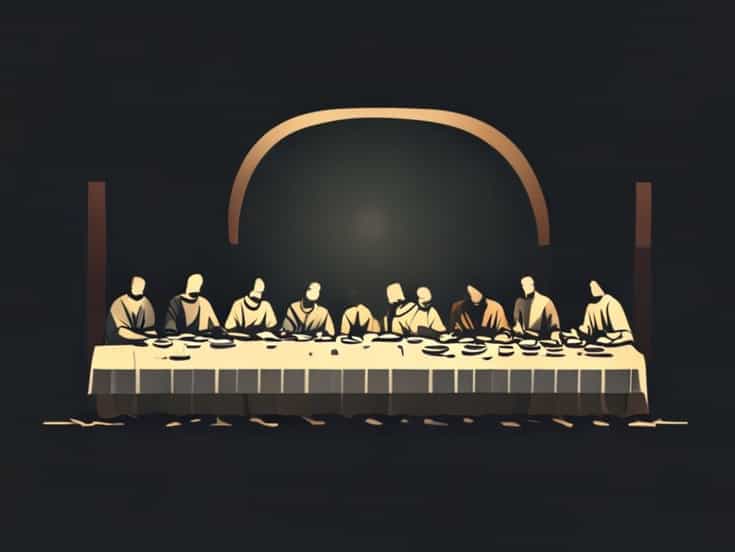
The question was the opening ceremony about the Last Supper sparked widespread discussion, curiosity, and debate among viewers around the world. Many people noticed visual elements, staging choices, and symbolic arrangements that seemed familiar, leading them to wonder whether the ceremony intentionally referenced the famous biblical scene. Opening ceremonies are often designed to be layered with meaning, drawing from history, culture, art, and shared human stories. Because of this, interpretations can vary widely depending on a viewer’s background, beliefs, and expectations.
The Role of Symbolism in Opening Ceremonies
Opening ceremonies are rarely straightforward. They are carefully constructed performances meant to communicate identity, values, and creativity on a global stage. Symbols are often used because they can convey complex ideas quickly and emotionally.
Religious imagery, classical art references, and historical motifs frequently appear in ceremonies, sometimes directly and sometimes in abstract ways. This makes it natural for viewers to search for deeper meaning, including connections to well-known scenes like the Last Supper.
Understanding the Last Supper as a Cultural Symbol
The Last Supper is one of the most recognizable scenes in Christian tradition. It represents a final gathering, sacrifice, unity, and betrayal. Beyond religion, it has become a powerful cultural image referenced in art, literature, and modern media.
Because of its visual familiarity, any scene involving a long table, grouped figures, or shared food can remind people of the Last Supper, even if the reference is unintentional.
Why the Last Supper Is Often Referenced
Artists and performers often reference the Last Supper because it is instantly recognizable and emotionally charged. It communicates ideas of togetherness, tension, and transformation.
- It symbolizes a pivotal moment before change
- It represents unity and division at the same time
- It is deeply embedded in Western art history
Visual Elements That Sparked the Question
When viewers ask was the opening ceremony about the Last Supper, they are usually responding to specific visual cues. These might include the arrangement of performers, lighting choices, costumes, or the positioning of a central figure.
Human brains are wired to recognize patterns, especially familiar ones. When multiple elements align with a known image, people naturally make connections.
Artistic Inspiration Versus Direct Reference
One important distinction is the difference between inspiration and intention. An opening ceremony may draw inspiration from a wide range of artistic traditions without aiming to recreate a specific scene.
Designers often blend influences from religion, mythology, modern art, and national history. What looks like a direct reference to one viewer may feel like a general artistic composition to another.
Statements and Interpretations From Creators
In many cases, creators of large-scale ceremonies explain that their work is meant to be open to interpretation. They may acknowledge that certain visuals resemble famous imagery but stop short of confirming a single meaning.
This openness allows audiences to engage with the performance in personal ways, which is often a deliberate artistic choice.
Public Reaction and Online Discussion
The question was the opening ceremony about the Last Supper gained momentum largely because of online discussions. Social media platforms allow viewers to share screenshots, theories, and opinions instantly.
Some viewers saw the resemblance as respectful, others viewed it as controversial, and many felt it was coincidental.
Why Reactions Were So Strong
Strong reactions often occur when religious symbols appear in public performances. For many people, these symbols are deeply personal.
- Religious imagery can evoke strong emotions
- Cultural context shapes interpretation
- Global audiences bring diverse perspectives
The Importance of Cultural Context
Cultural context plays a major role in how an opening ceremony is interpreted. A performance created in one cultural environment may be viewed very differently elsewhere.
What appears symbolic in one culture may be purely aesthetic in another. This is especially true with imagery that overlaps between religion and classical art.
Historical Use of Religious Imagery in Public Events
Religious themes have appeared in public ceremonies for centuries. From paintings to stage performances, these references often reflect shared history rather than religious instruction.
In many cases, the imagery is used because of its artistic significance rather than its spiritual meaning.
Symbolism of Shared Meals in Human History
Another reason the Last Supper comparison arises is because shared meals are universal symbols. Long tables, communal dining, and group gatherings appear in many traditions.
These scenes can represent unity, celebration, or transition without being tied to a single religious event.
Multiple Meanings Can Exist at Once
One of the strengths of artistic performances is that they can hold multiple meanings simultaneously. The opening ceremony may evoke the Last Supper for some viewers while representing something entirely different for others.
This layered interpretation is not a flaw but a feature of symbolic art.
Why the Question Keeps Coming Back
The question was the opening ceremony about the Last Supper continues to resurface because people seek clarity and intention. Humans naturally want to understand why something looks the way it does.
When visuals are ambiguous, speculation fills the gap.
The Balance Between Art and Belief
Public performances walk a fine line between artistic freedom and cultural sensitivity. Creators aim to inspire without alienating audiences.
This balance becomes especially delicate when imagery resembles religious scenes.
What Viewers Can Take Away
Rather than focusing solely on whether the opening ceremony was about the Last Supper, viewers may benefit from considering broader themes.
- The power of visual storytelling
- The role of shared cultural symbols
- The value of open interpretation
So, was the opening ceremony about the Last Supper? There is no single answer that satisfies everyone. Some viewers see a clear resemblance rooted in familiar imagery, while others view it as a coincidence or a broader artistic reference.
What matters most is how the ceremony sparked conversation, reflection, and engagement. By drawing on shared visual language, the performance encouraged people to think deeply about symbolism, culture, and meaning. In that sense, the question itself becomes part of the ceremony’s lasting impact.