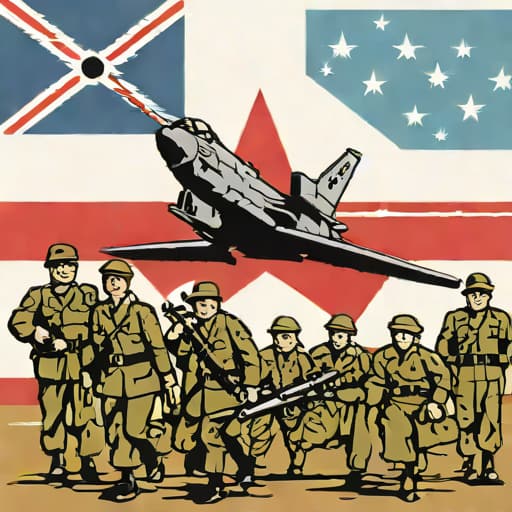
The Korean War remains one of the most debated conflicts in modern history. Lasting from 1950 to 1953, it caused immense destruction, divided families, and left the Korean Peninsula split between two ideologically opposed nations. When people ask whether the Korean War was worthwhile, they often struggle with the moral, political, and human costs that came from the fighting. Some argue that the war preserved freedom and stopped the spread of communism in Asia, while others believe it was an unnecessary tragedy that achieved little lasting peace. To understand this complex question, we need to look closely at the background, outcomes, and long-term effects of the Korean War on both Korea and the world.
Background and Causes of the Korean War
The Korean War began on June 25, 1950, when North Korean troops, supported by the Soviet Union and China, invaded South Korea. The goal was to unite the peninsula under communist control. The invasion caught the world by surprise and quickly escalated into a major international conflict. The United Nations, led primarily by the United States, intervened to defend South Korea. For three years, the war raged across the peninsula, destroying cities and causing millions of casualties.
The Role of Ideology and the Cold War Context
At its core, the Korean War was not only a regional conflict but also a battle between two global ideologies communism and democracy. The world was in the early stages of the Cold War, and the Korean Peninsula became one of the first major battlegrounds between the Soviet Union and the United States. For the U.S., defending South Korea was a way to prevent the domino effect the spread of communism throughout Asia. For the Soviets and Chinese, the war represented resistance against Western influence and a step toward strengthening their political alliances.
Human and Economic Costs of the War
Regardless of the political motives, the war’s toll on human life was staggering. Millions of soldiers and civilians were killed, wounded, or displaced. Entire cities were leveled, and the infrastructure of both North and South Korea was left in ruins. The division of families across the 38th parallel caused immense emotional suffering that continues to this day. The question of whether the Korean War was worthwhile must consider these immense human costs.
The Impact on Civilians
For ordinary Koreans, the war brought chaos, starvation, and loss. Villages were burned, and food supplies were cut off as armies advanced and retreated. The civilian death toll exceeded two million, and countless more were injured. In this sense, the war was a humanitarian disaster. Many who lived through it questioned whether the political goals of the war justified such suffering.
Economic Destruction and Reconstruction
Economically, the Korean Peninsula was devastated. Factories, railways, and farms were destroyed, and the economy had to be rebuilt from scratch. South Korea, with support from the U.S., gradually recovered and went on to achieve remarkable economic growth in later decades. North Korea, however, followed a different path, focusing on heavy industry and military expansion, which eventually led to isolation and economic decline. Looking back, some argue that the war laid the groundwork for South Korea’s eventual prosperity, while others say it delayed development by decades.
Political and Strategic Outcomes
Politically, the Korean War ended in a stalemate. The armistice signed in July 1953 established the Korean Demilitarized Zone (DMZ) and restored the border near the original 38th parallel. No peace treaty was ever signed, meaning the two Koreas remain technically at war. Yet, from a strategic standpoint, the conflict had far-reaching consequences for global politics.
The Containment of Communism
One of the main arguments in favor of the war being worthwhile is that it successfully contained communism. South Korea remained a democratic state and later became one of the world’s leading economies. The U.S. demonstrated its commitment to defending allies, which helped strengthen Western alliances such as NATO and reassure countries like Japan and Taiwan. Without the intervention in Korea, communist expansion in Asia might have spread unchecked.
The Strengthening of the United Nations
The Korean War was the first major military action undertaken by the United Nations. It proved that collective security could be more than an idea, as member nations united under the UN flag to resist aggression. This established a precedent for future peacekeeping missions and reinforced the idea of global cooperation against acts of war.
Arguments Against the War Being Worthwhile
Despite the strategic gains, many historians and civilians believe the Korean War was not worthwhile. The reasons range from the enormous human cost to the lack of a decisive victory and the long-term instability that continues to haunt the region.
No Permanent Peace Achieved
Even after millions of deaths and years of fighting, the Korean Peninsula remains divided. The armistice only froze the conflict, leaving both sides heavily armed and distrustful. The DMZ remains one of the most militarized borders in the world. Tensions persist, and occasional clashes remind the world that the Korean War never truly ended. From this perspective, the war did not bring peace it only postponed another potential conflict.
The Humanitarian Perspective
From a moral viewpoint, many argue that no political or ideological gain can justify the suffering endured by civilians. The destruction of homes, the loss of family members, and the deep psychological scars left behind outweigh any strategic benefits. For those who experienced the war firsthand, the concept of it being worthwhile can feel meaningless when measured against the personal trauma it caused.
Long-Term Legacy of the Korean War
Seventy years later, the Korean War still shapes global politics, regional security, and the identity of both North and South Korea. Its legacy is complex and often contradictory, offering both lessons and warnings for the future.
South Korea’s Transformation
South Korea’s postwar transformation is one of the most remarkable success stories in modern history. From the ashes of the Korean War, it rebuilt itself into a global economic powerhouse and vibrant democracy. The war, while tragic, arguably cemented South Korea’s alliance with the United States and opened the door for long-term development and modernization.
North Korea’s Isolation
In contrast, North Korea became increasingly isolated under the rule of the Kim dynasty. The country’s focus on military strength and self-reliance has led to economic stagnation and international sanctions. The regime continues to use the war as a tool of propaganda, reinforcing anti-American sentiment and justifying its pursuit of nuclear weapons. The ongoing division is a reminder that the war’s consequences are still being felt today.
Lessons from the Korean War
Whether or not the Korean War was worthwhile, it offers important lessons about diplomacy, ideology, and the human cost of conflict. The war demonstrated the dangers of geopolitical rivalry and the need for negotiation before military intervention. It also highlighted the resilience of the Korean people, who rebuilt their nation despite unimaginable loss.
Key Lessons
- Diplomatic solutions should be exhausted before resorting to war.
- Military intervention can have unpredictable and long-lasting consequences.
- Economic recovery and peacebuilding require international cooperation.
- The scars of war remain long after the fighting stops.
Was the Korean War Worthwhile?
Ultimately, the question of whether the Korean War was worthwhile does not have a simple answer. From a geopolitical standpoint, it succeeded in containing communism and preserving South Korea’s independence. From a human and ethical perspective, the immense suffering and lack of lasting peace suggest otherwise. The war’s legacy is one of both tragedy and transformation. It reminds the world that while political victories can be measured in borders and alliances, the true cost of war is written in the lives of those who endure it. The Korean War may have shaped history, but its worth remains a deeply personal and complex question one that each generation must continue to examine for itself.