The history of medical innovation is filled with experiments and methods that today seem unusual or even bizarre. One such historical anecdote involves the concept of being vaccinated with a phonograph needle. While it may sound like a curious or even fantastical idea to modern audiences, this phrase touches on the inventive lengths early scientists explored to deliver vaccines or stimulate immune responses. In the early 20th century, public health pioneers experimented with unconventional techniques to make vaccination more efficient, accessible, or even painless, sometimes incorporating tools and devices from entirely unrelated fields, such as phonographs, which were originally designed for sound reproduction. Understanding this historical context provides insight into how far medical science has come and how trial-and-error played a critical role in shaping modern vaccination methods.
Historical Context of Early Vaccination Techniques
Vaccination has been one of the most transformative public health interventions in human history. From Edward Jenner’s pioneering smallpox vaccine in the late 18th century to the development of modern immunizations, each advancement built upon experimentation and observation. In the late 19th and early 20th centuries, scientists faced significant challenges in delivering vaccines to large populations efficiently. Needles and syringes were in use, but methods to distribute vaccines quickly and reduce discomfort were continuously sought. It was during this period of experimentation that devices such as phonograph needles, primarily intended for playing records, were adapted for unusual medical purposes.
Phonograph Technology in the Early 1900s
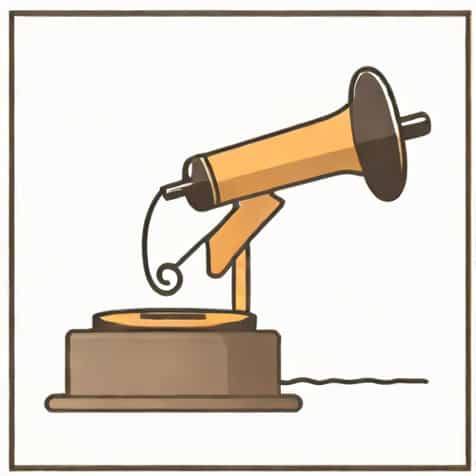
The phonograph was a revolutionary technology for its time, allowing sound to be recorded and reproduced mechanically. Invented by Thomas Edison in the late 19th century, the phonograph needle worked by vibrating along grooves in a record to produce sound. While its primary use was entertainment and communication, the precise mechanical movement of the needle inspired some early medical innovators to explore its potential in medicine. The idea of using a phonograph needle for vaccination arose from the needle’s ability to puncture the skin with minimal force, creating the possibility of delivering a vaccine through a mechanism different from standard hypodermic syringes.
The Concept of Vaccination with a Phonograph Needle
The notion of being vaccinated with a phonograph needle stems from experimental procedures where medical practitioners attempted to use the vibration or puncturing capability of phonograph needles to introduce vaccines into the skin. Unlike a conventional syringe, the phonograph needle method relied on mechanical movement to puncture the epidermis and deposit vaccine material. The approach aimed to reduce the pain and fear associated with traditional needle injections while exploring alternative delivery methods for mass immunization campaigns. Although such techniques were never widely adopted, they illustrate the creativity and determination of early scientists to innovate in public health.
Practical Challenges and Limitations
Despite its ingenuity, vaccinating with a phonograph needle presented numerous practical challenges. The needle’s primary design was for sound reproduction, not medical application. Ensuring proper dosage, maintaining sterility, and achieving consistent penetration of the skin proved difficult. In addition, the risk of infection and mechanical failure limited its viability as a mainstream vaccination tool. As a result, conventional syringes, which allowed precise control over dosage and depth, remained the standard. Nevertheless, the experimentation with phonograph needles demonstrates the intersection of technology and medicine, showing how early innovators often repurposed everyday tools in creative ways.
Impact on Modern Vaccine Delivery Methods
While the use of phonograph needles for vaccination did not persist, such experimentation contributed indirectly to modern vaccine delivery innovation. Today, needle-free injectors, jet injectors, and microneedle patches owe their conceptual origins to early experiments exploring alternative vaccination methods. The idea of minimizing pain, improving efficiency, and making vaccines more accessible can trace some of its inspiration back to experimental attempts like those involving phonograph needles. By examining these historical experiments, modern scientists can appreciate the iterative process of technological adaptation and innovation in public health.
Legacy of Unconventional Medical Experiments
Medical history is replete with examples of unconventional experiments that, while not always successful, paved the way for future breakthroughs. The phonograph needle vaccination concept serves as a reminder of the curiosity and ingenuity that drove early 20th-century medicine. Such experiments reflected a willingness to think outside the box and leverage available technology in novel ways. They also highlight the ethical and practical considerations that have since shaped medical experimentation, emphasizing safety, effectiveness, and reproducibility as central to modern medical practices.
The idea of being vaccinated with a phonograph needle may seem strange by today’s standards, but it represents a fascinating chapter in the history of medical innovation. Early scientists and public health pioneers continuously sought creative methods to improve vaccine delivery, experimenting with devices like phonograph needles to explore alternatives to conventional syringes. Although this particular approach was never adopted widely, it contributed to a broader understanding of vaccine administration and inspired future technological advancements. The story serves as a testament to human creativity in medicine and the ongoing quest to make healthcare more effective, efficient, and accessible for all.
Key Takeaways
- Early 20th-century medical innovators experimented with phonograph needles as a potential vaccination tool.
- The phonograph needle was repurposed from sound reproduction to deliver vaccines through mechanical skin puncture.
- Practical limitations, such as dosage control and sterility, prevented widespread adoption.
- These experiments influenced modern innovations like needle-free injectors and microneedle patches.
- The concept reflects the creativity and ingenuity of early public health pioneers in exploring unconventional solutions.