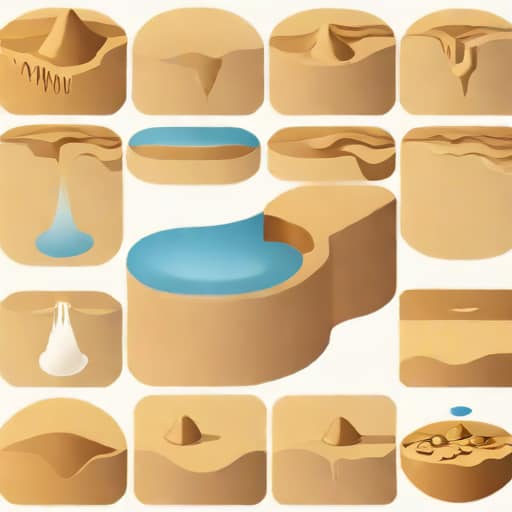
The process of sediment being glued together, scientifically known as lithification, is a fundamental mechanism in geology that transforms loose ptopics into solid rock. This process is responsible for the creation of sedimentary rocks, which cover much of the Earth’s surface and hold vital records of Earth’s history, climate changes, and life forms. Lithification occurs over long periods, often thousands or millions of years, as sediments such as sand, silt, and clay are compacted and cemented together. Understanding this process is essential for geologists, environmental scientists, and engineers, as it helps explain the formation of landscapes, natural resources, and geological hazards.
Understanding Sediments
Sediments are naturally occurring ptopics that originate from the weathering and erosion of pre-existing rocks, minerals, and organic materials. These ptopics are transported by agents like water, wind, and ice, and eventually deposited in various environments, including rivers, lakes, oceans, and deserts. Sediments vary in size, composition, and origin, ranging from fine clay ptopics to coarse gravel. The type and size of sediment play a crucial role in how they are compacted and cemented during lithification.
Types of Sediments
- Clastic SedimentsDerived from broken fragments of rocks and minerals, such as sand, silt, and clay.
- Chemical SedimentsFormed from minerals precipitating out of water, including limestone and evaporites.
- Organic SedimentsComposed of the remains of plants and animals, like coal and some types of limestone.
The Lithification Process
Lithification is the collective term for the processes that convert loose sediments into solid sedimentary rocks. It involves two primary mechanisms compaction and cementation. Both processes occur over extended periods under the influence of pressure, mineral-rich fluids, and environmental conditions. Lithification not only solidifies sediments but also preserves fossils and other geological features, making it a critical part of understanding Earth’s history.
Compaction
Compaction occurs when layers of sediments accumulate over time, and the weight of the overlying materials exerts pressure on the deeper layers. This pressure causes the sediment grains to be pushed closer together, reducing pore space and expelling water and air trapped between the ptopics. Compaction increases the density of the sediment, preparing it for cementation. The extent of compaction depends on factors such as sediment type, depth of burial, and the amount of overlying material.
Cementation
Cementation is the process by which dissolved minerals precipitate from groundwater and act as a natural glue, binding sediment ptopics together. Common minerals involved in cementation include silica, calcite, and iron oxides. Groundwater carrying these minerals flows through the compacted sediments, and as the water evaporates or reacts chemically, minerals deposit between the grains, solidifying the sediment into rock. Cementation is essential for transforming loose sediments into stable and durable sedimentary rocks.
Factors Affecting Sediment Lithification
Several environmental and geological factors influence how sediments are glued together. Temperature, pressure, mineral composition, and the availability of mineral-rich water all play critical roles in the lithification process. Additionally, the duration of sediment burial and the chemical environment, such as pH and the presence of organic acids, can accelerate or inhibit cementation. Understanding these factors helps geologists predict rock formation and identify regions with potential natural resources like petroleum, natural gas, or groundwater reservoirs.
Role of Water in Cementation
Water is a key component in cementation. It acts as a transport medium for dissolved minerals, facilitating their deposition between sediment grains. The flow of groundwater through sediment layers can lead to uneven cementation, creating variations in rock hardness and porosity. In some cases, water can introduce reactive ions that form new mineral phases, further strengthening the rock structure. The chemistry of the water, including its dissolved ion concentration, directly affects the type and extent of cementation.
Pressure and Temperature
Pressure from overlying sediments and temperature increase with depth, both of which influence lithification. Higher pressure compresses sediments more tightly, reducing pore spaces and promoting stronger inter-grain contact. Elevated temperatures can enhance chemical reactions, speeding up the precipitation of minerals during cementation. These factors often work together to create sedimentary rocks with varying textures, from loosely cemented sandstones to highly compacted shales.
Examples of Lithified Sedimentary Rocks
The result of sediments being glued together can be seen in various sedimentary rocks, each reflecting the conditions under which they formed. These rocks provide insights into past environments and are valuable for scientific research and resource exploration.
Sandstone
Sandstone forms primarily from compacted and cemented sand grains. It often contains quartz or feldspar minerals, and its porosity makes it an important reservoir for groundwater and hydrocarbons. Sandstone textures vary depending on the size and sorting of the sand grains and the type of cementing minerals.
Shale
Shale is created from fine clay ptopics that are compacted and cemented over time. It is often laminated and may contain fossils, providing evidence of ancient environments. Shale’s low permeability makes it a critical layer in hydrogeology and petroleum geology.
Limestone
Limestone often forms from chemical or organic sediments, such as calcium carbonate from marine organisms. Cementation in limestone can occur both chemically and biologically, resulting in durable rock used in construction and industry. Limestone also records environmental changes, such as variations in ocean chemistry and climate.
Significance of Sediment Lithification
The process of sediments being glued together is crucial for multiple reasons. First, it creates the rock record, which allows scientists to reconstruct Earth’s history, including past climates, tectonic events, and biological evolution. Second, lithified rocks serve as reservoirs for water, oil, and natural gas, making them vital for human resources. Third, understanding lithification is essential in civil engineering, where the stability of sedimentary rocks affects construction and infrastructure projects. Finally, it provides insights into erosion and sedimentation patterns, which are key to environmental management and hazard assessment.
Environmental and Geological Applications
- Petroleum and natural gas exploration relies on understanding cementation and porosity in sedimentary rocks.
- Groundwater studies depend on the permeability of lithified sediments.
- Construction projects evaluate sedimentary rock stability for foundations and tunnels.
- Paleontology uses sedimentary rocks to study fossil preservation and ancient ecosystems.
The process of sediment being glued together, or lithification, is a critical aspect of geology that transforms loose ptopics into solid sedimentary rock. Through compaction and cementation, sediments such as sand, silt, and clay become durable rocks that record Earth’s history, support ecosystems, and provide essential resources. Factors such as pressure, temperature, water chemistry, and mineral content influence the efficiency and outcome of lithification. Understanding this process allows scientists to interpret past environments, locate natural resources, and plan engineering projects safely. The study of lithification highlights the remarkable ways in which Earth’s materials are continuously reshaped and preserved over geological time.