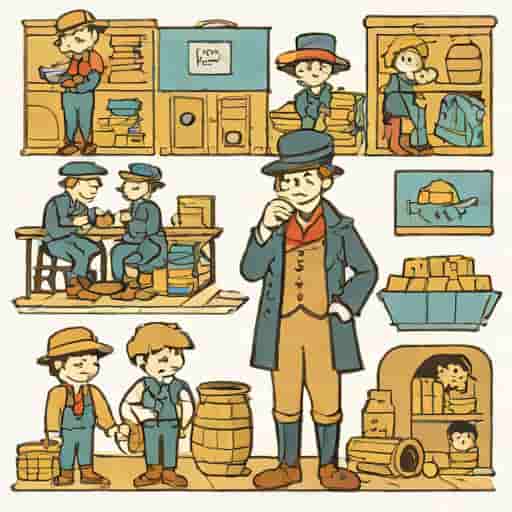
Oliver Twist is a classic novel by Charles Dickens, first published in 1837, that tells the story of a young orphan navigating the harsh realities of Victorian England. The novel highlights the struggles of the poor, the corruption and brutality of workhouses, and the criminal underworld of London. Through the journey of Oliver, Dickens explores themes of social injustice, innocence, morality, and resilience. The story follows Oliver from his early hardships in a workhouse to his encounters with thieves, kind strangers, and ultimately, the discovery of his true identity and family connections. Understanding the plot, characters, and key events in Oliver Twist provides insight into Dickens’ critique of society and his enduring literary legacy.
Early Life of Oliver Twist
Oliver Twist is born in a workhouse in a small town in England, under tragic circumstances as his mother dies shortly after his birth. The workhouse system, notorious for its harsh treatment of the poor, sets the stage for Oliver’s early suffering. He is subjected to cold meals, forced labor, and cruel supervision. Dickens portrays the workhouse as a symbol of societal neglect and the systemic abuse of vulnerable children. From the very beginning, Oliver’s innocence and gentle nature stand in stark contrast to the harsh environment in which he grows up.
Life in the Workhouse
At the age of nine, Oliver famously asks for more food, uttering the iconic line, Please, sir, I want some more. This act of defiance highlights both his courage and the cruelty of the workhouse authorities. As punishment for his request, Oliver faces mistreatment, which reinforces the theme of social injustice. Eventually, he is apprenticed to an undertaker, where he continues to experience neglect and hardship, prompting him to escape to London in search of a better life.
Oliver’s Journey to London
Upon arriving in London, Oliver encounters the dark side of the city, including the criminal underworld led by the cunning Fagin. Fagin trains young boys to become pickpockets, exploiting their vulnerability for his own gain. Oliver’s naivety and innocence make him an easy target, but he is unaware of the dangers that surround him. Dickens uses Oliver’s experiences to shed light on the exploitation of children and the moral corruption present in society.
Key Characters in London
- Fagin – The manipulative leader who trains children to steal for him.
- Bill Sikes – A violent criminal associated with Fagin, known for his brutality.
- Nancy – A young woman involved with Fagin and Sikes, who shows kindness and moral conscience.
These characters represent different aspects of the criminal world and the moral complexities within it. While Fagin and Sikes embody greed and violence, Nancy demonstrates compassion and the possibility of redemption.
Encounters and Challenges
Oliver becomes inadvertently involved in crimes orchestrated by Fagin and his gang, although he remains innocent of wrongdoing. One pivotal moment occurs when he is caught during a robbery but is defended by a kindly gentleman named Mr. Brownlow. This encounter marks a turning point in Oliver’s life, as he experiences kindness and generosity for the first time. Dickens contrasts the cruelty of the criminal world with the benevolence of characters like Mr. Brownlow to emphasize themes of morality and the potential for human goodness.
Nancy’s Courage and Sacrifice
Nancy plays a crucial role in Oliver’s story. Despite her association with criminals, she acts with bravery and compassion to protect Oliver. She secretly informs Mr. Brownlow about the plans to recapture Oliver, demonstrating her moral courage. Nancy’s actions ultimately lead to her tragic death at the hands of Bill Sikes, which underscores the dangers faced by those who try to do good within a corrupt environment. Her character illustrates the complexity of morality and the human struggle to choose right over wrong in difficult circumstances.
Revelation of Oliver’s Identity
As the story unfolds, Oliver’s true identity is revealed. He is discovered to come from a respectable family, which explains the threats he faced from those trying to exploit him. The revelation of his family background allows him to leave the criminal world behind and find security and belonging with Mr. Brownlow, who acts as his guardian. This discovery brings resolution to the narrative and reinforces the theme of justice and social restoration.
Resolution and Justice
- Oliver is adopted by Mr. Brownlow, leaving the harsh realities of poverty and crime behind.
- Fagin is arrested and ultimately executed for his crimes, symbolizing justice.
- Bill Sikes meets a violent end, representing the consequences of a life of crime.
- Nancy’s death serves as a reminder of the sacrifices made for moral integrity.
The resolution ties together the novel’s themes of innocence, morality, and social justice, illustrating Dickens’ belief in the ultimate triumph of good over evil, even in a world fraught with corruption and hardship.
Themes in Oliver Twist
Several major themes run throughout Oliver Twist, making it a timeless piece of literature
Social Injustice
The novel criticizes the harsh conditions of workhouses, child labor, and the mistreatment of the poor. Dickens uses Oliver’s suffering to draw attention to societal failings and the need for reform.
Innocence and Morality
Oliver’s purity and moral integrity stand in stark contrast to the corruption around him. His character embodies the idea that innocence can survive despite adversity.
Crime and Punishment
The novel portrays the criminal underworld realistically, showing both the allure and the consequences of crime. Characters like Fagin and Sikes face eventual punishment, reinforcing moral lessons about justice.
Compassion and Redemption
Kindness from characters such as Mr. Brownlow and the brave actions of Nancy demonstrate the possibility of compassion and moral redemption within a corrupt society.
Impact and Legacy
Oliver Twist remains one of Charles Dickens’ most influential works, praised for its social commentary, memorable characters, and vivid depiction of 19th-century London. The novel raised awareness about poverty and child exploitation, influencing public opinion and social reforms. Its enduring popularity lies in its compelling narrative, moral depth, and the timeless struggle between innocence and corruption. Oliver Twist continues to be studied, adapted, and appreciated worldwide for its literary and historical significance.
In summary, Oliver Twist is a rich and complex novel that explores the journey of a young orphan in a society plagued by poverty, crime, and injustice. Through Oliver’s experiences in the workhouse, the criminal underworld, and ultimately with Mr. Brownlow, Charles Dickens addresses critical themes of social injustice, morality, innocence, and redemption. The story’s memorable characters, dramatic events, and moral lessons make it a classic that resonates with readers across generations. Oliver’s journey from hardship to security and belonging serves as both a compelling narrative and a powerful commentary on society’s responsibilities toward its most vulnerable members.