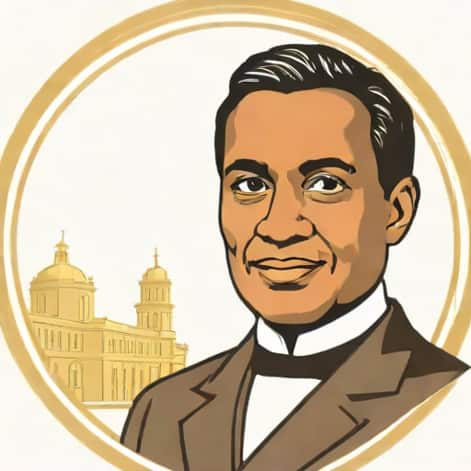
Robert Cooley Crispus Attucks is a name that resonates deeply in the history of the United States, symbolizing courage, resistance, and the struggle for freedom. Born in the early 18th century, Crispus Attucks became a prominent figure due to his role in the Boston Massacre, a pivotal event that fueled the American Revolution. Despite the limited historical records about his life, Attucks’ legacy has endured as a symbol of African American contribution to the fight for liberty and justice. Understanding his life, his background, and his ultimate sacrifice provides insight into the complex social and political landscape of colonial America, where issues of race, class, and oppression intersected with the larger struggle for independence.
Early Life and Background
Crispus Attucks was born around 1723, though exact details about his early life remain uncertain. He is believed to have been of African and Native American descent, possibly a descendant of the Wampanoag tribe and African slaves. Attucks’ mixed heritage positioned him uniquely in colonial society, as both African Americans and Native Americans faced significant social and economic restrictions during the 18th century. Historical accounts suggest that he worked as a sailor and a dockworker, occupations that were physically demanding but provided some degree of freedom compared to the limited opportunities available to enslaved or marginalized individuals at the time.
Life as a Sailor and Laborer
Attucks’ work as a sailor exposed him to diverse experiences and ideas, including the growing discontent among colonists toward British rule. Sailors often traveled between ports, carrying news and political discussions across cities. This mobility likely contributed to Attucks’ awareness of social inequalities and the tension between the colonies and the British government. As a laborer in Boston, he also witnessed firsthand the struggles of working-class individuals who were subjected to harsh conditions, low wages, and limited rights.
The Boston Massacre
The Boston Massacre occurred on March 5, 1770, and was a crucial moment in American history. Tensions had been escalating between colonial residents and British soldiers stationed in Boston. Soldiers were resented for taking jobs, enforcing unpopular taxes, and maintaining order through intimidation. On that fateful night, a crowd of colonists confronted a group of soldiers, leading to a chaotic and deadly confrontation. Crispus Attucks, described as a leader among the crowd, was one of the first to be shot and killed during the event. His death marked him as the first casualty in the struggle that would eventually lead to American independence.
Significance of Attucks’ Death
Attucks’ death carries immense symbolic value. As a man of African and Native American heritage, his involvement in the Boston Massacre challenges traditional narratives of the American Revolution as primarily led by white colonists. His courage in confronting British soldiers represents resistance against oppression and injustice. Many historians view Attucks as a symbol of the universal fight for liberty, highlighting that the desire for freedom transcended race and social class in early American history.
Legacy and Recognition
Although Attucks died at a young age, his legacy has grown over the centuries. He is remembered as an early martyr for American independence and as a figure who represents the contributions of African Americans and Native Americans in shaping the nation. Schools, streets, and public monuments bear his name, ensuring that his story remains a part of collective memory. For example, Crispus Attucks High School in Indianapolis was established in 1927 as the first all-Black high school in the city, honoring his commitment to courage and community leadership.
Impact on African American History
Attucks’ story has special significance within African American history. During the Civil Rights Movement, leaders often invoked his example as a reminder of the long-standing struggle for equality and justice. His role in the Boston Massacre demonstrates that African Americans were not passive observers in the fight for independence but active participants who risked their lives for the ideals of freedom and democracy. Attucks’ life and sacrifice continue to inspire generations of activists and educators who emphasize the importance of representation and recognition in history.
Memorials and Commemorations
- Crispus Attucks Day Observed in some regions to honor his contribution to American independence and African American history.
- Statues and Monuments Several cities have erected statues commemorating Attucks as a symbol of bravery and resistance.
- Educational Institutions Schools named after him highlight the importance of acknowledging African American leaders in the nation’s history.
Challenges in Historical Documentation
Despite his importance, much about Crispus Attucks’ life remains uncertain due to limited historical documentation. Records from the 18th century often overlooked the lives of African Americans and Native Americans, resulting in gaps in the historical narrative. Scholars have pieced together information from various sources, including court documents, eyewitness accounts, and newspaper reports from the time of the Boston Massacre. While some details may never be fully known, the overall picture of Attucks as a courageous figure in American history is widely accepted.
Controversies and Misconceptions
Over the years, Attucks has sometimes been misrepresented in popular culture and historical texts. Some accounts downplay his role or focus solely on the Boston Massacre without acknowledging his personal background and broader significance. Modern historians emphasize the importance of understanding Attucks as a multidimensional figure who represents the intersection of race, labor, and politics in colonial America. Correcting these misconceptions ensures that his contributions are accurately recognized and celebrated.
Crispus Attucks stands as a powerful symbol of courage, sacrifice, and the ongoing struggle for justice. From his early life as a sailor and laborer to his role in the Boston Massacre, Attucks demonstrated bravery and leadership in the face of oppression. His death marked a turning point in American history, highlighting the involvement of African Americans and Native Americans in the fight for independence. Today, his legacy continues to inspire and educate, reminding us of the diverse individuals who shaped the foundation of the United States. Recognizing Crispus Attucks is not just about honoring the past; it is about acknowledging the enduring values of courage, equality, and resilience that remain relevant in contemporary society.