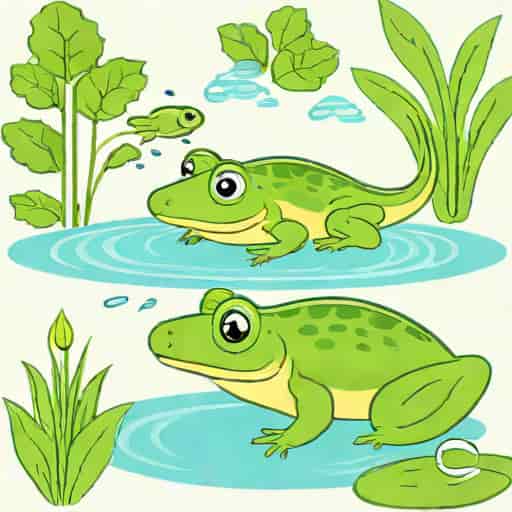
Respiration in living organisms is a fundamental life process, and the way it occurs can vary greatly depending on the stage of life and the environment. When studying amphibians, especially frogs, one common question is how respiration in tadpole of frog takes place by different organs compared to adult frogs. Tadpoles live entirely in water and show unique respiratory adaptations that allow them to survive and grow until metamorphosis. Understanding this process helps learners connect animal physiology with habitat and evolutionary change.
Introduction to Tadpole Respiration
A tadpole is the larval stage of a frog. At this stage, the frog has not yet developed lungs and does not live on land. Because of its aquatic lifestyle, respiration in tadpole of frog takes place by specialized structures suited for extracting oxygen from water. These respiratory organs change as the tadpole grows, making it a classic example of how organisms adapt their breathing mechanisms to their environment.
Why Respiration Is Essential for Tadpoles
Respiration is the process by which oxygen is taken in and carbon dioxide is released. In tadpoles, oxygen is required for cellular respiration, which provides energy for growth, movement, and development. Since tadpoles are actively swimming and feeding, their oxygen demand is relatively high, even though they are small.
Basic Functions of Respiration
- Provides energy for metabolic activities
- Supports growth and development
- Removes carbon dioxide from the body
- Maintains internal balance of gases
Main Respiratory Organ in Tadpoles
The most important answer to the question of how respiration in tadpole of frog takes place by which organ is the gills. Tadpoles breathe primarily through gills, which are specially adapted to extract dissolved oxygen from water.
These gills are similar in function to fish gills and allow efficient gas exchange in an aquatic environment.
External Gills in Early Tadpoles
In the early stages of development, tadpoles possess external gills. These gills appear as feathery outgrowths on the sides of the head. They are richly supplied with blood vessels, which helps in rapid diffusion of oxygen into the bloodstream.
External gills are exposed directly to water, making them very effective for respiration in young tadpoles.
Features of External Gills
- Feather-like structure
- Large surface area
- Thin walls for easy diffusion
- Highly vascularized
Internal Gills in Later Stages
As the tadpole grows, the external gills are gradually replaced by internal gills. These internal gills are enclosed within a gill chamber and covered by a flap of skin known as the operculum.
At this stage, respiration in tadpole of frog takes place by internal gills, which are protected and more efficient for prolonged aquatic life.
How Gas Exchange Occurs in Gills
Gas exchange in tadpole gills occurs by diffusion. Oxygen dissolved in water enters the blood through the thin walls of the gill filaments, while carbon dioxide moves out into the surrounding water.
Continuous flow of water over the gills ensures that oxygen concentration remains high, allowing efficient respiration.
Steps in Gill Respiration
- Water enters the mouth of the tadpole
- Water passes over the gill surfaces
- Oxygen diffuses into blood
- Carbon dioxide diffuses out
- Water exits through the gill opening
Role of Skin in Tadpole Respiration
In addition to gills, respiration in tadpole of frog also takes place partly through the skin. This type of respiration is known as cutaneous respiration.
The skin of a tadpole is thin, moist, and richly supplied with blood vessels, making it suitable for gas exchange.
Importance of Cutaneous Respiration
Skin respiration becomes especially important when the tadpole is resting or when oxygen levels in water are low. Although it does not replace gill respiration, it acts as a supportive mechanism.
This form of respiration continues even in adult frogs, showing continuity in amphibian breathing methods.
Respiration During Metamorphosis
Metamorphosis is the process by which a tadpole transforms into an adult frog. During this stage, major changes occur in the respiratory system.
Gills gradually disappear, and lungs begin to develop. This transition marks a shift from aquatic to terrestrial respiration.
Respiratory Changes During Metamorphosis
- Gradual loss of gills
- Development of lungs
- Increased importance of skin respiration
- Adaptation to air breathing
Comparison with Adult Frog Respiration
Respiration in tadpole of frog is very different from that in adult frogs. Tadpoles rely on gills and skin, while adult frogs use lungs, skin, and the lining of the mouth cavity.
This difference highlights the adaptability of frogs to different environments throughout their life cycle.
Environmental Factors Affecting Tadpole Respiration
Several environmental factors influence how effectively tadpoles can respire. Clean water with sufficient dissolved oxygen is essential for healthy gill function.
Pollution, high temperatures, and stagnant water can reduce oxygen levels and make respiration difficult.
Key Environmental Influences
- Oxygen concentration in water
- Water temperature
- Water movement
- Presence of pollutants
Adaptive Significance of Gill Respiration
Gill respiration allows tadpoles to exploit aquatic habitats effectively. It enables them to feed, grow, and avoid predators without needing to surface for air.
This adaptation increases survival chances during early life stages.
Common Misconceptions About Tadpole Respiration
A common misunderstanding is that tadpoles breathe using lungs like adult frogs. In reality, lungs are absent or non-functional in tadpoles.
Another misconception is that skin respiration alone is sufficient, when in fact gills are the primary respiratory organs.
Educational Importance of Studying Tadpole Respiration
Learning how respiration in tadpole of frog takes place by gills and skin helps students understand broader biological concepts such as adaptation, evolution, and life cycles.
This topic is often included in school biology curricula because it clearly demonstrates how structure and function are related.
respiration in tadpole of frog takes place mainly by gills, supported by cutaneous respiration through the skin. Early tadpoles use external gills, which later develop into internal gills for more efficient breathing in water. As the tadpole undergoes metamorphosis, gills disappear and lungs develop, preparing the frog for life on land.
This gradual change in respiratory organs reflects the remarkable adaptability of amphibians and highlights the close relationship between an organism’s environment and its mode of respiration.