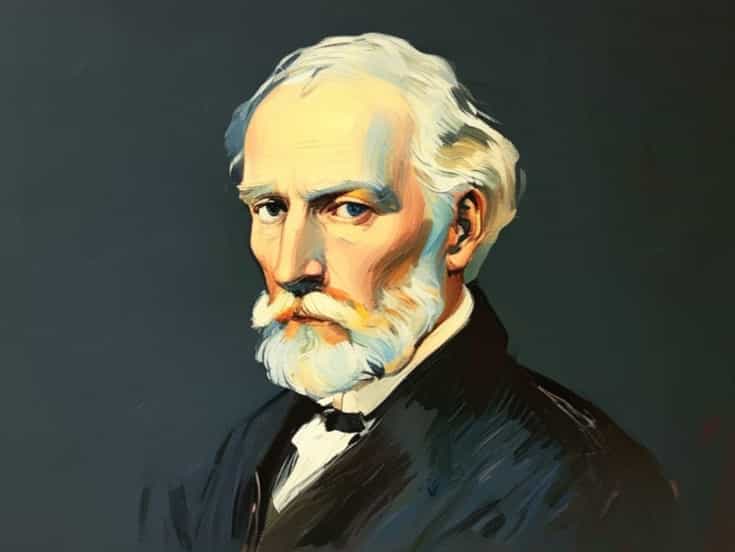
The Impressionist movement transformed the world of art in the late 19th century, challenging traditional academic painting and introducing a new way of capturing light, color, and everyday life. Among the artists who shaped this revolutionary movement, one of the masters stands out for his innovative technique, bold use of color, and ability to depict fleeting moments with extraordinary sensitivity. His contributions not only defined the visual language of Impressionism but also influenced generations of artists who followed. Understanding his life, work, and impact offers insight into how Impressionism became one of the most celebrated art movements in history.
Early Life and Artistic Beginnings
The master in question was born in France during the mid-19th century, a period of political change and cultural growth. From an early age, he showed an interest in drawing and painting, inspired by the landscapes and urban life surrounding him. His family encouraged his artistic ambitions, allowing him to study under prominent teachers of the time. Early works reveal a strong foundation in classical techniques, yet even in these formative years, hints of his distinctive style-vivid color, loose brushwork, and an interest in light-can be observed.
Influences and Education
During his formal training, he studied traditional art methods in Paris, learning to render perspective, anatomy, and composition with precision. However, he soon became disillusioned with the rigid constraints of academic painting, which often emphasized historical or mythological subjects over contemporary life. Exposure to the work of earlier innovators and plein air painting inspired him to experiment with capturing the natural world as he saw it, with a focus on light, atmosphere, and the fleeting quality of everyday moments.
Contributions to the Impressionist Movement
This artist was among the pioneers who helped define Impressionism as a movement, participating in the independent exhibitions that set the group apart from the official Paris Salon. He embraced techniques that broke from tradition, including visible brushstrokes, bright and unmixed colors, and compositions that captured scenes from modern life rather than historical or religious subjects. His approach emphasized the perception of a moment, aiming to convey how light and color interact rather than creating a polished, static image.
Innovative Techniques
One of the hallmarks of his work was the use of short, quick brushstrokes to suggest movement and the transient effects of light. He often painted outdoors, or en plein air, to directly observe the changing environment. This method allowed him to capture reflections on water, the shifting shadows of trees, and the luminous atmosphere of city streets. By focusing on color contrasts and the effects of sunlight, he created paintings that feel vibrant and alive, drawing viewers into the scene.
Subject Matter and Themes
Unlike traditional painters who often focused on grand historical events or formal portraits, this Impressionist master depicted ordinary people, urban landscapes, and leisure activities. Common subjects included cafés, gardens, rivers, train stations, and bustling streets. He was particularly interested in moments of everyday life, portraying the subtle interactions between people and their environment. Through these subjects, his work celebrates the beauty in ordinary experiences, transforming mundane scenes into captivating visual narratives.
Famous Works and Recognition
Throughout his career, this artist created numerous iconic paintings that exemplify the principles of Impressionism. Some of his most celebrated works feature shimmering light on water, crowded urban parks, and intimate domestic scenes. His paintings often drew mixed reactions from critics; while some praised the freshness and modernity of his approach, others dismissed it as unfinished or unconventional. Over time, however, his work gained recognition for its technical innovation and emotional depth.
Exhibitions and Critical Reception
He participated in several of the independent Impressionist exhibitions in Paris, which were organized outside of the official Salon. These shows allowed him to present his work alongside other leading Impressionists, fostering dialogue and collaboration among artists. Critics initially debated the value of this new style, but public interest grew as people became intrigued by the vibrancy and immediacy of his paintings. Today, many of his works are held in major museums worldwide, celebrated for their beauty and historical significance.
Legacy and Influence
The impact of this master extends far beyond his own paintings. His exploration of light, color, and modern life influenced not only fellow Impressionists but also subsequent movements such as Post-Impressionism and Modernism. Artists like Vincent van Gogh, Paul Cézanne, and Pierre Bonnard drew inspiration from his approach to brushwork and color. Even in contemporary art, his techniques for capturing the essence of a fleeting moment remain influential, demonstrating the lasting power of his vision.
Techniques and Artistic Philosophy
Understanding this artist’s approach requires examining his philosophy toward painting and the techniques he employed. He believed that art should reflect perception and emotion, capturing the subjective experience of a moment rather than adhering strictly to visual realism. By focusing on how light interacts with surfaces and the way color can convey atmosphere, he redefined how viewers experience a painting.
Use of Color
Color played a central role in his work. Rather than relying heavily on black for shading, he used complementary colors and varying tones to create depth and contrast. This approach allowed him to achieve luminosity and vibrancy in his compositions, making scenes feel alive and dynamic. The careful observation of natural light and shadow transformed ordinary subjects into extraordinary displays of visual energy.
Perspective and Composition
While classical techniques emphasized precise linear perspective, this Impressionist master often employed unconventional angles and cropping to emphasize immediacy and movement. His compositions suggest spontaneity, as if the viewer is witnessing a real-life moment unfolding. This compositional style invites engagement, drawing the audience into the world of the painting rather than presenting it as a distant, static tableau.
One of the masters of the Impressionist movement revolutionized the way people perceive art by challenging traditional norms and emphasizing the beauty of everyday life. His innovative techniques, vibrant use of color, and dedication to capturing fleeting moments have left a lasting legacy that continues to inspire artists and captivate audiences around the world. By studying his life, works, and influence, we gain insight into the transformative power of Impressionism and its enduring impact on the history of art. His contributions remind us that art is not just a reflection of the world but a way to experience it more vividly, celebrating light, color, and the subtleties of modern life.