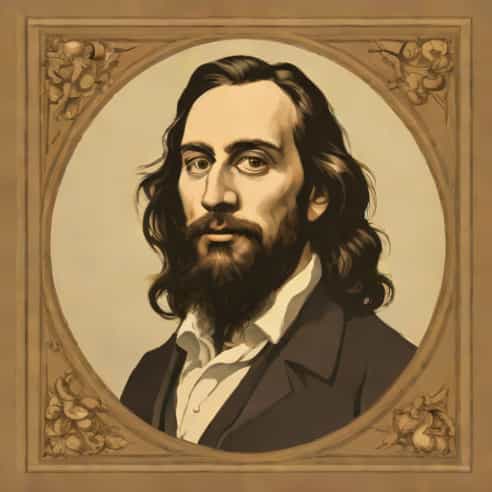
Gustave Courbet remains one of the most influential figures in 19th-century art, known for his bold Realist paintings that challenged academic conventions and traditional artistic norms. His work rejected idealized subjects and focused instead on depicting everyday life with unflinching honesty. Courbet’s approach marked a turning point in art history, bridging classical traditions and modern realism. Khan Academy, a widely respected educational platform, provides in-depth discussions and analyses of Courbet’s work, offering students and art enthusiasts valuable insights into his techniques, themes, and historical impact. Exploring Courbet through Khan Academy helps viewers understand both the cultural context of his time and the enduring influence of his art.
Gustave Courbet A Brief Biography
Gustave Courbet was born in 1819 in Ornans, France. Coming from a modest background, he initially trained in law but soon pursued his passion for art. Courbet moved to Paris in the 1830s and studied under established artists while developing his distinctive style. Unlike many of his contemporaries, Courbet refused to idealize his subjects, instead portraying them with realism and authenticity. His commitment to realism and his defiance of academic norms eventually led to both critical acclaim and controversy.
Early Influences and Training
During his early years in Paris, Courbet was exposed to the works of Romantic painters and earlier masters, which helped shape his technical skills. He studied drawing and painting techniques rigorously, focusing on anatomy, composition, and color. However, while he absorbed classical methods, he rejected the Romantic emphasis on dramatization and mythological subjects. Instead, Courbet’s focus shifted toward depicting ordinary people, rural landscapes, and scenes of contemporary life with raw authenticity.
Courbet and Realism
Realism, the artistic movement that Courbet championed, sought to portray subjects as they were, without embellishment or idealization. This movement was both a reaction to Romanticism and a reflection of broader societal changes in 19th-century France, including industrialization, political upheaval, and shifting social norms. Courbet’s paintings often depicted laborers, peasants, and everyday urban scenes, emphasizing the dignity and complexity of ordinary lives. Khan Academy highlights how Courbet’s commitment to realism distinguished him from his contemporaries and paved the way for future modernist movements.
Key Realist Works
- The Stone Breakers (1849)This painting depicts two laborers breaking stones on a rural road, emphasizing the physical toll of manual work. The work was groundbreaking for its unidealized portrayal of labor and its monumental scale, which was typically reserved for historical or mythological subjects.
- A Burial at Ornans (1849 50)This large-scale painting shows the funeral of an ordinary citizen, treating the event with the gravitas traditionally given to historical or royal subjects. Courbet’s choice to elevate ordinary life to the scale of history painting challenged academic norms and provoked critical debate.
- The Artist’s Studio (1855)Courbet’s self-referential work blends portraiture, allegory, and social commentary, portraying himself at the center of a diverse group of figures representing various aspects of contemporary society. Khan Academy analyzes this painting as an embodiment of Courbet’s philosophy of art and social realism.
Courbet’s Techniques and Style
Courbet’s artistic techniques contributed significantly to the impact of his works. He employed thick, textured brushstrokes to create a sense of physical presence and immediacy, often painting directly onto the canvas without preliminary sketches. His color palette was naturalistic, capturing the subtle variations of light and atmosphere in both interior and exterior scenes. Khan Academy notes that Courbet’s method of building form through layered brushwork helped convey realism while maintaining expressive power.
Use of Scale and Composition
One of Courbet’s innovative approaches was his use of large-scale canvases for ordinary subjects. Traditionally, monumental sizes were reserved for historical, religious, or mythological themes. By giving equal visual weight to peasants, laborers, and rural landscapes, Courbet challenged hierarchical artistic conventions and encouraged viewers to reconsider the value of everyday life. His compositions often emphasized horizontal lines and grounded figures, creating a sense of stability and realism.
Controversy and Public Reception
Courbet’s realistic portrayals often sparked controversy. Critics accused him of vulgarity for depicting ordinary subjects on monumental canvases, and some of his works were rejected from official salons. Despite this, Courbet gained recognition for his technical skill and commitment to authenticity. His insistence on painting reality as he saw it inspired a new generation of artists, including the Impressionists and later modernists. Khan Academy highlights how Courbet’s defiance of convention was both a personal and artistic statement, reflecting broader societal tensions of the time.
Political Engagement
Beyond his artistic innovations, Courbet was politically active, particularly during the French Revolution of 1848 and the Paris Commune of 1871. His political involvement influenced both his subject matter and his personal life. During the Commune, Courbet advocated for the preservation of the Louvre’s artworks and opposed the destruction of cultural monuments. His political activism eventually led to imprisonment and financial difficulties, demonstrating the intersection of art, society, and politics in his life.
Khan Academy and Courbet’s Legacy
Khan Academy provides accessible and in-depth analyses of Courbet’s work, helping students and art enthusiasts understand the historical, cultural, and technical aspects of his paintings. Through video lectures, images, and explanatory notes, Khan Academy explores Courbet’s innovative techniques, thematic choices, and lasting impact on the art world. By highlighting key works like The Stone Breakers and A Burial at Ornans, the platform demonstrates how Courbet’s realism reshaped the possibilities of painting and influenced future generations.
Educational Value
- Historical ContextKhan Academy situates Courbet’s work within 19th-century French society, helping learners understand the social and political factors that shaped his art.
- Artistic TechniquesThe platform explains Courbet’s brushwork, composition, and use of scale, providing practical insights into his methods.
- Interpretation and AnalysisStudents learn how to analyze Courbet’s themes, symbolism, and social commentary, fostering critical thinking and appreciation for Realism.
Gustave Courbet remains a central figure in art history, celebrated for his fearless realism and his challenge to academic conventions. His dedication to portraying ordinary life with honesty and dignity transformed the possibilities of painting and inspired countless artists. Khan Academy’s educational resources provide an accessible gateway to understanding Courbet’s techniques, themes, and historical significance, making his work approachable for learners of all levels. By studying Courbet, viewers gain insight not only into the art of the 19th century but also into the enduring impact of authenticity, observation, and social engagement in visual culture. Courbet’s legacy continues to resonate, demonstrating the power of art to reflect, challenge, and transform society.