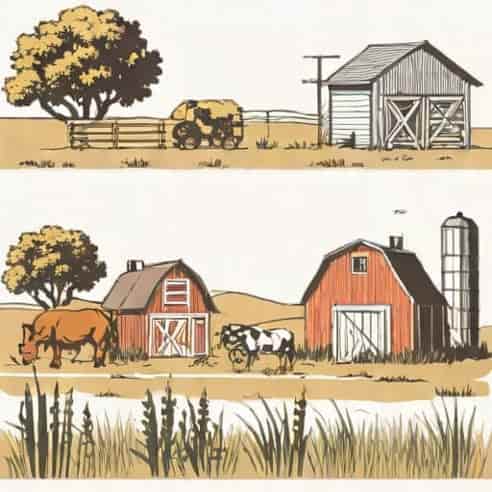
The Journal of Agrarian South is a scholarly publication that focuses on the historical, economic, social, and cultural aspects of agriculture and rural life in the Southern United States. For decades, the journal has served as a critical platform for researchers, historians, and scholars to explore the complexities of agrarian societies, examining topics such as plantation economies, tenant farming, sharecropping, and rural labor systems. Through rigorous research topics, essays, and reviews, the journal provides an in-depth understanding of how agrarian practices shaped Southern history, politics, and culture. It is recognized for its commitment to scholarly excellence and for shedding light on the lived experiences of farmers, laborers, and rural communities in the American South.
History and Background
The Journal of Agrarian South has its roots in the mid-20th century when scholars began to focus on agricultural history as a distinct field of study. The journal emerged to address the need for a dedicated platform where researchers could publish work that explored the interplay between land, labor, and society in the Southern United States. Its foundation coincided with a growing academic interest in understanding the social structures and economic conditions that defined the South, particularly in the context of slavery, Reconstruction, and the post-Civil War agricultural economy. Over the years, the journal has become a key resource for anyone studying Southern history and rural life.
Mission and Scope
The journal aims to provide a comprehensive and nuanced understanding of agrarian life in the South, including the historical, economic, and social dimensions of rural communities. Its scope includes the study of plantation economies, the transition to tenant farming, labor relations, rural social structures, agricultural technology, and cultural practices. The Journal of Agrarian South also examines broader themes such as migration, land ownership, and environmental impact, situating Southern agrarian history within the context of national and global developments. By combining historical analysis with cultural insights, the journal seeks to illuminate the complex realities of Southern agrarian society.
Types of Content
The Journal of Agrarian South publishes a variety of content that contributes to the scholarly understanding of Southern agriculture and rural life. Peer-reviewed research topics form the core of the journal, often presenting original research based on archival sources, oral histories, or quantitative data. In addition to research topics, the journal includes book reviews, historiographical essays, and thematic issues that focus on specific aspects of Southern agrarian history. The journal’s content is designed to engage both academic audiences and practitioners interested in the historical dimensions of rural development.
Examples of Topics Covered
- Historical analysis of plantation economies and slave labor systems.
- The development of tenant farming and sharecropping in the post-Civil War South.
- Rural social structures, family life, and community organization.
- Changes in agricultural technology and farming practices.
- The environmental and economic impact of Southern agriculture.
- Cultural traditions and folklore of Southern rural communities.
Academic Significance
The Journal of Agrarian South is highly regarded in academic circles for its contribution to the study of Southern history and agrarian studies. By publishing meticulously researched topics, the journal has helped shape scholarly discourse on rural economies, labor systems, and social hierarchies. Researchers frequently cite the journal as a primary source for historical data and analysis related to the South’s agricultural past. Its rigorous peer-review process ensures that only high-quality research is published, maintaining the journal’s reputation as a credible and influential academic resource.
Impact on Historical Studies
- Provides comprehensive research on Southern agriculture and rural life.
- Enhances understanding of social and economic structures in historical contexts.
- Offers critical insights into the legacy of slavery and sharecropping systems.
- Supports interdisciplinary studies linking history, economics, sociology, and cultural studies.
- Encourages the preservation and analysis of archival and oral histories.
Editorial Standards and Peer Review
Maintaining high editorial standards is central to the Journal of Agrarian South’s mission. Each submission undergoes a rigorous peer-review process by experts in Southern history, agrarian studies, and related disciplines. This ensures that published research is accurate, original, and contributes meaningfully to the academic field. Editors also focus on clarity, methodology, and historical interpretation, providing constructive feedback to authors to enhance the quality of their work. By adhering to strict scholarly standards, the journal upholds its credibility and academic integrity.
Submission Guidelines
- topics must be original and relevant to the study of Southern agrarian history.
- Submissions are evaluated based on methodological rigor, historical accuracy, and contribution to scholarship.
- Authors may submit research topics, essays, or reviews following the journal’s formatting and citation standards.
- Peer reviewers provide critical feedback to improve the clarity and impact of the work.
- Accepted topics undergo final editorial checks to ensure consistency and quality.
Audience and Readership
The journal primarily targets scholars, historians, and students engaged in the study of Southern history, rural sociology, and agricultural development. However, its readership also includes policymakers, educators, and individuals with a general interest in the history and culture of the Southern United States. By presenting well-researched and accessible topics, the Journal of Agrarian South bridges the gap between academic scholarship and public understanding, making it a valuable resource for anyone interested in the historical foundations of Southern rural life.
Benefits for Readers
- Access to peer-reviewed research and primary historical sources.
- Insight into social, economic, and cultural aspects of Southern agriculture.
- Understanding of historical trends that shaped modern rural communities.
- Educational resource for students, teachers, and researchers.
- Exposure to diverse perspectives and interdisciplinary approaches.
The Journal of Agrarian South serves as a vital platform for exploring the complexities of Southern agriculture, rural life, and historical development. Through its high-quality research topics, reviews, and thematic studies, the journal provides deep insights into social structures, labor systems, economic transformations, and cultural practices that shaped the American South. Its commitment to scholarly rigor, editorial excellence, and accessibility makes it an indispensable resource for academics, students, and anyone interested in understanding the history and impact of agrarian societies. By documenting and analyzing the agricultural past of the South, the Journal of Agrarian South contributes not only to historical knowledge but also to a broader understanding of the cultural and economic forces that continue to influence the region today.