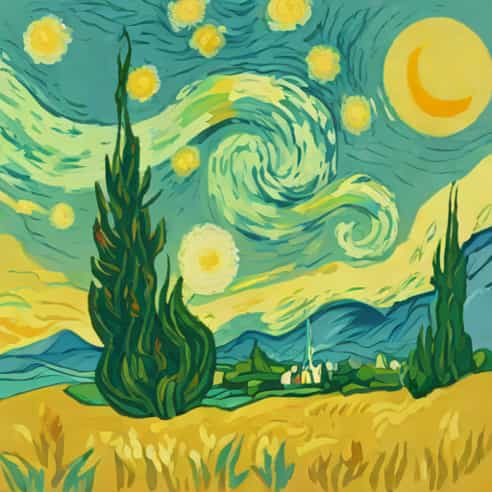
When people think about Vincent van Gogh, they often associate his name with the Impressionist movement. His colorful brushstrokes, emotional intensity, and vivid depictions of light seem to reflect many of the qualities we see in Impressionist art. Yet, the question remains is Van Gogh truly an Impressionist? The answer is not straightforward. While his work shares several characteristics with Impressionism, he is more accurately described as a Post-Impressionist-an artist who took the foundations of Impressionism and pushed them into new emotional and expressive territory. Understanding this distinction helps us appreciate Van Gogh’s unique place in art history and the evolution of modern painting.
Understanding Impressionism
Before deciding whether Van Gogh was an Impressionist, it’s important to understand what Impressionism really means. The Impressionist movement began in France during the late 19th century, led by artists such as Claude Monet, Pierre-Auguste Renoir, Edgar Degas, and Camille Pissarro. Their goal was to capture fleeting moments of light, color, and atmosphere rather than focusing on fine details or strict realism. Impressionists often painted outdoors, using quick, visible brushstrokes to depict natural light and its changing effects. They sought to represent how the world looked at a particular moment, not how it should ideally appear.
Key Characteristics of Impressionism
- Focus on light and color over precise detail.
- Use of short, visible brushstrokes to convey movement and texture.
- Depiction of everyday scenes, nature, and modern urban life.
- Interest in capturing the passage of time and transient effects of weather and sunlight.
- Preference for outdoor painting (plein air) rather than studio work.
These characteristics defined a revolution in art, breaking away from traditional academic painting and paving the way for future artistic experimentation. Van Gogh admired these painters deeply, and their influence on him is undeniable.
Van Gogh’s Connection to Impressionism
Vincent van Gogh’s artistic journey brought him into direct contact with Impressionism during his time in Paris between 1886 and 1888. When he arrived in the city, he was exposed to the works of Monet, Renoir, and Pissarro, as well as the emerging Neo-Impressionists like Georges Seurat and Paul Signac. This exposure dramatically changed his approach to painting. His earlier works, such asThe Potato Eaters, were dark and somber, painted in earthy browns and greens that reflected the hardships of peasant life. But after encountering Impressionism, Van Gogh’s palette brightened, and his style became more dynamic and colorful.
Influence of French Impressionists
While in Paris, Van Gogh began experimenting with the use of light, color contrast, and broken brushstrokes. He learned how to use complementary colors to create vibrancy and depth, a hallmark of Impressionist technique. Paintings from this period, such asView of Paris from Vincent’s Room in the Rue Lepic, show his attempt to capture the atmosphere of the city using quick strokes and bright tones. This period marks a crucial transition in his style-from the realism of his Dutch period to the emotional expressiveness that would define his later years.
Why Van Gogh Is Not Strictly an Impressionist
Although Van Gogh absorbed many lessons from the Impressionists, he soon began to diverge from their goals. The Impressionists were primarily concerned with visual perception and the scientific study of light. Van Gogh, on the other hand, sought to express inner emotions through color and form. His paintings went beyond capturing reality; they revealed how he felt about what he saw. This emotional intensity and symbolic use of color distinguish him from the Impressionists and align him more closely with the Post-Impressionist movement.
Expression Over Observation
For Van Gogh, painting was not just about observing nature-it was about translating emotional and spiritual experience onto the canvas. While Monet might paint the same haystack at different times of day to study the changing light, Van Gogh would paint a wheat field to express loneliness, peace, or divine beauty. His work was less about what the eye saw and more about what the heart felt. This psychological depth sets him apart from Impressionists, who aimed to remain objective in their depictions of the natural world.
Defining Post-Impressionism
Post-Impressionism was a movement that developed as a reaction to the limitations of Impressionism. Artists like Van Gogh, Paul Cézanne, Paul Gauguin, and Georges Seurat sought to move beyond the focus on light and atmosphere to explore more structured, symbolic, or emotional content. Post-Impressionists experimented with bold colors, distorted forms, and new compositional techniques to express their personal visions. The movement wasn’t a unified style but a collective effort to expand the boundaries of what painting could represent.
Van Gogh’s Post-Impressionist Style
Van Gogh’s later works are some of the best examples of Post-Impressionism. Paintings such asStarry Night,Sunflowers, andThe Bedroomare filled with swirling motion, emotional tension, and symbolic color choices. His use of thick impasto-applying paint in heavy layers-added texture and intensity to his canvases. He used color not to imitate nature but to evoke feeling. For instance, the yellow tones in hisSunflowersrepresent warmth and vitality, while the blues ofStarry Nightconvey both peace and turmoil. This focus on emotional storytelling through color is what separates Van Gogh from the Impressionists and places him firmly among the Post-Impressionists.
The Legacy of Van Gogh’s Artistic Identity
Despite the technical distinctions, many people still refer to Van Gogh as an Impressionist because of the visible similarities in brushwork and color use. His art bridges the gap between Impressionism and Expressionism, making him a crucial link in the evolution of modern art. His influence reached far beyond his own era-paving the way for movements such as Fauvism, Expressionism, and Abstract art. Artists like Henri Matisse and Edvard Munch drew inspiration from Van Gogh’s bold use of color and emotional depth.
How His Style Evolved
Van Gogh’s style evolved rapidly over a short period. Within just a decade, he moved from dark, earthy tones to radiant, expressive colors. This evolution shows his restless experimentation and his desire to find new ways to communicate through art. While Impressionism provided the technical foundation, it was Van Gogh’s personal vision that made his paintings timeless. His brushstrokes became symbols of his emotional state, and his canvases transformed into expressions of his soul.
So, is Van Gogh an Impressionist? Not exactly. While he was deeply influenced by the movement, he transcended its boundaries to create something uniquely his own. Impressionism taught him the value of color, light, and immediacy, but Post-Impressionism allowed him to explore emotion, symbolism, and self-expression. His art stands at the intersection of observation and feeling, capturing both the beauty of the world and the turbulence of the human spirit. Vincent van Gogh may not fit neatly into one artistic category, but his legacy continues to inspire generations of artists and art lovers alike-proof that the power of creativity lies not in following movements, but in transforming them.