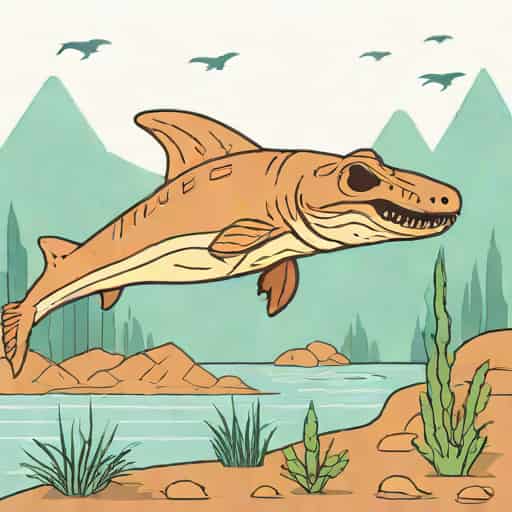
The question of how long ago was the Late Devonian extinction invites us to look far back into Earth’s deep past, long before humans or even dinosaurs existed. This extinction event unfolded hundreds of millions of years ago, during a time when life was mostly found in the oceans and the first forests were beginning to take shape on land. Understanding when it happened helps scientists piece together how life evolved, how ecosystems collapsed and recovered, and how environmental changes can dramatically reshape the planet over long periods of time.
Placing the Late Devonian Extinction in Time
To answer how long ago was the Late Devonian extinction, we need to look at the Devonian Period itself. The Devonian Period lasted from about 419 million to 359 million years ago. The Late Devonian extinction did not happen in a single sudden moment, but rather as a series of extinction pulses near the end of this period.
Most scientists agree that the main phases of the Late Devonian extinction occurred roughly between 372 million and 359 million years ago. This means the event took place approximately 360 to 370 million years ago. Instead of one sharp boundary, it was a prolonged crisis that unfolded over millions of years.
Why the Late Devonian Extinction Is Unique
When people think of mass extinctions, they often imagine a single catastrophic event. The Late Devonian extinction stands out because it was extended and complex. It is considered one of the five major mass extinctions in Earth’s history, but it differs from others due to its slow and episodic nature.
This prolonged timeline makes the question of how long ago was the Late Devonian extinction especially interesting. Rather than marking one date, scientists study a range of time during which biodiversity steadily declined, particularly in marine environments.
Multiple Extinction Phases
Researchers have identified at least two major extinction pulses within the Late Devonian.
- The Kellwasser events, occurring around 372 million years ago
- The Hangenberg event, occurring around 359 million years ago
These phases caused repeated disruptions to life on Earth, especially affecting reef-building organisms and ocean-dwelling species.
Life on Earth Before the Extinction
Before the Late Devonian extinction, Earth was experiencing a time of biological innovation. The Devonian Period is often called the Age of Fishes because of the rapid diversification of fish species. Coral reefs were widespread, and marine ecosystems were complex and productive.
On land, early plants were spreading, forming the first forests. These changes had a significant impact on the atmosphere and soil. Understanding how long ago was the Late Devonian extinction also means recognizing that it happened during a time of rapid environmental transformation.
Marine Ecosystems at Risk
The extinction primarily affected marine life. Many species of fish, trilobites, ammonites, and corals disappeared. Reef systems, which had taken millions of years to develop, collapsed and would not fully recover for a very long time.
In contrast, land plants and early terrestrial animals were less affected, which makes this extinction different from later events that devastated both land and sea life.
Possible Causes of the Late Devonian Extinction
Scientists continue to debate the exact causes of the Late Devonian extinction. Since it occurred over such a long span of time, it is likely that multiple factors were involved rather than a single catastrophic trigger.
When exploring how long ago was the Late Devonian extinction, researchers also examine what was happening to Earth’s climate, oceans, and atmosphere during that era.
Environmental Changes
Several environmental factors are commonly discussed as possible contributors.
- Widespread ocean anoxia, where deep waters lacked oxygen
- Climate cooling and possible glaciation
- Volcanic activity affecting atmospheric chemistry
- Nutrient runoff from early forests altering ocean ecosystems
The spread of large land plants may have played a role by changing how nutrients flowed into the oceans, triggering algal blooms and oxygen depletion.
How Scientists Determine the Timing
Determining how long ago was the Late Devonian extinction relies on careful study of the fossil record and rock layers. Scientists use radiometric dating, chemical signatures, and fossil distributions to build a timeline of extinction events.
Certain rock layers contain evidence of widespread environmental stress, such as changes in carbon isotopes and the disappearance of key species. These clues help narrow down the timing to the late stages of the Devonian Period.
Fossils as Time Markers
Fossils are essential for understanding extinction timing. When certain species suddenly vanish from the fossil record across many locations, it suggests a global event. By dating the surrounding rocks, scientists can estimate when these disappearances occurred.
This approach has allowed researchers to conclude that the Late Devonian extinction unfolded roughly between 372 and 359 million years ago.
Consequences for Life After the Extinction
The effects of the Late Devonian extinction were long-lasting. Many ecological niches were left empty, allowing surviving species to diversify in new ways. However, recovery was slow, especially for reef ecosystems.
Understanding how long ago was the Late Devonian extinction helps scientists see how life responds to prolonged environmental stress rather than sudden catastrophe.
Shaping Future Evolution
After the extinction, new groups of fish began to rise, eventually leading toward the dominance of early amphibians and later land vertebrates. The loss of older reef systems also paved the way for new types of marine communities.
In this sense, the Late Devonian extinction reshaped the trajectory of life, influencing evolution for tens of millions of years afterward.
Why the Late Devonian Extinction Still Matters Today
Although the Late Devonian extinction happened hundreds of millions of years ago, it remains relevant today. Studying it helps scientists understand how long-term environmental changes can affect biodiversity on a global scale.
The question of how long ago was the Late Devonian extinction is not just about dates, but about patterns. It shows that gradual changes, when sustained over time, can be just as destructive as sudden disasters.
Lessons from Deep Time
The Late Devonian extinction reminds us that Earth’s systems are interconnected. Changes in climate, vegetation, and oceans can combine in complex ways. By studying this ancient event, scientists gain insights into modern environmental challenges and the importance of maintaining ecological balance.
In summary, the Late Devonian extinction occurred roughly 360 to 370 million years ago, during the final stages of the Devonian Period. It was a prolonged and complex crisis that reshaped life on Earth and continues to offer valuable lessons about extinction, survival, and the long history of our planet.