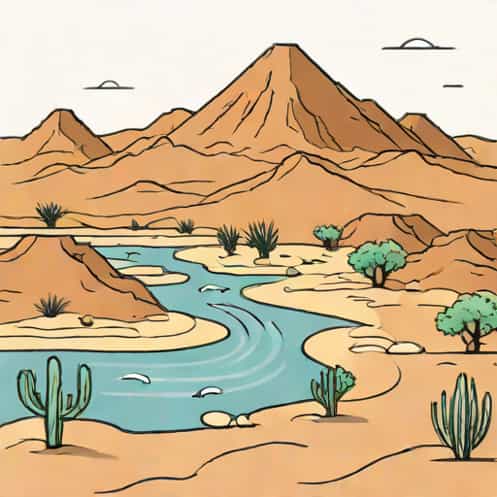
The Atacama Desert is widely regarded as one of the driest places on Earth, famous for its unique landscapes, salt flats, and stunning night skies. Travelers, geographers, and scientists alike are fascinated by this desert’s extreme conditions, rare ecosystems, and geological formations. Many people ask, Gurun Atacama berada di mana? or Where is the Atacama Desert located? Understanding its exact location, surrounding regions, climate, and significance offers a deeper appreciation for this remarkable natural wonder, as well as its influence on local culture, tourism, and scientific research.
Geographical Location of the Atacama Desert
The Atacama Desert is situated in South America, primarily within northern Chile. It stretches approximately 1,000 kilometers (about 620 miles) along the Pacific coast, bordered by the Andes Mountains to the east and the Chilean Coast Range to the west. Its northern edge approaches the border with Peru, while its southern limit gradually transitions into the semi-arid regions of central Chile. The desert encompasses several administrative regions of Chile, including Arica y Parinacota, Tarapacá, Antofagasta, and parts of Atacama Region itself. This strategic location along the western edge of the continent contributes to its extreme dryness and unique climate.
Latitude and Climate Factors
The Atacama Desert lies between approximately 18° and 27° south latitude, placing it within the subtropical high-pressure zone. This positioning is one of the reasons for its extremely arid conditions. The desert’s climate is influenced by the cold Humboldt Current along the Pacific Ocean, which suppresses moisture and rainfall, as well as the rain shadow effect created by the Andes Mountains. These combined factors result in annual precipitation that can be as low as 1 millimeter in some areas, making it virtually one of the driest deserts globally.
Key Features and Regions within the Desert
The Atacama Desert is not a uniform expanse of sand but a complex region featuring salt flats, volcanoes, high plateaus, and unique rock formations. Some of its most notable areas include
- San Pedro de AtacamaA popular town for tourists, serving as a gateway to explore salt flats, geysers, and valleys.
- Atacama Salt Flats (Salar de Atacama)A vast salt-rich area home to flamingos and other wildlife.
- Valle de la LunaA lunar-like valley with striking rock formations and sand dunes.
- El Tatio GeysersOne of the highest geyser fields in the world, located on the Andean plateau.
- VolcanoesIncluding Licancabur, Lascar, and others that shape the desert’s dramatic landscape.
Proximity to Other Countries
The Atacama Desert’s northern location places it near several important borders. To the north, it is close to southern Peru, connecting with the Sechura Desert in Peru. To the east, the Andes Mountains form a natural border with Bolivia, which features its own high-altitude salt flats and arid regions. The desert’s location near these countries has historically influenced trade, mineral exploration, and cultural exchanges in the region, highlighting its strategic significance beyond natural beauty.
Scientific Importance
Scientists study the Atacama Desert not only because of its extreme aridity but also because it resembles Martian landscapes. The desert’s soil and rock formations provide insights into astrobiology, climate change, and desert ecosystems. NASA and other space agencies use parts of the Atacama as analog sites to test instruments for Mars exploration. Understanding where the Atacama Desert is located allows researchers to access these unique environments and conduct experiments on microbial life, soil composition, and atmospheric conditions.
Tourism and Cultural Significance
The Atacama Desert is a popular destination for travelers seeking adventure, stargazing, and cultural experiences. Its high elevation and dry atmosphere create some of the clearest night skies in the world, attracting astronomers and tourists alike. Local indigenous communities, such as the Atacameño people, have inhabited parts of the desert for centuries, preserving unique traditions and knowledge about the land. Visitors often explore ancient ruins, petroglyphs, and traditional villages while enjoying the desert’s natural beauty.
Accessibility and Travel Tips
Knowing gurun Atacama berada di mana is essential for planning a visit. The most common entry point is Calama, a city with an airport connecting to Santiago, Chile’s capital. From Calama, travelers typically drive to San Pedro de Atacama, which serves as the base for excursions to the desert’s attractions. Roads are generally well-maintained, but some remote areas require four-wheel-drive vehicles. Tourists should also be prepared for high altitudes, strong sun exposure, and extreme temperature fluctuations between day and night.
Climate Considerations for Visitors
The Atacama Desert has a desert climate with extremely low rainfall. Daytime temperatures can be hot, while nighttime temperatures can drop significantly, especially at higher elevations. Travelers should plan clothing, hydration, and sunscreen accordingly. Visiting between the dry season months of March to November can provide the best conditions for outdoor activities and stargazing. Understanding the desert’s location helps in preparing for these environmental factors and ensures a safe, enjoyable experience.
The Atacama Desert is located in northern Chile, stretching along the Pacific coast between the Andes Mountains and the Chilean Coast Range. Its unique geographical position, extreme aridity, and proximity to neighboring countries like Peru and Bolivia make it a significant natural and cultural landmark. From scientific research to tourism and indigenous culture, the desert’s location shapes its global importance. Knowing where the Atacama Desert is allows travelers, scientists, and enthusiasts to explore its landscapes responsibly, appreciating the natural wonders, clear skies, and rich cultural heritage that make this desert one of the most remarkable in the world.