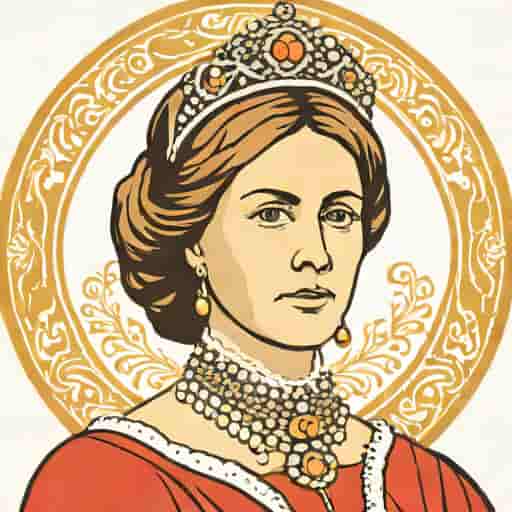
Grand Duchess Anastasia Nikolaevna of Russia remains one of history’s most fascinating figures, capturing the imagination of people around the world for over a century. Born into the Romanov dynasty in 1901, Anastasia lived a life marked by luxury, privilege, and ultimately, tragedy. Her story is intertwined with the dramatic fall of the Russian Empire, the brutal execution of her family, and the enduring mystery and speculation surrounding her fate. The tale of Anastasia continues to inspire books, films, and historical research, highlighting not only the personal tragedy of a young princess but also the broader turbulence of early 20th century Russia.
Early Life of Anastasia Nikolaevna
Anastasia was born on June 18, 1901, in Peterhof, Russia, as the youngest daughter of Tsar Nicholas II and Tsarina Alexandra Feodorovna. She was the fourth daughter and the youngest child of the Romanov family. Growing up in the Winter Palace, she experienced the privileges of royalty, including a private education, tutors, and a close-knit family environment. Despite the formality of imperial life, Anastasia was known for her playful personality, mischievous sense of humor, and adventurous spirit, which endeared her to family and staff alike.
Family and Siblings
Anastasia had three older sisters-Olga, Tatiana, and Maria-and one younger brother, Alexei, who was the heir to the Russian throne. The family was very close, and Anastasia shared a particularly playful bond with her siblings. The Romanov children were raised under strict supervision, but their parents attempted to provide a nurturing environment. Anastasia’s playful nature often led to lighthearted moments that broke through the rigidity of court life.
The Romanov Family in the Context of History
The early 20th century was a period of immense social and political upheaval in Russia. Tsar Nicholas II’s reign faced criticism for mismanagement, social inequality, and the strains of World War I. Anastasia’s childhood, though filled with privilege, was not immune to these pressures. The Romanov family became increasingly isolated from the realities faced by ordinary Russians, and their personal lives were closely scrutinized by the public. Despite these challenges, Anastasia and her siblings continued their lives in relative comfort until the Russian Revolution of 1917 dramatically changed everything.
The Russian Revolution and the Fall of the Romanovs
The Russian Revolution led to the abdication of Tsar Nicholas II in March 1917. The family was placed under house arrest, first in the Alexander Palace and later moved to Tobolsk in Siberia. Anastasia, along with her family, faced uncertainty, deprivation, and fear for their lives. The luxurious surroundings of her childhood were replaced with confinement and the looming threat of execution. During this time, Anastasia’s youthful energy and resilience were noted by those who guarded the family, highlighting her courage even in the face of extreme adversity.
Execution of the Romanov Family
On the night of July 16-17, 1918, the Romanov family was executed by Bolsheviks in Yekaterinburg. Anastasia, her parents, siblings, and loyal servants were killed in a basement room of the Ipatiev House. The brutal nature of their deaths shocked the world and marked the end of the Romanov dynasty. For decades, rumors persisted that Anastasia had somehow survived, fueled by occasional sightings and claims from imposters.
The Mystery of Anastasia
The mystery surrounding Anastasia’s fate captivated the public imagination. Several women claimed to be the Grand Duchess, the most famous being Anna Anderson, who insisted she had survived the massacre. Despite initial belief by some, DNA testing in the 1990s ultimately confirmed that Anastasia had perished with her family, putting the longstanding speculation to rest. However, the legend of her survival continues to be a popular subject in literature, film, and folklore.
Legacy and Cultural Impact
Anastasia Nikolaevna’s story has left a lasting impact on popular culture. Her life has inspired numerous books, movies, and theatrical productions. Films and animated adaptations often romanticize her supposed survival and adventures, creating a blend of historical fact and fiction that continues to capture imaginations. Her story is not only one of tragedy but also of intrigue, resilience, and fascination with royal history.
Representation in Media
- Animated films depict Anastasia’s fictional survival and quest for identity.
- Historical novels explore the political and social context of the Romanov family.
- Documentaries and biographies aim to provide factual accounts of her life and death.
- Stage musicals and plays often dramatize the romance and mystery surrounding her legend.
The cultural fascination with Anastasia underscores the human desire to connect with stories of resilience, mystery, and the allure of royalty. Her narrative continues to resonate across generations, blending history with myth and imagination.
Grand Duchess Anastasia Nikolaevna of Russia was born into a life of privilege but faced the extraordinary turbulence of early 20th century Russia. Her life, from her playful childhood to the tragic execution of her family, has captured the imagination of the world. The enduring mystery of her supposed survival, coupled with her cultural legacy, ensures that Anastasia remains a significant figure in history and popular culture. Through books, films, and historical research, the story of Anastasia provides insight into the personal and political dimensions of the Romanov dynasty, as well as the human fascination with resilience, royalty, and historical intrigue.