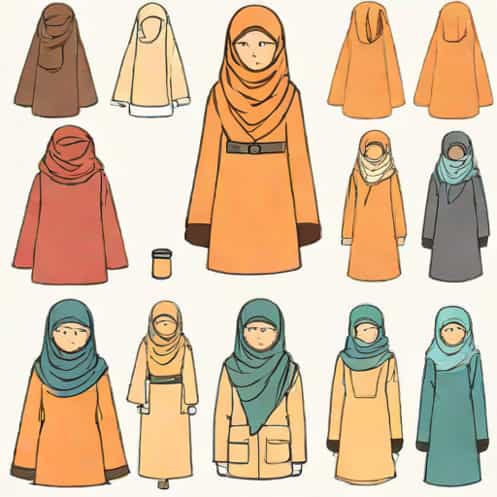
Muslim women around the world wear a variety of garments that reflect their cultural, religious, and personal choices. These garments are designed to maintain modesty, in line with Islamic teachings, while also allowing for expression of identity and style. Understanding the different types of clothing worn by Muslim women provides insight into both religious practices and cultural diversity, as well as the evolving fashion trends within Muslim communities. The garments range from traditional attire like abayas and jilbabs to contemporary interpretations that blend modesty with modern fashion.
Hijab The Most Recognized Garment
The hijab is perhaps the most widely recognized garment worn by Muslim women. It generally refers to a headscarf that covers the hair, neck, and sometimes the shoulders, while leaving the face visible. The hijab serves as a symbol of modesty and privacy, and it is worn by women of various ages in many different countries.
Styles and Variations of Hijab
There are multiple ways to wear the hijab, and styles often vary by culture and personal preference
- ShaylaA long rectangular scarf wrapped around the head and tucked or pinned at the shoulder.
- Al-AmiraA two-piece veil consisting of a fitted cap and a tube-like scarf worn over it.
- KhimarA cape-like veil that drapes over the shoulders, covering the hair and upper body.
- Turban StyleA modern adaptation that wraps the scarf around the head without covering the neck fully.
The hijab is not only a religious garment but also a fashion statement, with various fabrics, colors, and patterns allowing for personal expression.
Abaya Full-Length Outer Garment
The abaya is a long, flowing robe worn over everyday clothing. It is most common in Middle Eastern countries such as Saudi Arabia, the UAE, and Qatar. The abaya provides complete coverage from the shoulders to the feet, maintaining modesty in public spaces.
Designs and Fabrics
While traditionally black, abayas now come in a wide range of colors and designs
- Simple AbayasMinimalistic designs, often in black, for everyday wear.
- Embroidered or Decorated AbayasFeaturing intricate embroidery, beadwork, or lace for special occasions.
- Lightweight FabricsCotton, chiffon, or satin abayas for comfort in warmer climates.
Abayas are versatile and can be paired with a hijab, niqab, or face covering depending on cultural norms and personal choice.
Niqab Face Covering
The niqab is a veil that covers the face, leaving only the eyes visible. It is worn in addition to a hijab or headscarf and is primarily used in regions where full facial coverage is a cultural or religious expectation. The niqab allows women to maintain anonymity in public while adhering to interpretations of modesty.
Varieties of Niqab
- Half NiqabCovers the lower part of the face, leaving the eyes fully exposed.
- Full NiqabCovers the entire face except for a slit or mesh for the eyes.
- Layered NiqabCan be worn over a hijab or under an abaya for additional coverage.
The niqab is often made from lightweight fabrics to ensure comfort and breathability, especially in hot climates.
Jilbab Modest Outerwear
The jilbab is a long, loose-fitting garment similar to the abaya but is more common in Southeast Asia and some Western countries. It typically covers the entire body except for the face, hands, and feet, and is worn over regular clothes. Jilbabs can be styled in various ways to suit fashion preferences while preserving modesty.
Differences Between Jilbab and Abaya
- AbayaOften associated with Middle Eastern styles, tends to be a single piece with less emphasis on layers.
- JilbabCommon in Indonesia and Malaysia, can include multiple layers, buttons, or zippers, and is often more adaptable for movement.
Jilbabs offer flexibility for Muslim women who want modest clothing without compromising comfort or style.
Chador and Burqa Regional Variations
Other garments worn by Muslim women include the chador in Iran and the burqa in Afghanistan. The chador is a full-body cloak that covers the body and hair but leaves the face open. The burqa covers the entire body, including the face, with a mesh screen over the eyes for vision.
Purpose and Usage
- ChadorProvides cultural and religious adherence while allowing women to see and interact freely.
- BurqaOffers complete coverage for extreme privacy and is traditionally required in certain regions due to local customs.
Both garments reflect deep cultural roots and interpretations of modesty, emphasizing the diversity of Muslim clothing practices.
Modern Trends in Muslim Women’s Fashion
Today, Muslim women are blending traditional garments with contemporary fashion, creating modest yet stylish outfits. Designers worldwide are offering abayas, jilbabs, and hijabs in vibrant colors, patterns, and fabrics. Modest fashion blogs, online stores, and social media platforms are promoting this evolving style, showing that religious adherence and personal expression can coexist harmoniously.
Examples of Modern Adaptations
- Layered abayas with contrasting colors or modern cuts.
- Hijabs in lightweight, patterned fabrics for casual or professional settings.
- Jilbabs with zippers, pockets, and tailoring for daily comfort and mobility.
- Combination of Western clothing with traditional headscarves to create culturally respectful yet fashionable outfits.
Garments worn by Muslim women are diverse, reflecting religious principles, cultural heritage, and personal style. From the widely recognized hijab to the flowing abaya, the face-covering niqab, and regional variations like the chador and burqa, these garments prioritize modesty while allowing for individuality. Modern trends continue to integrate fashion with tradition, proving that Muslim women can adhere to their beliefs without sacrificing personal expression. Understanding these garments highlights the richness of Muslim culture and the importance of modesty in daily life.