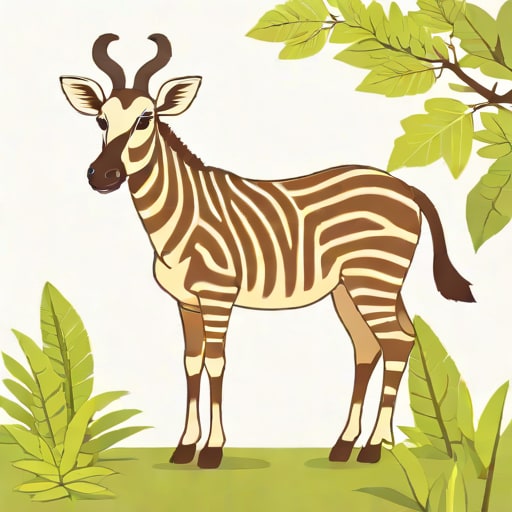
The okapi is one of the most fascinating animals in the world, yet many people, especially kids, have never heard of it. Sometimes called the forest giraffe, the okapi lives deep in the rainforests of central Africa and has a unique appearance that makes it stand out among other animals. Its striped legs, long neck, and quiet nature make it a mysterious and interesting creature to learn about. Children often enjoy discovering fun facts about the okapi because it looks like a combination of a zebra and a giraffe, but it is actually a completely unique species. Learning about okapis can spark curiosity about wildlife, forests, and conservation efforts to protect these amazing animals.
What is an Okapi?
The okapi is a mammal that belongs to the same family as the giraffe, which is why it shares some features like a long neck and large eyes. However, okapis are much shorter than giraffes and have a body covered in reddish-brown fur with white horizontal stripes on their legs. These stripes help them blend into the forest, acting like camouflage. Okapis are native to the dense rainforests of the Democratic Republic of Congo in Africa, where they are very hard to spot because they are shy and quiet animals.
Fun Facts About Okapis
1. The Forest Giraffe
Even though okapis look like zebras because of their striped legs, they are actually closely related to giraffes. This is why they are sometimes called the forest giraffe. Unlike giraffes, however, okapis have shorter necks and live in thick forests instead of open savannas. Kids often find it surprising that an animal that looks so different from a giraffe can be its closest relative.
2. Unique Stripes
The white stripes on an okapi’s legs are not just for decoration. They act as camouflage in the dappled light of the forest, helping the okapi hide from predators. Each okapi has a pattern of stripes that is unique, much like a human fingerprint. This means no two okapis have exactly the same markings.
3. Long, Sticky Tongue
Okapis have an extraordinary long, dark purple tongue that can reach up to 18 inches (45 centimeters). They use it to grab leaves, buds, and fruits from trees and bushes. The tongue is so flexible that okapis can clean their eyes and ears with it. This special feature makes them excellent at feeding even in dense forests where food is hard to reach.
4. Solitary Animals
Unlike zebras or giraffes, okapis are very shy and solitary. They usually live alone and only meet other okapis during mating season or when a mother is caring for her baby. Because they are quiet and live in deep forests, humans didn’t know about them for a long time. The okapi was unknown to the western world until the early 20th century.
5. Communication
Okapis communicate using sounds that humans can barely hear. They make low-frequency calls, sometimes called infrasounds, which can travel through the dense forest. These sounds help okapis find each other or warn about danger. Scientists are still learning a lot about how these sounds work and what they mean.
6. Diet of an Okapi
Okapis are herbivores, which means they eat plants. Their favorite foods include leaves, shoots, fruits, ferns, and fungi. They are very selective and can choose the tastiest leaves from the forest. The okapi’s long tongue and prehensile lips help it strip leaves from branches, which is an impressive skill to watch.
7. Babies Called Calves
Baby okapis are called calves. When a calf is born, it already has the striped legs of an adult. Newborn calves usually hide quietly in the forest for a few weeks while their mother goes off to feed. This helps keep them safe from predators. Moms are very protective and will call their babies using special sounds.
8. Lifespan and Size
Okapis can live up to 20-30 years in captivity, and somewhat less in the wild. Adult okapis are about 5 feet (1.5 meters) tall at the shoulder and can weigh between 440-770 pounds (200-350 kilograms). They are strong but gentle animals that are adapted to moving quietly through dense forests.
Where Okapis Live
Okapis are found only in the Democratic Republic of Congo, mostly in tropical rainforests. They prefer areas with lots of vegetation where they can hide and find enough food. The forests are dense and sometimes swampy, which makes it hard for humans and predators to reach them. This remote habitat has helped okapis survive for centuries, but it also means they are very sensitive to changes in their environment.
Interesting Behaviors
- Okapis are usually active during the day but can be nocturnal in areas where humans are present.
- They use scent glands on their feet to mark trails in the forest, helping them communicate with other okapis.
- Okapis are fast runners and can escape predators like leopards by sprinting through the dense undergrowth.
- They are excellent swimmers and can cross rivers if needed, though they rarely do so.
Conservation Status
Okapis are considered endangered due to habitat loss, deforestation, and poaching. Because they live in such remote forests, protecting their environment is a big challenge. Organizations and wildlife parks are working to preserve okapi habitats and educate people about these amazing animals. Kids can learn the importance of protecting okapis and other endangered species by understanding how fragile their home environments are.
Why Kids Love Learning About Okapis
Okapis are fascinating for children because they look like a mix of animals, have cool stripes, and possess unique features like a long tongue. They inspire curiosity about nature, forests, and how animals adapt to their environments. Fun facts like their secretive behavior, special communication sounds, and camouflage patterns make okapis one of the most exciting animals to learn about in school or during a trip to a zoo.
The okapi is a mysterious and amazing animal that has captured the imagination of kids and adults alike. From its forest giraffe nickname to its striped legs, long tongue, and quiet personality, the okapi has many fun facts that make it special. Learning about okapis teaches children about biodiversity, animal behavior, and the importance of protecting endangered species. By understanding these unique creatures, kids can develop a love for wildlife and a curiosity for the natural world that lasts a lifetime. Okapis remind us that the world is full of surprises, and there is always something new to discover in the animal kingdom.