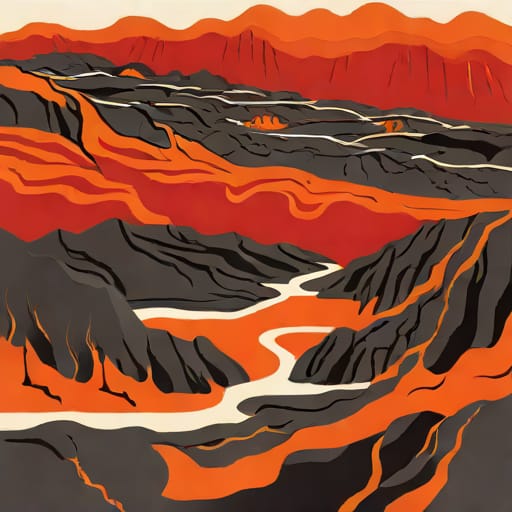
Basaltic lava is one of the most common and significant types of lava found on Earth and other planetary bodies. It originates from the partial melting of the Earth’s mantle and is characterized by its low viscosity, high temperature, and unique mineral composition. Understanding the characteristics of basaltic lava is essential for geologists, volcanologists, and anyone interested in natural processes that shape our planet. Its flow patterns, cooling behavior, and chemical properties influence the formation of volcanic landforms, affect ecosystems, and even provide insights into planetary geology beyond Earth. Examining these features helps us comprehend the dynamic processes of volcanism and the impact of basaltic lava on both local environments and global geological history.
Physical Characteristics of Basaltic Lava
Basaltic lava exhibits distinct physical properties that set it apart from other types of lava, such as andesitic or rhyolitic lava. These characteristics affect its behavior during eruptions and the landforms it creates once cooled.
Low Viscosity
One of the most notable traits of basaltic lava is its low viscosity. This means it flows easily over long distances compared to more viscous lavas. The low viscosity is primarily due to its low silica content, usually between 45% and 55%, which reduces internal friction. As a result, basaltic lava can form extensive lava plains, known as flood basalts, and gently sloping shield volcanoes. Its fluidity allows it to cover large areas, creating broad, relatively smooth surfaces when cooled.
High Temperature
Basaltic lava is typically erupted at high temperatures, ranging from 1,100°C to 1,250°C (2,012°F to 2,282°F). These high temperatures contribute to its low viscosity and rapid flow rates. The heat also enables basaltic lava to maintain fluidity over long distances before solidifying. This property is particularly important in forming vast lava fields and shaping volcanic landscapes.
Dark Color
Basaltic lava is usually dark gray to black due to its high content of iron and magnesium-rich minerals. This mafic composition distinguishes it from lighter-colored lavas, such as rhyolitic lava, which are rich in silica. The dark color persists even after cooling, creating basaltic rocks that are visually distinct and easily recognizable in the field.
Chemical Composition
The chemical makeup of basaltic lava is a key factor in determining its physical properties and volcanic behavior.
Mafic Minerals
Basaltic lava is rich in mafic minerals, including pyroxene, olivine, and plagioclase feldspar. These minerals contain iron and magnesium, which contribute to the dark color and high density of the lava. The mineral content also affects the cooling process and the textures of the resulting basaltic rock.
Low Silica Content
As mentioned, basaltic lava has relatively low silica content, usually between 45% and 55%. The low silica content decreases the viscosity, allowing the lava to flow more easily. It also influences the gas content and eruption style, as less viscous lava allows volcanic gases to escape more efficiently, often resulting in non-explosive eruptions.
Other Elements
In addition to iron, magnesium, and silica, basaltic lava contains small amounts of calcium, sodium, and aluminum. These elements contribute to the formation of different mineral structures and influence the hardness and durability of the basalt once solidified.
Types of Basaltic Lava Flows
Basaltic lava can exhibit different flow characteristics, leading to the formation of distinct volcanic features.
Pahoehoe Lava
Pahoehoe lava is smooth, ropey, and highly fluid. Its low viscosity allows it to flow in thin, continuous sheets, often forming intricate surface textures. This type of lava is common in Hawaiian eruptions and can travel considerable distances before solidifying. The smooth surface makes pahoehoe visually distinctive and relatively easy to traverse when cooled.
A’a Lava
A’a lava is rough, jagged, and more viscous than pahoehoe, though still less viscous than other lava types. It forms blocky, fragmented surfaces that can be challenging to walk on. The transition from pahoehoe to a’a often occurs as the lava cools, loses gases, or flows more rapidly. A’a flows are thicker and may move more slowly, creating rugged landscapes that persist for centuries.
Lava Tubes
Basaltic lava can form underground channels known as lava tubes. These tubes occur when the surface of a lava flow cools and solidifies while the molten lava beneath continues to flow. Once the lava drains away, a hollow tube remains, which can extend for several kilometers. Lava tubes are significant in geology and planetary science, as they provide insights into fluid flow and may offer protective habitats for life in extraterrestrial environments.
Volcanic Landforms Associated with Basaltic Lava
Basaltic lava is responsible for some of the most iconic volcanic landscapes on Earth.
Shield Volcanoes
Shield volcanoes are broad, gently sloping structures formed primarily from basaltic lava. The low viscosity allows the lava to spread over large areas, creating a wide base with gentle slopes. Famous examples include Mauna Loa and Kilauea in Hawaii. These volcanoes often experience frequent but non-explosive eruptions due to the fluid nature of basaltic lava.
Lava Plateaus
Lava plateaus, or flood basalts, are extensive regions covered by multiple layers of basaltic lava flows. These plateaus can span thousands of square kilometers and result from repeated, large-scale eruptions over millions of years. The Columbia River Basalt Group in the United States is a classic example. Such formations illustrate the ability of basaltic lava to cover vast areas and reshape entire landscapes.
Volcanic Islands
Basaltic lava also plays a crucial role in the formation of volcanic islands. When basaltic lava erupts underwater, it cools rapidly, gradually building up landmasses that emerge above the sea surface. The Hawaiian Islands are prime examples, where successive basaltic eruptions have formed a chain of islands over geological time scales.
Cooling and Solidification
Once basaltic lava is exposed to the atmosphere, it begins to cool and solidify. The cooling rate affects the texture and mineral formation in the resulting rock.
Fine-Grained Texture
Rapid cooling of basaltic lava produces fine-grained, dense rocks with small crystals. These textures are typical of volcanic basalt and make it suitable for construction and other industrial uses. Slower cooling, such as in lava tubes or thick flows, may allow larger crystals to form, resulting in coarse-grained textures known as gabbro.
Columnar Jointing
Basaltic lava can also exhibit columnar jointing, where cooling and contraction create hexagonal columns. This striking feature is visible in formations like the Giant’s Causeway in Northern Ireland. Columnar jointing highlights the unique physical behavior of basaltic lava as it solidifies and contracts.
Basaltic lava is a fundamental component of volcanic activity and has distinctive characteristics that influence its behavior and the landforms it creates. Its low viscosity, high temperature, dark color, and mafic composition allow it to flow easily, form extensive lava fields, and generate shield volcanoes and lava plateaus. Variations in flow type, such as pahoehoe and a’a, demonstrate the versatility of basaltic lava in shaping landscapes. Understanding its chemical and physical properties, cooling patterns, and geological significance is essential for studying volcanology, planetary geology, and environmental impact. The characteristics of basaltic lava not only reveal the dynamic nature of Earth’s interior but also contribute to the striking landscapes and natural features that define volcanic regions around the world.