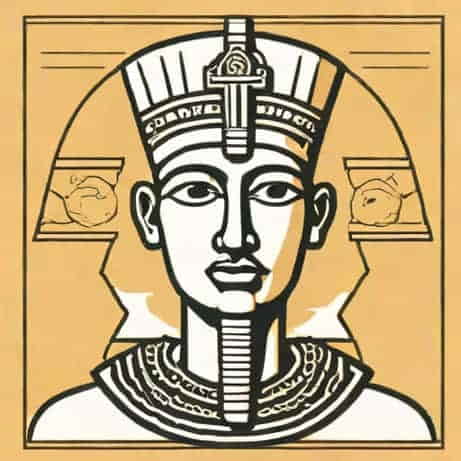
Amenhotep I, the second pharaoh of Egypt’s 18th Dynasty, remains one of the most fascinating figures of the New Kingdom. His reign, which likely lasted from around 1525 to 1504 BCE, marked a time of peace, prosperity, and significant development in art and architecture. However, despite the historical importance of his rule, one mystery continues to intrigue historians and Egyptologists alike – how did Amenhotep I die? Unlike many other pharaohs whose deaths were documented or whose mummies revealed clear evidence, the exact cause of Amenhotep I’s death has never been definitively determined. Yet through careful study of his remains, tomb, and the historical context of his time, scholars have developed several compelling theories.
The Life and Reign of Amenhotep I
Amenhotep I succeeded his father, Ahmose I, the founder of the 18th Dynasty who expelled the Hyksos and reunified Egypt. As a young ruler, Amenhotep inherited a kingdom that was politically stable and ready for expansion. His reign is remembered for consolidating Egypt’s power, strengthening its borders, and fostering advances in religion and culture. He continued many of his father’s policies and emphasized the worship of Amun, a deity who became increasingly central to Egyptian spiritual life during the New Kingdom.
Under his rule, Egypt enjoyed peace and prosperity. Amenhotep I commissioned numerous building projects, including temples in Thebes and elsewhere, and he may have initiated the royal necropolis at Deir el-Bahari. His administration was efficient and well-organized, which helped Egypt enter what is now seen as one of its most remarkable historical periods. Despite this success, the end of his life – and the cause of his death – remain largely obscured by time.
The Mystery of Amenhotep I’s Death
The question of how Amenhotep I died has puzzled scholars for generations. Unlike some pharaohs who perished in battle or from visible injuries, there is no evidence to suggest that Amenhotep I met a violent end. His mummy, discovered in the 19th century and later examined using modern technology, showed no signs of trauma or disease that could explain a sudden or unnatural death.
Ancient Egyptian records are also silent about the circumstances of his passing. This lack of documentation could indicate that his death was peaceful or expected – perhaps from natural causes or illness. However, since the Egyptians often associated their kings with divine qualities, it was not uncommon for scribes to avoid recording the specific details of a pharaoh’s death, focusing instead on the spiritual transition to the afterlife.
Modern Examinations of the Mummy
In the 1880s, the mummy of Amenhotep I was found in the Deir el-Bahari cache, a secret tomb that priests used to protect royal remains from tomb robbers. Unlike many other mummies, his body was never unwrapped by 19th- or 20th-century archaeologists, as his funerary wrappings were remarkably well-preserved and beautifully decorated. This made him one of the few pharaohs whose mummy remained intact for millennia.
In 2021, Egyptian researchers used advanced CT scanning technology to examine Amenhotep I’s mummy without disturbing its wrappings. The scans revealed an astonishingly well-preserved body of a man who was about 35 years old when he died, standing roughly 169 centimeters tall. There were no signs of injuries, broken bones, or diseases such as arthritis or infection that could suggest a cause of death. His teeth and bones appeared healthy, and his internal organs, which had been removed and embalmed separately, showed no abnormal conditions.
This discovery ruled out violent death and made it more likely that Amenhotep I died of natural causes – possibly a sudden illness or heart failure. However, the absence of visible disease also leaves open the possibility that he died from something that would not leave skeletal traces, such as an infection or undetected internal ailment.
Theories About His Death
Since there is no definitive evidence, scholars have proposed several theories to explain Amenhotep I’s death. These interpretations rely on medical findings, historical clues, and comparisons with other pharaohs from the same era.
- Natural CausesThe most widely accepted theory is that Amenhotep I died of natural causes. At about 35 years old, he may have succumbed to an undiagnosed illness or condition such as malaria or an infection, both of which were common in ancient Egypt.
- Sudden IllnessAnother possibility is that he suffered a rapid and unexpected illness, like heart failure or heatstroke, which could have taken his life without leaving evidence on his remains.
- Spiritual or Religious SignificanceSome Egyptologists suggest that the mystery surrounding his death may have been intentional, reflecting the belief that a pharaoh’s transition to the afterlife was a divine process beyond human understanding.
What remains certain is that Amenhotep I’s death was not the result of violence, assassination, or warfare. His reign appears to have ended peacefully, and the orderly succession of his chosen heir, Thutmose I, indicates that there was no power struggle or political instability at the time of his passing.
The Role of the Deir el-Bahari Cache
The discovery of Amenhotep I’s mummy in the Deir el-Bahari cache provides additional insight into how his body was treated after death. This cache, discovered in 1881, contained the mummies of several New Kingdom pharaohs who had been reburied by later priests to protect them from looters. The rewrapping and restoration of Amenhotep’s body were carried out with great care, demonstrating the deep respect held for him even centuries after his death.
Hieroglyphic inscriptions found in the cache confirmed that the priests had reburied him during the 21st Dynasty, but they made no mention of how he had originally died. The restoration process did reveal, however, that his body had suffered minor posthumous damage, likely from earlier tomb robbers, not from any injury sustained during life.
The Legacy of Amenhotep I
Amenhotep I’s death did not diminish his influence. In fact, he was deified after his passing – one of the few pharaohs to receive divine status. He was worshiped alongside his mother, Queen Ahmose-Nefertari, as patrons of the workers at Deir el-Medina, the community responsible for building royal tombs in the Valley of the Kings. His cult persisted for centuries, and he was remembered as a benevolent ruler who brought stability and prosperity to Egypt.
As a god-king, Amenhotep I was believed to continue protecting Egypt from the afterlife. The workers and artisans of Thebes prayed to him for health, safety, and success in their work. His spiritual presence in Egyptian culture long outlived his physical reign, solidifying his reputation as one of the most revered monarchs of the early New Kingdom.
Why His Death Remains Significant
The mystery of Amenhotep I’s death continues to captivate scholars not only because it remains unsolved, but because it highlights the sophistication of ancient Egyptian burial traditions and beliefs. The care taken to preserve his body, the lack of visible trauma, and the reverence shown in his burial all suggest that his death, though ordinary in a physical sense, held great spiritual meaning for his people.
In many ways, the uncertainty surrounding his passing adds to his legend. It invites modern audiences to consider how the Egyptians viewed life, death, and the divine role of their pharaohs. For Amenhotep I, death was not an end but a transition into eternal divinity – a continuation of his duty to maintain order and prosperity in both worlds.
While the exact cause of Amenhotep I’s death remains unknown, modern science and historical evidence suggest that he likely died peacefully of natural causes around the age of 35. His well-preserved mummy, examined through non-invasive technology, offers a rare glimpse into the care and craftsmanship of ancient Egyptian embalmers. More importantly, his death – mysterious yet serene – reflects the broader Egyptian belief that a pharaoh’s passing was not to be mourned but celebrated as a divine transformation.
Today, Amenhotep I stands as a symbol of the enduring mysteries of ancient Egypt. His life and death remind us that even after thousands of years, the stories of the pharaohs continue to inspire curiosity, respect, and wonder about one of history’s greatest civilizations.