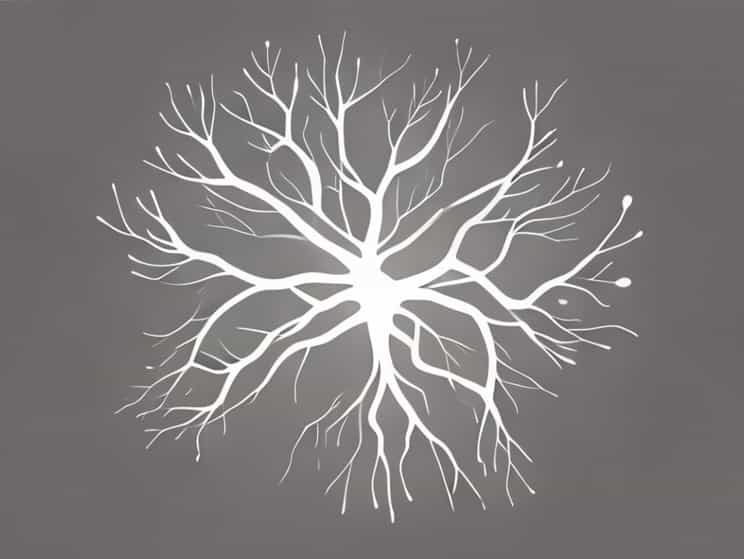
Dendrites are crucial components of the nervous system, often described as treelike fibers projecting from a neuron. These structures play a fundamental role in receiving and integrating signals from other neurons, allowing the nervous system to process information and respond appropriately to stimuli. The branching, tree-like shape of dendrites maximizes their surface area, facilitating communication with multiple neurons simultaneously. Understanding dendrites, their structure, function, and significance, is essential in neuroscience, as they are central to learning, memory, and overall brain function. Their complexity reflects the intricate networks that underpin human cognition and behavior, highlighting the sophistication of the nervous system.
Structure of Dendrites
Dendrites extend from the cell body, or soma, of a neuron, forming a highly branched structure that resembles the branches of a tree. This treelike architecture is not merely aesthetic but serves a critical functional purpose it increases the surface area available for synaptic connections. Each dendritic branch can receive signals from thousands of other neurons, allowing a single neuron to integrate a vast amount of information. Dendritic spines, small protrusions along the branches, further enhance connectivity and are the primary sites of excitatory synaptic input.
Dendritic Components
- SomaThe cell body of the neuron from which dendrites extend.
- Dendritic ShaftThe main branch of the dendrite that supports signal conduction.
- Dendritic SpinesTiny protrusions where synapses form, enabling communication with other neurons.
- Branching PatternsThe treelike structure that increases the area for signal reception.
Function of Dendrites
The primary function of dendrites is to receive chemical and electrical signals from other neurons and convey them toward the neuron’s cell body. Neurotransmitters released from presynaptic neurons bind to receptors on dendritic spines, generating postsynaptic potentials. These signals are integrated within the dendritic tree, and if the cumulative input exceeds a certain threshold, the neuron generates an action potential that travels along the axon to communicate with other neurons. This process underlies all neural activity, from basic reflexes to complex thought processes.
Signal Integration
Dendrites are not passive conduits; they actively process incoming signals. The spatial and temporal arrangement of synaptic inputs influences how the signals are integrated. For example, signals arriving simultaneously on different branches can summate to produce a larger effect, while inhibitory inputs can modulate or suppress excitatory signals. This dynamic processing allows neurons to respond selectively to patterns of input, forming the basis for learning and memory.
- Excitatory InputSignals that increase the likelihood of an action potential.
- Inhibitory InputSignals that decrease the likelihood of an action potential.
- SummationIntegration of multiple signals to determine the neuron’s response.
- PlasticityChanges in dendritic structure and function that underlie learning.
Dendritic Plasticity and Learning
Dendrites are highly plastic structures, capable of changing their shape, number of spines, and connectivity in response to experience. This plasticity is fundamental to learning and memory. For example, when a new skill is acquired or an environment is experienced, dendritic spines may grow, retract, or strengthen, altering the network of synaptic connections. This ability to reorganize synaptic connections allows the brain to adapt to new information, store memories, and recover from injury. The treelike arrangement of dendrites facilitates this adaptability by providing a vast substrate for synaptic modification.
Factors Affecting Dendritic Plasticity
- NeurotransmittersChemical signals that influence spine growth and synaptic strength.
- ExperienceLearning, sensory input, and environmental exposure drive dendritic changes.
- AgePlasticity is higher in younger individuals but continues throughout life.
- PathologyNeurodegenerative diseases and injury can disrupt dendritic structure.
Dendrites in Health and Disease
Dendrites are vital for normal brain function, and abnormalities in dendritic structure or function are linked to neurological and psychiatric disorders. For instance, reduced dendritic branching or spine density has been observed in conditions such as Alzheimer’s disease, autism spectrum disorders, and schizophrenia. These changes can impair synaptic communication, leading to cognitive deficits, memory loss, or altered behavior. Understanding dendritic structure and function is therefore crucial in developing therapeutic interventions for these disorders.
Research and Therapeutic Implications
Neuroscientists study dendrites to better understand how the brain processes information and how dysfunctions contribute to disease. Techniques such as advanced imaging, electrophysiology, and molecular biology allow researchers to observe dendritic structure, monitor synaptic activity, and manipulate dendritic plasticity. These studies provide insight into how learning occurs at the cellular level and how interventions might restore normal dendritic function in disease states.
- Imaging dendritic architecture using microscopy techniques.
- Electrophysiological recording of dendritic electrical activity.
- Pharmacological modulation to enhance or restore dendritic function.
- Behavioral studies linking dendritic changes to cognitive performance.
Dendrites are indeed treelike fibers projecting from a neuron, and their structure and function are central to the operation of the nervous system. By receiving, integrating, and processing signals from other neurons, dendrites enable complex behaviors, learning, and memory. Their treelike branching maximizes surface area for synaptic connections, while their plasticity allows adaptation and learning. Abnormalities in dendritic structure or function can lead to neurological disorders, highlighting their critical role in brain health. Studying dendrites provides essential insights into how the brain functions, adapts, and responds to both internal and external stimuli, emphasizing their importance in neuroscience research and therapeutic development. The intricate architecture of dendrites demonstrates the remarkable complexity and adaptability of the neural networks that underlie human cognition and behavior.