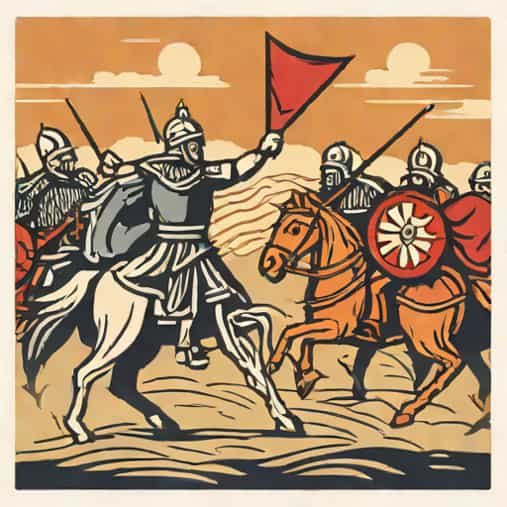
The Battle of Plataea, fought in 479 BCE, was one of the decisive encounters of the Greco-Persian Wars and played a crucial role in shaping the future of Greece. It marked the final land battle between the Greek city-states and the Persian Empire during Xerxes I’s invasion of Greece. While often overshadowed by the famous Battle of Thermopylae, Plataea is equally significant for its strategic impact, military tactics, and the unity it demonstrated among the Greek states. Exploring interesting facts about the Battle of Plataea provides insight into ancient warfare, the resilience of the Greeks, and the historical context that helped shape Western civilization.
Background of the Battle of Plataea
The Battle of Plataea took place during the second Persian invasion of Greece, led by King Xerxes I. Following the famous battles at Thermopylae and Salamis, the Persian forces retreated but remained a significant threat. The Greek city-states, primarily Sparta and Athens, sought to defend their territory and push the Persians out of Greece entirely. The plains near Plataea in Boeotia became the site for the final confrontation between the Persian army and the united Greek forces. The battle was crucial in ending Persian ambitions in Greece and ensuring the survival of Greek independence.
Strategic Importance of Plataea
The location of Plataea was strategically significant because it provided flat terrain suitable for large-scale military engagements. Unlike the narrow passes of Thermopylae, which favored defensive tactics, the open plains allowed the Greeks to deploy their heavy infantry formations effectively. The choice of battlefield demonstrated Greek strategic thinking and helped them leverage their strengths against the numerically superior Persian forces. Controlling this area also protected central Greece and Athens from further invasion.
Key Participants in the Battle
The battle involved several key Greek city-states and leaders, highlighting the rare unity among historically independent and often rivaling polities. The Spartans, known for their disciplined hoplite soldiers, played a central role in the land-based engagement. Athens contributed heavily, particularly after its naval success at Salamis. Other city-states, including Corinth, Plataea, and Megara, also sent forces. On the Persian side, Xerxes I commanded a massive army composed of various contingents from across his empire, including Persians, Medes, and other subject peoples.
Greek Leadership
- Pausanias Spartan regent and military commander who led the Greek forces.
- Aristides Athenian general known for his strategic and organizational skills.
- Other allied generals Representatives from smaller city-states coordinated with the Spartans and Athenians.
Interesting Facts About the Battle of Plataea
While many people know the Battle of Thermopylae for its heroic last stand, the Battle of Plataea offers several fascinating insights and historical facts that make it equally compelling.
1. A United Greek Army
One of the most remarkable aspects of Plataea was the unity among Greek city-states, which were often in conflict. The Spartans, Athenians, Corinthians, and smaller states combined forces to face a common enemy. This coalition was not always easy to manage, as differences in military tactics and political priorities could have caused internal disputes. Despite these challenges, the Greek alliance functioned effectively during the battle, demonstrating the power of collaboration.
2. Persian Numerical Superiority
The Persian army at Plataea was significantly larger than the Greek forces, with estimates ranging from 70,000 to over 100,000 troops. In contrast, the Greek coalition fielded roughly 40,000 men, including heavily armed hoplites and supporting troops. Despite being outnumbered, the Greeks used strategic positioning, discipline, and superior heavy infantry to their advantage, eventually defeating the larger Persian force.
3. Role of Heavy Infantry
Greek hoplites, equipped with heavy armor, shields, and spears, were crucial to the victory at Plataea. Unlike the lightly armed Persian infantry, the hoplites fought in phalanx formations, providing a strong defensive and offensive structure. This military innovation allowed the Greeks to withstand Persian attacks and exploit weaknesses in their formations, demonstrating the effectiveness of heavily armored infantry in ancient warfare.
4. Decisive Leadership
The leadership of Pausanias and Aristides was instrumental in coordinating the diverse Greek forces. They ensured that the army maintained cohesion, disciplined formations, and executed effective counterattacks. Leadership decisions, such as choosing the battlefield and timing the engagement, were critical in maximizing Greek advantages and minimizing the impact of the larger Persian army.
5. End of Persian Invasion
The victory at Plataea effectively ended the Persian invasion of Greece. Following the battle, remaining Persian forces retreated, and Xerxes returned to Persia. This defeat marked the decline of Persian influence in mainland Greece and allowed the Greek city-states to recover, rebuild, and eventually flourish culturally and politically, setting the stage for the Classical Age.
6. Capture of Persian Leaders
During the battle, key Persian commanders were killed, and many soldiers were captured or fled. The loss of leadership and morale significantly weakened the Persian army and contributed to the Greeks’ ability to pursue and expel the remaining forces. The battle showcased how decisive leadership and morale could influence the outcome of a large-scale engagement.
7. Historical Sources
The main accounts of the Battle of Plataea come from ancient historians such as Herodotus and Plutarch. Herodotus provides detailed descriptions of troop movements, strategies, and the political context, though some details are debated by modern historians. These sources offer valuable insights into ancient warfare, leadership, and the sociopolitical dynamics of the Greek world.
Impact on Greek Civilization
The Battle of Plataea had long-lasting effects on Greek civilization. By defeating the Persians, the Greek city-states preserved their independence and cultural identity. Athens and Sparta emerged as major powers, setting the stage for future political, military, and cultural developments. The battle also reinforced the value of alliances and collective action, influencing future Greek strategies in both domestic and foreign affairs.
Legacy in Military History
Plataea is studied as an example of effective coalition warfare, the use of terrain, and the advantages of heavy infantry formations. Military historians examine the battle for lessons in strategy, leadership, and coordination. The engagement also demonstrated that smaller, disciplined forces could defeat larger armies when tactical advantages are leveraged effectively.
SEO-Friendly Keywords
Relevant keywords for readers searching online include interesting facts about the Battle of Plataea, Plataea 479 BCE, Greek victory over Persia, Greek-Persian Wars battles, and ancient Greek military history. These keywords help readers find detailed explanations, historical context, and key insights about this important ancient battle.
The Battle of Plataea stands as a defining moment in ancient history, showcasing the power of unity, strategy, and disciplined military organization. It marked the end of the Persian threat to mainland Greece, preserved Greek independence, and laid the foundation for the cultural and political developments of the Classical Age. Interesting facts about the battle, including the numerical odds, the role of heavy infantry, the leadership of Pausanias and Aristides, and the alliance of city-states, provide a deeper understanding of how the Greeks achieved a decisive victory. Studying Plataea highlights not only military tactics but also the resilience and cooperation that helped shape Western civilization.