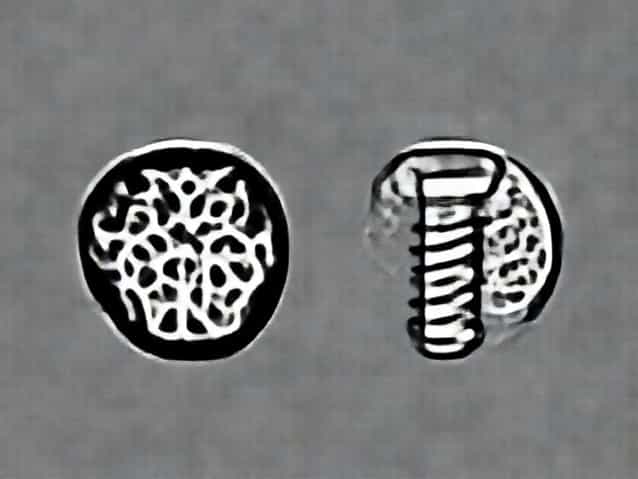
In orthopedic surgery and trauma management, screws are essential tools for bone fixation and stabilization. Among the commonly used screws are cortical screws and cancellous screws. While both types serve the purpose of holding bone fragments together, they have distinct designs, applications, and biomechanical properties. Understanding the difference between cortical and cancellous screws is crucial for surgeons, medical students, and healthcare professionals involved in bone repair and reconstructive procedures. This knowledge ensures optimal fixation, faster healing, and reduced risk of complications in patients undergoing orthopedic interventions.
Overview of Cortical Screws
Cortical screws are designed specifically for use in dense, compact bone, known as cortical bone. Cortical bone forms the outer layer of most bones and provides structural strength and rigidity. These screws are typically used in areas where bone density is high, such as the shafts of long bones including the femur, tibia, and humerus. Cortical screws are known for their fine threads, which run along the entire length of the screw, allowing them to grip dense bone effectively and provide stable fixation.
Design and Characteristics of Cortical Screws
- Threads Fine and closely spaced along the entire shaft.
- Length and Diameter Available in various lengths and diameters to match cortical bone thickness.
- Head Types Usually have flat, countersunk heads to sit flush with bone surface.
- Application Ideal for fixing fractures in compact bone where high stability is required.
Cortical screws achieve stability by engaging the dense outer bone layer. They are often used in combination with plates for internal fixation of fractures, ensuring minimal movement between bone fragments and promoting proper healing. Their fine threads distribute force along the screw, reducing the risk of bone splitting or loosening.
Overview of Cancellous Screws
Cancellous screws, on the other hand, are designed for spongy, less dense bone known as cancellous bone. Cancellous bone is found mainly at the ends of long bones, within the vertebrae, and in the pelvis. It has a porous, trabecular structure that allows for greater flexibility and shock absorption but provides less grip for traditional screws. Cancellous screws have coarse threads concentrated at the tip, which enhances their ability to anchor in spongy bone without stripping or loosening.
Design and Characteristics of Cancellous Screws
- Threads Coarse and widely spaced, mostly concentrated at the tip.
- Length and Diameter Shorter and thicker to provide better grip in soft bone.
- Head Types Can have rounded or flat heads depending on fixation requirements.
- Application Ideal for securing fractures in trabecular or spongy bone areas.
Cancellous screws often provide better purchase in soft bone due to their deeper threads, allowing for stronger anchorage without damaging the surrounding bone structure. They are frequently used in surgeries involving the metaphyseal regions of long bones, vertebral fixation, and pelvic reconstructions.
Key Differences Between Cortical and Cancellous Screws
While both cortical and cancellous screws serve to stabilize fractures, their differences in design, threading, and intended application are significant. Understanding these differences is critical for proper selection during orthopedic procedures.
Thread Design and Placement
- Cortical screws have fine, closely spaced threads along the entire shaft to engage dense cortical bone.
- Cancellous screws have coarse, widely spaced threads concentrated at the tip to anchor in spongy bone.
Bone Type and Application
- Cortical screws are used primarily in compact, dense bone, such as the shaft of long bones.
- Cancellous screws are intended for trabecular, porous bone, commonly found at the ends of long bones and in vertebrae.
Holding Strength and Stability
- Cortical screws provide rigid fixation in dense bone, preventing micro-movement between fragments.
- Cancellous screws provide better purchase in soft bone, preventing screw loosening and bone stripping.
Head Design and Countersinking
- Cortical screws often have flat, countersunk heads to sit flush with the bone surface.
- Cancellous screws may have flat, round, or pan heads depending on fixation requirements and plate compatibility.
Common Clinical Applications
Cortical screws are typically used in procedures such as fixation of diaphyseal fractures, osteotomies, and plating of long bones. Their fine threads and rigid design make them suitable for high-stress areas where maximum stability is required. Surgeons rely on cortical screws to provide predictable outcomes in compact bone fixation.
Cancellous screws are commonly used in metaphyseal fracture fixation, spinal surgery, pelvic reconstruction, and joint replacement procedures. Their design allows them to hold firmly in softer bone areas where cortical screws may not achieve adequate purchase. In cases where bone density is compromised, such as osteoporosis, cancellous screws provide superior anchorage and stability.
Considerations for Screw Selection
Choosing between cortical and cancellous screws depends on several factors, including the type and location of the fracture, bone density, load requirements, and patient-specific anatomy. Surgeons must evaluate the bone quality at the fracture site to determine the appropriate screw type. Using a cortical screw in cancellous bone may lead to poor fixation and loosening, while using a cancellous screw in dense cortical bone may not provide sufficient grip.
Additional Factors
- Length and diameter selection according to bone thickness and fracture size.
- Compatibility with plates, rods, or other fixation devices.
- Consideration of bone quality, including conditions like osteoporosis.
- Load-bearing requirements and expected mechanical stress on the fixation.
In summary, cortical screws and cancellous screws are essential tools in orthopedic surgery, each designed for specific types of bone and clinical applications. Cortical screws are fine-threaded, designed for dense cortical bone, and provide rigid stability. Cancellous screws have coarse, widely spaced threads concentrated at the tip, making them ideal for spongy cancellous bone and soft tissue anchorage. Understanding these differences is critical for surgeons to achieve optimal fixation, promote bone healing, and prevent complications. Proper selection and application of these screws ensure that orthopedic procedures are both effective and safe, enhancing patient outcomes in fracture management and reconstructive surgery.