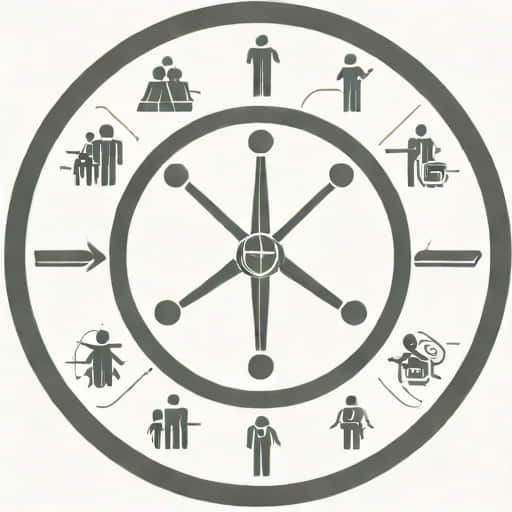
Zimmerman’s Cyclical Model of Self-Regulation is a widely recognized framework in educational psychology that explains how individuals actively guide their learning processes through structured phases of planning, monitoring, and reflection. Unlike traditional models of learning, which often focus solely on instructional methods or external feedback, Zimmerman’s model emphasizes the learner’s active role in setting goals, evaluating progress, and adjusting strategies to achieve success. Understanding this cyclical model is crucial for students, educators, and researchers who aim to improve learning outcomes, enhance motivation, and foster lifelong self-directed learning skills. By breaking down the model into its phases and exploring practical applications, one can appreciate the depth and versatility of Zimmerman’s approach.
Overview of Self-Regulation
Self-regulation refers to the process by which learners take control of their own learning experiences by setting goals, monitoring performance, and adjusting strategies to achieve desired outcomes. It involves cognitive, metacognitive, motivational, and behavioral components, all of which interact dynamically to support effective learning. Zimmerman’s model provides a structured perspective on how these components operate in a continuous cycle, enabling learners to refine their approach over time.
Importance of Self-Regulation
Self-regulation is critical for academic success and personal development. Learners who effectively self-regulate are more likely to
- Set realistic and achievable learning goals
- Maintain focus and motivation over extended periods
- Employ adaptive strategies to overcome challenges
- Reflect on performance to identify areas for improvement
- Develop resilience and persistence in the face of difficulties
By cultivating self-regulation skills, learners become more autonomous, capable of independent study, and better prepared for lifelong learning.
The Cyclical Nature of Zimmerman’s Model
Zimmerman’s Cyclical Model of Self-Regulation is characterized by three primary phases that repeat continuously the forethought phase, the performance phase, and the self-reflection phase. Each phase is interconnected, creating a feedback loop that allows learners to refine their strategies and enhance performance with each cycle.
Forethought Phase
The forethought phase occurs before the learning task begins and involves planning and goal-setting. Key components of this phase include
- Task AnalysisIdentifying the requirements of the learning task, including potential challenges and necessary resources.
- Goal SettingEstablishing specific, measurable, achievable, relevant, and time-bound (SMART) goals to guide the learning process.
- Strategic PlanningSelecting appropriate learning strategies, such as note-taking, summarization, or concept mapping, to achieve goals effectively.
- Self-Motivation BeliefsAssessing confidence levels, outcome expectations, and intrinsic motivation to maintain engagement and persistence.
This phase is crucial because it lays the foundation for focused and intentional learning. Learners who invest time in thorough forethought are better prepared to navigate challenges and apply effective strategies.
Performance Phase
The performance phase occurs during the execution of the learning task and emphasizes self-control and self-observation. Key components include
- Self-ControlApplying strategies identified during the forethought phase and managing distractions or impulses that may hinder progress.
- Self-ObservationMonitoring one’s performance continuously to assess whether the current approach is effective in achieving learning goals.
- Adjusting StrategiesModifying methods or approaches in real-time based on ongoing observations and feedback.
In this phase, learners actively engage with the material, maintaining focus and adapting strategies as necessary. The performance phase is where theory meets practice, allowing learners to test their plans and evaluate effectiveness.
Self-Reflection Phase
The self-reflection phase occurs after completing the learning task and involves evaluating outcomes, identifying successes and failures, and drawing lessons for future cycles. Key components include
- Self-EvaluationComparing performance outcomes against initial goals to determine the degree of success.
- AttributionAnalyzing reasons for success or failure, such as strategy effectiveness, effort, or external factors.
- Adaptive InferencesDrawing conclusions about which strategies were effective and planning adjustments for future learning tasks.
This reflective phase allows learners to close the loop of the cyclical model, integrating insights into subsequent forethought phases and fostering continuous improvement.
Practical Applications of Zimmerman’s Model
Zimmerman’s Cyclical Model of Self-Regulation is widely applied in educational settings to enhance student learning and academic achievement. Some practical applications include
Classroom Instruction
Teachers can use the model to design lessons that explicitly teach self-regulation skills. For example, instructors may guide students in setting learning goals, selecting appropriate strategies, and reflecting on their performance after completing assignments. By embedding self-regulation practices into everyday classroom activities, educators encourage students to become more autonomous and motivated learners.
Academic Interventions
The model can inform interventions for students who struggle with organization, time management, or motivation. Structured programs can help these learners practice forethought planning, monitor their performance effectively, and engage in reflective exercises to improve outcomes. Over time, students internalize these self-regulation habits and become more capable of independent learning.
Higher Education and Lifelong Learning
In higher education, self-regulation is essential due to the increased responsibility placed on learners. Zimmerman’s model provides a framework for managing complex research projects, preparing for exams, and engaging in self-directed study. Beyond formal education, the model supports lifelong learning by helping individuals approach new skills, professional development, and personal growth with structured, reflective strategies.
Benefits of the Cyclical Model
The cyclical nature of Zimmerman’s model offers several advantages
- Promotes continuous improvement through repeated cycles of planning, performance, and reflection.
- Enhances motivation by linking effort and strategy use to tangible outcomes.
- Encourages adaptability by allowing learners to modify approaches based on feedback.
- Develops metacognitive awareness, helping learners understand their own learning processes.
- Supports autonomy and self-directed learning, which are essential for academic and professional success.
Challenges and Considerations
While the model is effective, learners may face challenges in applying it consistently. For instance, students may struggle with accurate self-observation or fail to engage in meaningful reflection. Educators can support learners by providing scaffolding, feedback, and structured guidance, particularly during the early stages of implementing self-regulation strategies.
Zimmerman’s Cyclical Model of Self-Regulation provides a comprehensive framework for understanding how learners actively guide their own learning processes. By integrating forethought, performance, and self-reflection phases, the model emphasizes goal setting, strategic action, and continuous improvement. Its practical applications span classroom instruction, academic interventions, and lifelong learning, making it a versatile and powerful tool for enhancing motivation, adaptability, and metacognitive awareness. Understanding and applying this cyclical model helps learners take ownership of their education, build resilience, and achieve sustained academic success, highlighting the critical role of self-regulation in effective learning.