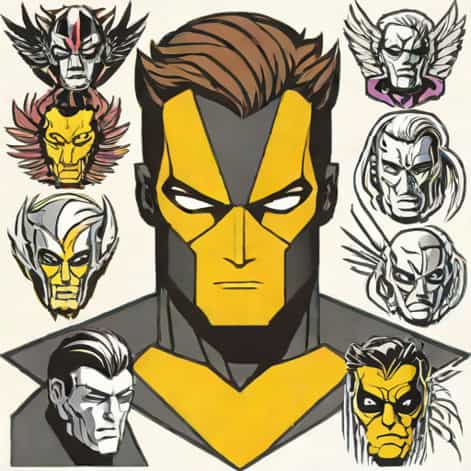
Among the many fascinating characters in the X-Men universe, Nathan Charles Summers stands out as one of the most complex and intriguing. Better known to most fans as Cable, his story weaves together time travel, family legacy, genetic experimentation, and the eternal struggle between hope and despair. His existence is tied deeply to Cyclops (Scott Summers) and Jean Grey’s clone, Madelyne Pryor, giving him a background that is as emotionally charged as it is filled with conflict. Nathan Charles Summers embodies the heart of Marvel’s mutant lore, balancing superhero action with deep psychological and philosophical themes that continue to capture the imagination of fans worldwide.
Origins of Nathan Charles Summers
Nathan Charles Summers was first introduced in Marvel Comics in the late 1980s, and his arrival was shrouded in mystery. The child of Scott Summers (Cyclops) and Madelyne Pryor, who was a clone of Jean Grey created by Mister Sinister, Nathan was destined to play an essential role in mutant history. His story begins tragically, as he was infected with a techno-organic virus that threatened to consume his body. To save him, Nathan was sent into the future where advanced technology and resistance fighters could keep him alive. This decision marked the beginning of his life as a warrior forged by time and hardship.
The Meaning of His Name
The name Nathan Charles Summers carries emotional significance. Nathan was chosen by his parents, while Charles was a tribute to Charles Xavier, the mentor and leader of the X-Men. This combination symbolizes the hope placed upon him to carry on the Summers legacy while also embodying Xavier’s dream of coexistence between mutants and humans. Yet, as his story unfolded, it became clear that Nathan would not only inherit this legacy but also redefine it.
The Transformation into Cable
Over time, Nathan Charles Summers grew into the warrior Cable, a grizzled time traveler armed with both mutant powers and advanced weaponry. His techno-organic infection gave him unique abilities, forcing him to constantly use his telekinesis to keep the virus in check. Instead of being consumed, Nathan turned his condition into a strength, combining mutant abilities with cybernetic enhancements to become one of the most formidable characters in Marvel Comics.
Cable’s Abilities
- Telekinesis strong enough to move massive objects and suppress the spread of his virus.
- Telepathy inherited from his mother’s genetic lineage.
- Expert combat skills developed from decades of training in war-torn futures.
- Advanced weaponry knowledge, often carrying futuristic guns and technology.
This mixture of psychic abilities and futuristic technology gave Cable an edge that few could match. His appearance-an older man with scars, a glowing eye, and a metallic arm-became iconic in 1990s comics.
The Role of Time Travel
A key part of Nathan Charles Summers’ identity lies in his connection to time travel. Raised in a post-apocalyptic future, Cable returned to the past to prevent the events that led to humanity’s downfall. This mission positioned him not only as a warrior but also as a guardian of hope, determined to protect the timeline and ensure a better future for mutants and humans alike. His clashes with villains often involved battles across time, making his story larger than life while still deeply personal.
Conflicts with Apocalypse
Nathan’s greatest nemesis was Apocalypse, the ancient mutant whose philosophy of survival of the fittest clashed directly with Xavier’s dream. Apocalypse infected Nathan with the techno-organic virus, setting in motion his destiny. Much of Cable’s story revolved around resisting Apocalypse’s influence and striving to build a world where mutants could thrive without domination or fear. These confrontations highlighted the balance between destiny and free will, central to Nathan’s character arc.
Family Connections
The Summers family tree is one of the most complex in Marvel Comics, and Nathan Charles Summers is at the heart of it. His father, Cyclops, struggled with the choice to send his son into the future, a decision that haunted him for years. Nathan’s mother, Madelyne Pryor, suffered her own tragic arc, becoming the villainous Goblin Queen after being manipulated by sinister forces. These family ties gave Nathan’s story emotional depth, tying his battles to personal pain and responsibility.
Relationship with Jean Grey
Though Madelyne was his biological mother, Jean Grey became a maternal figure for Nathan after her resurrection. This connection added layers of complexity to his family life, blending themes of identity, legacy, and acceptance. Nathan’s relationship with his extended family, including his half-siblings and descendants, often underscored the generational struggles within the mutant community.
Nathan Summers as a Leader
In addition to his role as a warrior, Nathan Charles Summers often stepped into leadership positions. One of his most notable achievements was founding X-Force, a militant offshoot of the X-Men. Unlike the traditional team led by Xavier, X-Force operated with a more aggressive approach, reflecting Cable’s philosophy that peace often required strength and decisive action. This leadership role demonstrated Nathan’s ability to inspire others while staying true to his mission.
X-Force Philosophy
- Take proactive measures against threats before they escalate.
- Use strategic force when diplomacy fails.
- Embrace a pragmatic approach rather than relying solely on idealism.
- Protect the mutant future through strength and sacrifice.
This vision of leadership made Cable both controversial and respected, showing how Nathan Charles Summers differed from his predecessors while still working toward a common goal.
Appearances Beyond the Comics
Nathan Charles Summers, as Cable, eventually made his way into other media, further solidifying his legacy. He appeared in animated series, video games, and live-action films. Most notably, Josh Brolin portrayed him in Deadpool 2, bringing his gruff demeanor and time-traveling mission to mainstream audiences. The film introduced Cable to viewers who may not have followed the comics, sparking new interest in his backstory and significance to the X-Men universe.
Legacy in Pop Culture
Cable’s popularity during the 1990s made him a symbol of that era’s comic book style gritty, heavily armed, and larger-than-life. Despite changing tastes in superhero storytelling, Nathan Charles Summers continues to resonate because of his depth and humanity. His struggles with the techno-organic virus, his role as a protector of the future, and his ties to the Summers family make him a character with enduring appeal.
The Themes Behind Nathan Charles Summers
What makes Nathan Charles Summers unique is not just his powers but the themes his character represents. His story speaks to the idea of resilience in the face of impossible odds, the burden of legacy, and the moral complexities of leadership. While many superheroes fight villains in the present, Nathan battles for the very survival of the future, making his mission larger in scope but deeply tied to personal loss and responsibility.
Key Themes in His Character
- The struggle between destiny and free will.
- The burden of carrying both family legacy and Xavier’s dream.
- Balancing hope with pragmatism in a hostile world.
- Turning personal suffering into strength and resilience.
These themes elevate Nathan’s story from simple action to one of philosophy, making him a character that continues to inspire debate and admiration.
Nathan Charles Summers is far more than just another mutant in the X-Men universe. His journey from a child infected with a deadly virus to the powerful warrior Cable represents resilience, sacrifice, and hope. By combining family legacy, time travel, and the eternal conflict with Apocalypse, his story becomes one of the richest in Marvel Comics. The name Nathan Charles Summers symbolizes both the weight of history and the promise of the future, ensuring that his role in the X-Men saga will remain vital for generations of fans. His battles are not only against villains but also against fate itself, making him one of the most iconic figures in the world of superheroes.