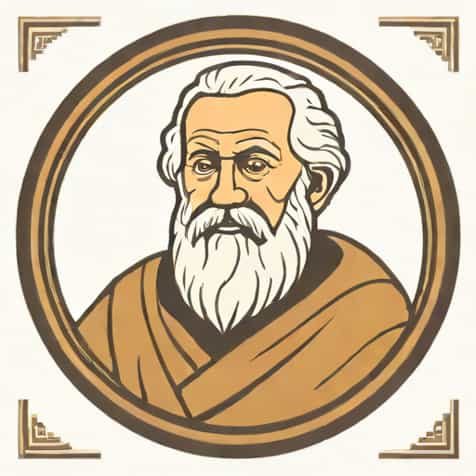
Democritus, a pre-Socratic Greek philosopher, is often remembered as one of the earliest thinkers to propose the concept of the atom as the fundamental building block of matter. His ideas laid the groundwork for modern atomic theory, influencing both philosophy and science for centuries. While there is some uncertainty surrounding the exact details of his life, including his birth and death, historical records provide estimates that place his death around 370 BCE. Understanding when Democritus died is not only a question of dates but also a way to contextualize his contributions within the intellectual landscape of ancient Greece and the broader development of scientific thought.
The Life of Democritus
Democritus was born around 460 BCE in Abdera, a city in Thrace, Greece. He came from a wealthy family, which allowed him to travel extensively and study under various teachers. Known for his curiosity and philosophical insight, Democritus explored a wide range of subjects, including physics, ethics, mathematics, and cosmology. His intellectual endeavors were driven by a desire to understand the nature of reality, leading him to develop the theory that all matter consists of indivisible units called atoms, which move through the void.
Philosophical Contributions
Democritus’ atomic theory proposed that the universe is composed of countless tiny, indivisible ptopics, or atoms, that combine in different ways to form all matter. He argued that changes in the material world result from the movement and interaction of these atoms rather than the influence of divine forces. This mechanistic view of the universe was revolutionary for its time, emphasizing observation, reason, and natural explanations over mythological interpretations. His work influenced later philosophers, including Epicurus and Lucretius, and provided a foundation for modern scientific thinking.
Estimating the Death of Democritus
Pinpointing the exact year of Democritus’ death is challenging due to the scarcity of contemporary records. Ancient sources provide approximate dates based on references in historical texts and accounts by later philosophers. Most scholars agree that Democritus died around 370 BCE, though some estimates range slightly earlier or later. This places his life within the classical period of Greece, a time marked by significant advancements in philosophy, politics, and science.
Historical Context
Understanding the approximate year of Democritus’ death allows historians to situate him within the intellectual environment of ancient Greece. During his lifetime, philosophers such as Socrates and Plato were also active, each contributing to different aspects of knowledge and thought. Democritus’ emphasis on materialism and natural explanations offered an alternative perspective to the more metaphysical approaches of his contemporaries. By the time of his death, his ideas had already begun to influence subsequent thinkers, shaping the philosophical landscape for generations.
Legacy of Democritus’ Work
Democritus’ contributions extend far beyond the approximate year of his death. His atomic theory challenged prevailing views of matter and set the stage for scientific inquiry based on observation and reason. Though his writings survive only in fragments and through the reports of later philosophers, the impact of his ideas is evident in both philosophy and science.
Influence on Philosophy
Democritus’ focus on atoms and the natural world influenced the development of materialist philosophy. Philosophers such as Epicurus adopted his atomic theory to develop ethical and cosmological systems that emphasized the pursuit of happiness and the understanding of nature. In addition, his mechanistic approach contributed to the eventual emergence of empiricism, a key principle in modern science that relies on observation and experimentation.
Influence on Science
While Democritus did not conduct experiments in the modern sense, his conceptualization of atoms inspired centuries of scientific thought. In the 17th and 18th centuries, scientists such as John Dalton and Robert Boyle revisited the idea of atoms, eventually developing empirical atomic theory. Democritus’ early insights demonstrate the enduring relevance of philosophical inquiry to scientific progress, illustrating how ideas from ancient Greece laid the foundations for modern physics and chemistry.
Challenges in Historical Dating
The lack of primary sources makes it difficult to establish precise dates for many figures from ancient Greece, including Democritus. Ancient biographers often relied on oral traditions, secondhand accounts, or philosophical references rather than systematic record-keeping. As a result, historians must piece together information from various sources to estimate the timeline of his life and death. Despite these challenges, the consensus places his death around 370 BCE, providing a useful reference point for understanding the chronology of Greek philosophy.
Evidence from Later Writers
Writings by later philosophers and historians, such as Diogenes Laërtius, provide important clues about Democritus’ life and death. These sources describe his philosophical work, travels, and interactions with other thinkers, allowing scholars to approximate the timeframe of his death. While exact details remain uncertain, these accounts help situate Democritus within the broader context of classical Greek intellectual history.
Significance of Democritus’ Death in Historical Context
The estimated year of Democritus’ death is significant not just as a chronological fact but also as a marker of the transition between different periods of Greek thought. By the time he died around 370 BCE, Greek philosophy was evolving, with Socratic and Platonic ideas gaining prominence. Democritus’ materialist and atomic perspectives offered a counterpoint to these emerging trends, ensuring that his influence persisted even as new philosophical schools developed. His death marked the end of an era for pre-Socratic materialism but also ensured the continuity of his ideas through later thinkers.
Continuing Influence
After his death, Democritus’ ideas were preserved and transmitted through the works of other philosophers, contributing to both philosophical discourse and early scientific theories. His emphasis on rational inquiry, observation, and the fundamental nature of matter resonated through centuries, ultimately influencing the scientific revolution and the development of modern atomic theory. Understanding when he died helps contextualize the timeline of these intellectual developments and the evolution of Western thought.
Democritus, who likely died around 370 BCE, was a pioneering philosopher whose work on atoms and the nature of the universe left a lasting legacy. While the exact year of his death is uncertain due to the scarcity of contemporary records, historical estimates provide a framework for understanding his life and contributions. His emphasis on rational inquiry, natural explanations, and the concept of indivisible ptopics influenced both philosophy and science for centuries, shaping the development of materialist thought and early atomic theory.
By situating Democritus’ death within the broader context of Greek philosophy, we can appreciate how his ideas intersected with other thinkers and movements of the time. His work challenged traditional views, laid the groundwork for future scientific investigation, and demonstrated the enduring power of philosophical inquiry. Remembering the approximate year of his death allows us to place him within the historical timeline of ancient Greece and recognize the continuity of his intellectual impact across centuries, from pre-Socratic philosophy to modern science.