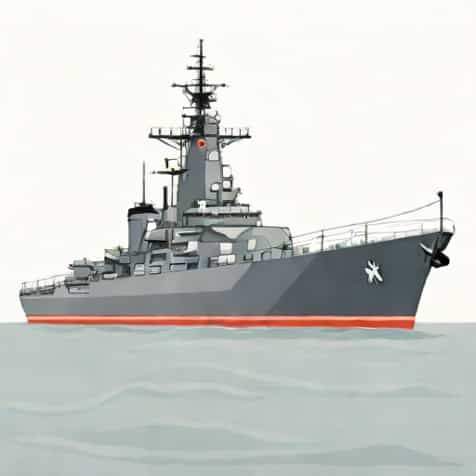
The HMS Dreadnought was one of the most revolutionary warships in naval history. Launched in 1906 by the British Royal Navy, it changed the face of maritime warfare and set a new standard for battleships worldwide. With its innovative design, heavy armament, and powerful engines, HMS Dreadnought made all previous battleships instantly obsolete. Understanding what was the HMS Dreadnought involves exploring its design, purpose, historical context, and lasting impact on naval power in the 20th century.
The Historical Context of HMS Dreadnought
At the start of the 20th century, global powers such as Britain, Germany, and the United States were competing for naval dominance. The Royal Navy, already the largest in the world, wanted to maintain its superiority. Advances in technology, gunnery, and shipbuilding created an opportunity to build a battleship that would outclass all others. HMS Dreadnought was the result of this vision, becoming a symbol of innovation and military might.
Why Britain Built the Dreadnought
Britain’s strategy relied on the two-power standard, meaning its navy should be at least as strong as the next two largest navies combined. As rival nations expanded their fleets, the British Admiralty saw the need for a battleship that would leap ahead of the competition. The Dreadnought was designed not just as an improvement, but as a total transformation of naval warfare.
Design and Innovations of HMS Dreadnought
What made HMS Dreadnought so unique was its combination of firepower, armor, and speed. It introduced features that became the model for all future battleships, giving rise to the term dreadnoughts to describe this new class of warships.
Main Armament
The most striking feature of HMS Dreadnought was its all-big-gun armament. Earlier battleships carried a mixture of large and small-caliber guns, but the Dreadnought carried ten 12-inch guns arranged in five twin turrets. This allowed it to deliver devastating firepower at long ranges, which matched the new naval strategies focused on long-distance gunnery.
Speed and Engines
Another innovation was its propulsion system. HMS Dreadnought was the first battleship powered by steam turbines instead of traditional reciprocating engines. This gave it a top speed of 21 knots, making it faster than most contemporary warships despite its size and heavy armor.
Armor Protection
The ship was heavily armored with thick steel plating, designed to withstand enemy shells. Its layout also improved survivability, as vital sections such as the engine rooms and magazines were well-protected.
Size and Crew
HMS Dreadnought displaced about 18,000 tons and required a crew of around 800 men. Its sheer size and presence symbolized power, influencing both naval strategy and political rivalries.
The Launch and Public Reaction
When HMS Dreadnought was launched in 1906, it captured worldwide attention. Naval observers realized immediately that this ship had rendered all existing battleships outdated. The term dreadnought soon came to describe any battleship of similar design, while older ships were dismissed as pre-dreadnoughts.
Impact on Naval Competition
The launch of HMS Dreadnought sparked a global naval arms race. Countries like Germany, Japan, and the United States rushed to build their own dreadnoughts. The competition was especially fierce between Britain and Germany, as both nations sought to dominate the seas.
Symbol of British Power
For Britain, HMS Dreadnought was more than just a warship; it was a statement of technological leadership and naval supremacy. The ship reassured the public that the Royal Navy would remain unmatched and helped fuel national pride.
The Role of HMS Dreadnought in Service
Despite its groundbreaking design, HMS Dreadnought’s active service was surprisingly limited. By the time World War I began in 1914, many newer dreadnoughts had already surpassed it in power and design.
World War I Service
During World War I, HMS Dreadnought spent most of its time with the British Home Fleet, serving as a deterrent against the German navy. Its most famous action occurred in 1915 when it rammed and sank a German U-boat, U-29. Ironically, this was the only time a battleship sank a submarine during the war.
Obsolescence and Replacement
Only a few years after its launch, HMS Dreadnought was outclassed by newer ships that carried even larger guns and thicker armor. The rapid pace of technological change meant that while the Dreadnought had revolutionized naval design, it was soon outdated itself.
The Legacy of HMS Dreadnought
The true importance of HMS Dreadnought lies not in its wartime service but in its influence on naval history. It marked the beginning of a new era and reshaped the strategies and priorities of the world’s navies.
The Dreadnought Arms Race
The ship triggered an intense naval buildup before World War I. Britain and Germany competed to build the largest fleets of dreadnoughts, a rivalry that increased tensions leading up to the conflict. Other nations followed, creating a global race for naval supremacy.
Changing Naval Warfare
By emphasizing long-range firepower, speed, and heavy armor, HMS Dreadnought set the pattern for 20th-century battleships. Naval battles were no longer about close-range gunnery but about who could strike first and with greater accuracy from a distance.
A Symbol of Technological Progress
Beyond military strategy, the Dreadnought represented the rapid pace of industrial and technological progress. It demonstrated how innovations in engineering could change global politics and military balance overnight.
Criticism and Controversy
While HMS Dreadnought was celebrated, it also faced criticism. Some argued that it made existing fleets obsolete too quickly, forcing nations into costly naval buildups. The enormous expense of building dreadnoughts strained national budgets and shifted resources away from other priorities.
Cost and Economic Burden
Building a dreadnought was extremely expensive, and maintaining fleets of them was even more so. Critics questioned whether the ship’s influence justified the financial burden it placed on Britain and its rivals.
Strategic Limitations
Despite its power, HMS Dreadnought did not radically change naval outcomes in World War I. Naval blockades and submarine warfare often proved more decisive than battleship duels, suggesting that dreadnoughts were not the ultimate answer to naval dominance.
Decommissioning and Fate
After World War I, HMS Dreadnought continued to serve for a short time before being retired. In 1920, it was placed in reserve, and by 1923 it was sold for scrap. Although its active career was relatively brief, its historical impact had already been secured.
So, what was the HMS Dreadnought? It was a revolutionary battleship launched by the British Royal Navy in 1906 that redefined naval power. With its all-big-gun design, steam turbines, and unprecedented firepower, it rendered earlier battleships obsolete and sparked a global arms race. Although its own career was short and quickly overshadowed by newer ships, HMS Dreadnought’s legacy endures as a symbol of technological innovation and naval supremacy. More than just a warship, it was a turning point in military history that influenced world politics and set the stage for the naval conflicts of the 20th century.