Birds are fascinating creatures, and their life cycles often spark curiosity among nature enthusiasts, bird watchers, and children alike. One such bird that captures attention is the moorhen, a small waterbird commonly found in wetlands, ponds, and lakes across various parts of the world. While most people may recognize adult moorhens by their distinctive features, including their dark plumage and red frontal shield, fewer are familiar with the terminology used for their offspring. Understanding what a baby moorhen is called offers insight into the species’ development, behavior, and ecology, and allows nature lovers to communicate more accurately about these interesting birds.
Introducing the Moorhen
The moorhen belongs to the rail family, scientifically known asGallinula chloropus. These birds are widely distributed and known for their ability to thrive in both freshwater and brackish environments. Adult moorhens are medium-sized birds with dark feathers, long legs, and a characteristic red beak with a yellow tip. They are social animals often seen swimming gracefully or foraging along the edges of water bodies for plants, insects, and small aquatic animals.
Physical Characteristics of Adult Moorhens
- Dark plumage, mostly black or dark brown.
- Red frontal shield on the face above the beak.
- Yellow-tipped red beak.
- Long greenish or yellow legs adapted for walking through marshes.
These features make adult moorhens easy to identify in their natural habitat, but the appearance of their young is quite different, leading to special terminology for baby moorhens.
What is a Baby Moorhen Called?
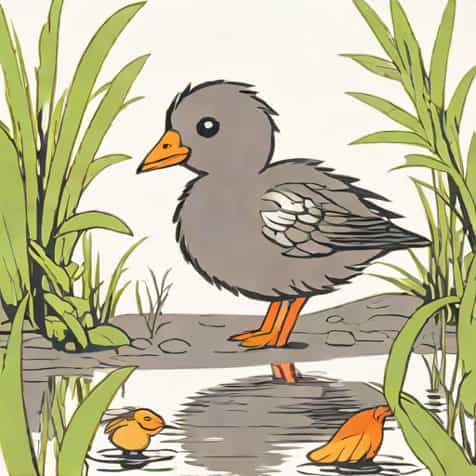
A baby moorhen is commonly called a chick, a term widely used for the young of many bird species. In the case of moorhens, these chicks are particularly interesting because they are precocial, meaning they are relatively mature and mobile shortly after hatching. Unlike some other birds that require extensive parental care and feeding for weeks, moorhen chicks can leave the nest and follow their parents almost immediately, although they still depend on adults for protection and guidance.
Characteristics of Moorhen Chicks
- Soft down feathers, often brownish or gray with yellowish stripes.
- Small size at hatching, weighing only a few grams.
- Bright red or orange markings on their head and face.
- Relatively long legs that allow them to walk and swim shortly after birth.
These characteristics help chicks survive in wetland habitats, where mobility and camouflage are crucial for avoiding predators such as larger birds, fish, and mammals.
The Life Cycle of a Moorhen
Understanding the term chick is just the beginning. Observing the life cycle of a moorhen gives context to the development and behavior of baby moorhens. The life cycle begins when adult moorhens build nests in dense vegetation near water bodies. These nests are usually hidden among reeds or grasses, providing protection and shelter for the eggs and eventual chicks.
Egg Laying and Hatching
- Female moorhens lay a clutch of 5-10 eggs.
- The eggs are pale green or olive in color with speckles.
- Incubation lasts approximately 19-22 days.
- Both parents participate in incubating the eggs and keeping them warm.
From Egg to Chick
Once the eggs hatch, the chicks emerge covered in soft down and are immediately mobile. As chicks, they rely on their parents for food, learning to forage, and protection from predators. They practice swimming and walking under parental guidance, gradually developing the skills needed for survival. This stage is critical for their growth, and it can be fascinating to observe how chicks interact with each other and with adult moorhens.
Behavior of Baby Moorhens
Baby moorhens display several interesting behaviors that are typical of precocial birds. They are quick learners and start to mimic the actions of their parents almost immediately. These behaviors include
- Following parents closely to stay safe.
- Pecking at small pieces of food to learn foraging skills.
- Exhibiting alarm calls or responses when threatened by predators.
- Practicing swimming and diving in shallow water.
These behaviors are crucial for the chicks’ survival and help ensure that they reach maturity successfully.
Growth and Development
As baby moorhens grow, they gradually develop juvenile feathers that resemble those of adults. By a few weeks old, they start losing their down feathers and take on a darker plumage. Over time, their red beak and frontal shield develop, and they transition from dependent chicks to independent juvenile birds. Understanding this growth process helps bird watchers and researchers identify young moorhens accurately in the wild.
Significance of Knowing Baby Bird Terminology
Knowing that a baby moorhen is called a chick is more than just a fun fact. It has practical implications for biology, bird watching, and wildlife conservation
- Scientific CommunicationResearchers and ornithologists use proper terminology to describe different life stages, ensuring clarity in studies and reports.
- Bird WatchingObserving chicks allows enthusiasts to track population health and breeding success in wetland habitats.
- Conservation EffortsUnderstanding the early life stages of moorhens helps conservationists protect nests and manage habitats effectively.
- EducationTeaching children the correct terms for baby animals fosters curiosity and understanding of nature.
Fun Facts About Moorhen Chicks
- Moorhen chicks are able to swim within hours of hatching.
- They communicate with soft peeping calls to signal hunger or alarm.
- Despite being small, they are surprisingly agile and can climb through vegetation.
- Chicks often stay in family groups until they are strong enough to fend for themselves.
a baby moorhen is called a chick. These chicks are precocial birds, meaning they are mobile and partially independent shortly after hatching, although they still rely on their parents for food and protection. Understanding the life stages of moorhens, from eggs to chicks to adults, helps bird watchers, researchers, and nature enthusiasts appreciate the complexity and beauty of these waterbirds. Observing chicks in their natural habitats provides valuable insight into bird behavior, development, and survival strategies. By knowing the terminology and characteristics of baby moorhens, anyone interested in wildlife can communicate more effectively and develop a deeper understanding of avian life.