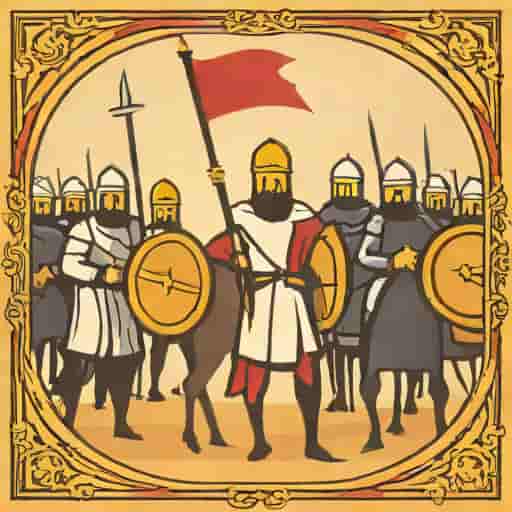
The Albigensian Crusade, which took place from 1209 to 1229, was a major religious and military campaign initiated by the Catholic Church to eliminate the Cathar heresy in southern France. The Cathars, also known as Albigensians, held beliefs that were considered heretical by the Church, emphasizing dualism and rejecting the authority of the clergy. This crusade had far-reaching consequences, not only in terms of religious conformity but also in political and social structures of the region. Understanding what happened during the Albigensian Crusade requires exploring the causes, key events, major figures, and the lasting impact on both the people of Languedoc and the Catholic Church itself.
Background and Causes
The Albigensian Crusade was rooted in the growing influence of the Cathars, a religious group that gained significant following in the Languedoc region of southern France. The Cathars promoted a strict ascetic lifestyle and challenged the wealth and power of the Catholic clergy. They believed in a dualistic universe, where the material world was seen as evil and created by a malevolent force, while the spiritual world was good and created by God. This belief system directly contradicted the teachings of the Church, leading to increasing tension.
Political and Social Factors
In addition to religious concerns, political motives played a significant role. The rulers of the northern French territories saw the wealth and independence of the southern lords as an opportunity to expand their control. The Church’s endorsement of military action against the Cathars provided both a religious justification and a chance for northern French nobles to gain lands in the south. Economic interests, local rivalries, and the desire for political domination intertwined with the religious mission, creating a complex backdrop for the crusade.
The Launch of the Crusade
Pope Innocent III called for the crusade in 1208 following the murder of the papal legate Pierre de Castelnau, who had been sent to negotiate with the Cathar-aligned nobility. The papal call encouraged northern French nobles and knights to take up arms against the Cathars, promising spiritual rewards for participation. The campaign quickly attracted a large number of warriors motivated by both religious zeal and the prospect of acquiring land and wealth in Languedoc.
Early Campaigns and Sieges
The first major military action began with the siege of the town of Béziers in 1209. When the crusaders demanded the surrender of the inhabitants, the citizens refused. The army then attacked the town, resulting in the massacre of thousands of people, including Catholics and Cathars alike. The infamous phrase Kill them all; God will know His own is often associated with this event, reflecting the indiscriminate violence used by the crusaders. Following Béziers, the crusaders captured Carcassonne and other key towns, gradually consolidating control over the region.
Key Figures in the Crusade
- Simon de MontfortA northern French noble who became the leading military commander of the crusade, known for his strict enforcement of papal authority and ruthless tactics.
- Raymond VI of ToulouseA southern lord who tried to defend his territory while negotiating with the Church, often caught between loyalty to his people and pressure from the crusaders.
- Pope Innocent IIIThe pope who initiated the crusade and provided religious legitimacy, aiming to eliminate heresy and strengthen papal influence.
Major Battles and Military Campaigns
The crusade consisted of a series of battles, sieges, and political maneuvers. The northern French army systematically targeted Cathar strongholds, employing both conventional military tactics and terror to suppress resistance. Important battles included sieges at Minerve, Termes, and Lastours, where Cathar defenders often resisted valiantly despite overwhelming odds. These campaigns led to significant loss of life and the eventual capture or surrender of many Cathar leaders.
Use of Religious and Political Pressure
In addition to military action, the Church used tools like excommunication and interdict to pressure local leaders to comply. Nobles who supported the Cathars risked being declared heretics themselves, facing spiritual and social consequences. This combination of spiritual authority and military power allowed the crusaders to weaken resistance and expand control over the Languedoc region.
Impact on the Cathars and the Region
The Albigensian Crusade had devastating effects on the Cathar population and the society of southern France. Thousands of Cathars were executed or forced to convert to Catholicism. The social fabric of the region was altered, as local nobles who resisted were often replaced by northern French rulers loyal to the Church. The cultural and economic autonomy of Languedoc was severely reduced, and the region became increasingly integrated into the political framework of northern France.
Suppression of Catharism
Although the military phase of the crusade ended by the late 1220s, Cathar beliefs persisted for several decades. The Church continued to pursue the Cathars through the establishment of the Inquisition, which investigated and punished heresy systematically. By the 14th century, Catharism had been largely eradicated, marking the crusade as a successful, though brutal, campaign from the perspective of the Catholic Church.
Long-Term Consequences
The long-term consequences of the Albigensian Crusade extended beyond religion. It established the precedent for combining religious authority with political and military action to achieve control over territories. The cultural identity of southern France was transformed, as the imposition of northern French governance, laws, and Catholic orthodoxy reshaped local traditions. The crusade also demonstrated the power of the papacy in mobilizing forces across regions for both spiritual and temporal objectives.
The Albigensian Crusade was a significant and violent chapter in medieval European history. It began as a religious campaign to eradicate Cathar heresy but quickly evolved into a broader political and military struggle in southern France. The crusade featured key figures like Simon de Montfort and Raymond VI, involved brutal sieges and massacres, and led to the suppression of the Cathar movement. Its consequences included both the consolidation of northern French control over Languedoc and the reinforcement of papal authority in the region. Understanding what happened during the Albigensian Crusade provides insight into the interplay of religion, politics, and warfare in the Middle Ages and highlights the lasting impact of this campaign on European history.