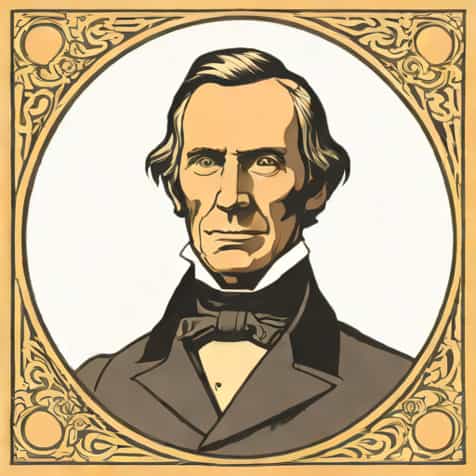
Henry Clay is often remembered as one of the most influential American statesmen of the nineteenth century. Known as the Great Compromiser, he played a pivotal role in shaping U.S. politics, particularly in matters related to slavery, economic development, and the balance between North and South. Yet, when people ask whether Henry Clay was a slaveholder, the question opens up a complex discussion that mixes personal history with national politics. Clay was indeed a slaveholder, but his relationship with slavery was deeply contradictory. On one hand, he publicly spoke about gradual emancipation, while on the other, he continued to own enslaved people throughout much of his life.
Henry Clay’s Background and Early Life
Henry Clay was born in 1777 in Virginia, a state where slavery was deeply entrenched in society and economy. Like many men of his class and time, he was introduced early to a culture that viewed slaveholding as a norm. When he later moved to Kentucky, he established Ashland, his estate near Lexington, which would become a symbol of both his wealth and his reliance on enslaved labor. This setting placed him directly in the world of southern slaveholding gentry, even as his political career made him a national figure who often spoke about the country’s divisions over slavery.
The Ashland Estate
Ashland became the physical and symbolic heart of Clay’s identity. At this estate, enslaved men, women, and children worked in agriculture, domestic service, and skilled trades. Records indicate that Clay owned dozens of enslaved people over the course of his life. These individuals were crucial to maintaining the operations of his property and providing the wealth that supported his political career. While Clay sometimes freed individuals in his will or supported colonization efforts to resettle freed African Americans in Africa, he did not take decisive action to end slavery at his estate during his lifetime.
Henry Clay as a Slaveholder
Yes, Henry Clay was a slaveholder. This fact is sometimes surprising to those who associate him primarily with compromise and national unity. He purchased enslaved people, inherited some through family connections, and relied on their labor throughout his life. Though he occasionally expressed unease about slavery, he never fully separated himself from the institution. In fact, his ownership of enslaved laborers highlighted the moral contradictions of American leaders who sought national solutions while benefiting personally from slavery.
Contradictions in His Public and Private Life
- Clay supported gradual emancipation in theory but delayed action in practice.
- He promoted colonization through the American Colonization Society but never applied it comprehensively to his own estate.
- He spoke of slavery as a national problem, yet his personal wealth depended on enslaved labor.
Clay’s Political Stance on Slavery
Clay’s political career was defined by efforts to hold the Union together despite growing sectional divisions. He was instrumental in brokering compromises that temporarily eased tensions between slaveholding states and free states. His positions on slavery were carefully balanced, often seeking to maintain unity rather than advance a bold moral stance. For example, in the Missouri Compromise of 1820, Clay helped craft legislation that admitted Missouri as a slave state while maintaining a balance by admitting Maine as a free state. This solution postponed but did not resolve the deeper conflict over slavery.
The Compromise of 1850
Perhaps the most famous example of his balancing act was the Compromise of 1850. Clay played a central role in negotiating this package of laws designed to settle disputes following the Mexican-American War. While the compromise admitted California as a free state, it also included a stronger Fugitive Slave Law, which angered many abolitionists. Clay’s role demonstrated his determination to preserve the Union at almost any cost, even if it meant reinforcing aspects of slavery that he privately acknowledged were problematic.
Clay’s Relationship with the Colonization Movement
One of Clay’s notable positions was his involvement in the American Colonization Society, an organization that sought to resettle freed African Americans in Liberia. He served as its president for a time and promoted the idea as a middle ground between abolition and the continuation of slavery. While he saw colonization as a humane alternative, many critics argued that it was a way of avoiding the more difficult work of confronting slavery in America. Furthermore, Clay never implemented colonization broadly for the enslaved people he personally owned.
Impact of Colonization Advocacy
Clay’s support for colonization highlighted his belief that racial coexistence in America would be difficult, if not impossible. While he opposed immediate emancipation and integration, he viewed colonization as a gradual process. However, in practice, colonization never gained the wide support or resources needed to make a significant impact on the millions of enslaved African Americans living in the United States.
Public Perception of Clay as a Slaveholder
During his lifetime, Clay’s position on slavery was both praised and criticized. Southerners often distrusted him for being too willing to compromise, while Northerners accused him of being too willing to accommodate slaveholding interests. His reputation as a slaveholder complicated his legacy, especially as the abolitionist movement grew stronger in the 1830s and 1840s. Activists like William Lloyd Garrison condemned leaders like Clay for failing to take decisive moral action against slavery.
Legacy of Contradiction
Clay’s image as a great compromiser remains central to his legacy, but his role as a slaveholder underscores the contradictions of his life. He was neither a staunch defender of slavery like John C. Calhoun nor a radical abolitionist. Instead, he occupied a middle ground that, while politically pragmatic, left him vulnerable to criticism from both sides of the slavery debate.
Evaluating Clay’s Legacy Today
Modern historians view Henry Clay’s relationship with slavery as a reflection of the larger contradictions of his era. His ownership of enslaved people illustrates how deeply slavery was embedded in American political, economic, and social systems. At the same time, his compromises delayed but did not prevent the Civil War. By attempting to hold the Union together without resolving the moral issue of slavery, he contributed to the very tensions that would eventually erupt in national conflict.
Lessons from Clay’s Example
- Clay’s compromises show the limits of political solutions when moral issues remain unresolved.
- His personal reliance on slavery demonstrates the difficulty leaders faced in separating themselves from the institution.
- His involvement in colonization efforts reveals the complexities of early attempts to deal with emancipation.
So, was Henry Clay a slaveholder? Yes, he was. His personal life at Ashland depended on enslaved labor, and his political career reflected the contradictions of a man who recognized the problems of slavery but never fully abandoned it. Clay’s legacy as the Great Compromiser cannot be separated from his identity as a slaveholder, making him a symbol of both the strengths and weaknesses of American leadership in the antebellum era. By examining his story, we gain a clearer understanding of how the nation’s most pressing moral issue intersected with its politics, shaping the road that eventually led to the Civil War.