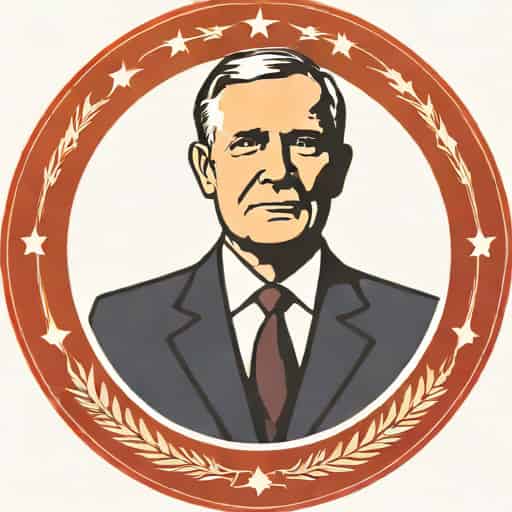
Henry L. Stimson, who served as the United States Secretary of War during both World War I and World War II, played a crucial role in shaping American military and foreign policy in the first half of the twentieth century. Known for his moral integrity, strategic insight, and firm sense of duty, Stimson helped guide the nation through some of its most challenging moments. His leadership during World War II, particularly in overseeing the U.S. Army and the Manhattan Project, left a lasting impact on the world. Understanding Stimson’s legacy as U.S. Secretary of War provides valuable insight into the evolution of American defense policy, international diplomacy, and the moral dilemmas of modern warfare.
Early Life and Career of Henry L. Stimson
Henry Lewis Stimson was born on September 21, 1867, in New York City, into a wealthy and well-educated family. He studied at Phillips Academy, Yale University, and later Harvard Law School, where he developed a strong sense of public service. His early career as a lawyer in New York established him as a man of integrity and intellect, earning him respect across political lines.
Although originally a Republican, Stimson’s commitment to national service transcended party boundaries. His reputation as a reformer and a man of principle soon caught the attention of prominent political figures, paving the way for his entry into public life. By the early 1900s, he had become a key player in legal and political circles, advocating for justice and efficiency in government.
Appointment as Secretary of War under President Taft
Stimson first served as Secretary of War from 1911 to 1913 under President William Howard Taft. In this role, he worked to modernize the U.S. Army and improve military administration. At the time, the United States was not yet a global power, but Stimson recognized the importance of readiness and professionalization within the armed forces.
During this period, he focused on improving the structure of the military, supporting the development of the General Staff system, and promoting better coordination between the War Department and other branches of government. His early reforms laid the groundwork for future military efficiency, which would later prove essential during the world wars.
Views on Military Preparedness
Stimson believed that national security depended on a strong and disciplined military force but also insisted that such power should always be used responsibly. He opposed unnecessary aggression and instead emphasized the moral responsibility of the United States to use its strength in defense of peace and justice. This balanced philosophy defined his entire career and shaped his later decisions during World War II.
Service as U.S. Secretary of State
Before returning to the War Department, Stimson also served as Secretary of State under President Herbert Hoover from 1929 to 1933. His tenure coincided with a turbulent period in international politics marked by the rise of militarism in Asia and Europe. One of his most significant achievements during this time was the development of the Stimson Doctrine.
The Stimson Doctrine, announced in 1932, declared that the United States would not recognize any territorial acquisitions made through aggression, particularly referring to Japan’s invasion of Manchuria. Although the policy had limited immediate effect, it became an important precedent in international law and American foreign policy, reinforcing the principle that conquest through force was illegitimate.
Return as Secretary of War under Franklin D. Roosevelt
Stimson’s most famous and influential role came when President Franklin D. Roosevelt appointed him Secretary of War in 1940, on the eve of the United States’ entry into World War II. Despite being a Republican, Stimson accepted the position in Roosevelt’s Democratic administration, demonstrating his deep commitment to national unity and defense.
At the time, Europe was already engulfed in war, and Stimson’s task was monumental to prepare the United States for a global conflict that many still hoped to avoid. He played a vital role in mobilizing the U.S. military, expanding industrial production, and coordinating with Allied nations to develop a cohesive strategy against Axis powers.
Mobilization and Military Organization
Under Stimson’s direction, the War Department underwent massive expansion. He supervised the drafting and training of millions of soldiers, the construction of bases and supply chains, and the management of wartime industries. His ability to balance military needs with civilian oversight helped maintain both efficiency and accountability in wartime administration.
He also worked closely with General George C. Marshall, the Army Chief of Staff, to create a professional and well-coordinated command structure. Together, they transformed the U.S. Army into one of the most powerful military forces in history.
The Manhattan Project and the Atomic Bomb
One of the most significant and controversial aspects of Stimson’s tenure as Secretary of War was his involvement in the Manhattan Project the secret program that developed the first atomic bomb. Although the project was initially managed by scientists and the military, Stimson oversaw it at the highest administrative level, ensuring secrecy and efficient coordination.
When the bomb was completed in 1945, Stimson faced one of the most difficult moral decisions in modern history whether to use the atomic weapon against Japan. After consulting with military and political leaders, he supported President Harry S. Truman’s decision to deploy the bomb on Hiroshima and Nagasaki, believing it would end the war quickly and save countless lives.
Ethical Reflections on the Atomic Decision
Despite his support for the atomic bombings, Stimson was deeply aware of the moral implications. After the war, he expressed concern about the future of nuclear weapons and the potential for global destruction. He argued that the United States should lead in establishing international controls over atomic energy to prevent further devastation. His reflections show that he was not a man driven by power, but by a sense of duty and moral responsibility.
Postwar Contributions and Legacy
After World War II, Stimson retired from public office but remained active in advising on defense and foreign policy. He continued to write and speak about international cooperation, the dangers of nuclear arms, and the importance of maintaining moral integrity in political decision-making.
His memoirs, published after the war, provide a detailed account of his experiences and offer valuable insights into the ethical challenges faced by world leaders during times of crisis. Stimson’s long career serves as a bridge between the older traditions of diplomacy and the modern realities of global power.
Character and Leadership Style
Henry L. Stimson was known for his disciplined, principled approach to leadership. He valued honesty, hard work, and moral judgment above political ambition. His ability to work effectively across party lines demonstrated a rare commitment to the nation’s interests above personal or partisan goals.
Colleagues and subordinates often described him as firm but fair, demanding excellence while respecting the dignity of others. His leadership helped set standards for future government officials, particularly those responsible for national defense and security.
Historical Impact of Henry L. Stimson
The influence of Stimson’s career can still be seen in American political and military thought. His emphasis on ethical responsibility, combined with practical decision-making, helped define the role of the United States as a global leader in the mid-twentieth century. The policies he helped implement laid the foundation for America’s postwar dominance and its ongoing debates about the balance between power and morality.
- He strengthened the U.S. military and improved wartime efficiency.
- He introduced principles of international law that rejected territorial aggression.
- He oversaw the successful mobilization of American forces during World War II.
- He faced the moral challenge of nuclear warfare with honesty and reflection.
Henry L. Stimson’s career as U.S. Secretary of War stands as a testament to the power of integrity and duty in public service. From modernizing the Army under Taft to leading wartime efforts under Roosevelt, his influence shaped both America’s military capability and its ethical approach to power. His role in the Manhattan Project and his reflections afterward remind us of the complex balance between necessity and morality in times of conflict. Stimson’s life exemplified the ideal of service to one’s country not for personal gain, but for the preservation of justice, order, and humanity in a world forever changed by war.