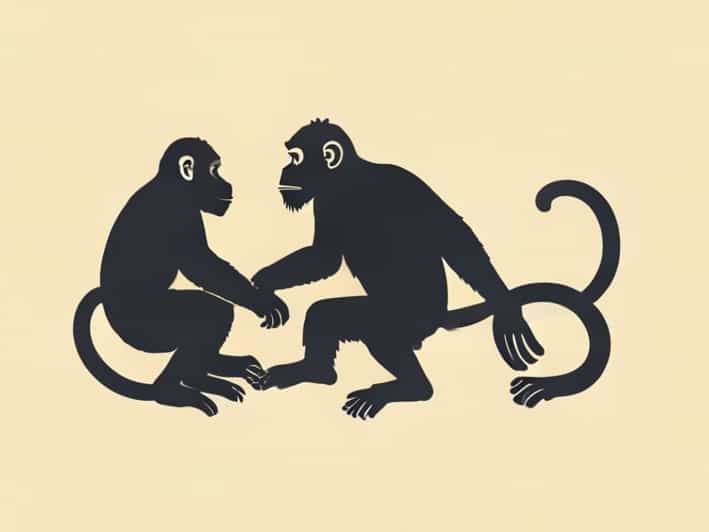
The gestural communication of apes and monkeys is a fascinating area of study in primatology and animal behavior. Unlike humans, who rely heavily on spoken language, non-human primates use a combination of gestures, facial expressions, and body postures to convey messages and interact with their social groups. Understanding these gestures provides insight into their cognitive abilities, social structures, and even the evolutionary roots of human communication. By examining the ways apes and monkeys communicate through movement and physical signals, researchers can better appreciate the complexity and sophistication of primate social life.
Overview of Gestural Communication
Gestural communication refers to the use of intentional movements of the body, limbs, or facial features to convey information to others. In primates, gestures can serve a variety of purposes, including requesting food, initiating play, signaling danger, or establishing social bonds. These gestures are often deliberate, meaning that the individual performing the gesture is aware that it will elicit a response from another member of the group. This intentionality is one of the key indicators of advanced cognitive abilities in apes and monkeys.
Types of Gestures
Gestures can be broadly categorized into several types based on their function and context
- Indicative GesturesThese gestures direct attention to an object or location. For example, a chimpanzee might point to food to request it from another group member.
- Requestive GesturesUsed to request actions from others, such as grooming, play, or sharing food.
- Threat or Aggressive GesturesThese include gestures intended to intimidate or warn others, such as raising the arms, displaying teeth, or lunging forward.
- Affiliative GesturesGestures that promote bonding and cooperation, such as gentle touches, embraces, or presenting body parts for grooming.
- Play GesturesSpecific movements that indicate a desire to engage in play, like bowing, hopping, or extending the hand.
Gestural Communication in Apes
Apes, including chimpanzees, gorillas, bonobos, and orangutans, demonstrate highly complex gestural repertoires. These gestures are not only numerous but also context-dependent, meaning that the same gesture may convey different meanings depending on the situation. Research has shown that apes can combine gestures with facial expressions and vocalizations to enhance communication, demonstrating a multimodal approach similar to human communication.
Chimpanzees
Chimpanzees are perhaps the best-studied primates when it comes to gestural communication. They use gestures to request grooming, invite play, or solicit food. A well-known example is the arm raise gesture, which signals a desire for attention or interaction. Chimpanzees also exhibit referential gestures, such as pointing or reaching toward objects, which indicate an understanding that others can perceive and respond to their intentions.
Gorillas and Bonobos
Gorillas and bonobos use gestures to maintain social cohesion and navigate their complex hierarchies. Bonobos, in particular, are known for their affiliative gestures, such as hugging or offering objects, which help reduce tension and foster cooperation. Gorillas may use a combination of body postures, chest-beating, and hand gestures to assert dominance or convey urgency within the group.
Gestural Communication in Monkeys
While monkeys generally have less complex gestural repertoires compared to apes, they still rely heavily on body movements and signals for social interaction. For example, macaques and capuchins use gestures to coordinate group activities, establish hierarchies, and signal alarm. Some monkey species exhibit culturally specific gestures, where certain signals are passed down within social groups and vary between populations.
Function and Adaptation
Gestural communication in monkeys serves multiple adaptive purposes. By using gestures instead of vocalizations, monkeys can communicate discreetly, reducing the risk of attracting predators. Gestures also allow for fine-tuned social interactions, which are essential in maintaining cohesion within large groups. Social learning plays a key role, as young monkeys observe and imitate older individuals to acquire effective gestural behaviors.
Intentionality and Cognitive Insights
One of the most remarkable aspects of gestural communication in apes and monkeys is intentionality. Researchers have observed that primates adjust their gestures based on the attention and responsiveness of their audience. For instance, if a gesture does not elicit the desired response, the individual may repeat it, modify it, or use an alternative gesture. This indicates a level of cognitive sophistication, suggesting that primates understand the concept of influencing others’ behavior through deliberate communication.
Comparisons with Human Communication
Studying primate gestures provides valuable insights into the evolution of human language. Many gestures observed in apes resemble early forms of non-verbal communication in humans, such as pointing, signaling, or using body language to convey intent. The flexibility, context-dependence, and intentionality of these gestures indicate that the roots of human communication may lie in these complex non-verbal behaviors observed in our closest evolutionary relatives.
Research Methods in Studying Gestures
Primatologists use a variety of methods to study gestural communication. Observational studies in natural habitats or sanctuaries allow researchers to record spontaneous interactions. Controlled experiments, where researchers introduce objects or challenges, help identify the function and intentionality of gestures. Detailed coding systems are often used to classify gestures based on form, context, and response, enabling scientists to quantify and compare communication patterns across species.
Significance of Research
Understanding gestural communication in apes and monkeys has implications for multiple fields, including anthropology, psychology, and linguistics. It helps trace the evolutionary origins of human language, provides insight into social cognition, and informs conservation efforts by enhancing our understanding of primate behavior. Additionally, studying gestures can improve human-animal interactions in sanctuaries, zoos, and rehabilitation programs, promoting better welfare for captive primates.
The gestural communication of apes and monkeys is a rich and complex system that reveals the intelligence, sociality, and adaptability of these primates. Through intentional gestures, facial expressions, and body movements, they convey messages about needs, emotions, and social relationships. Apes, with their extensive repertoires, demonstrate remarkable cognitive abilities that parallel aspects of human communication, while monkeys exhibit practical, adaptive gestures suited to their social environments. Studying these gestures not only enhances our understanding of primates but also sheds light on the evolutionary roots of human communication, emphasizing the importance of non-verbal signaling in social life and survival.