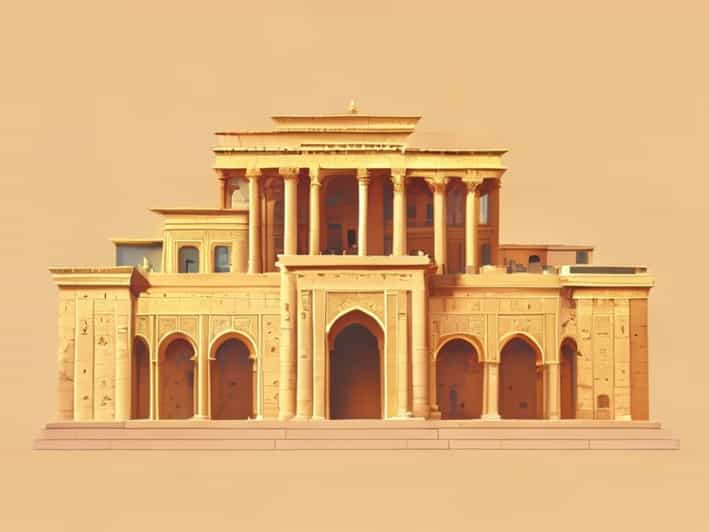
Sennacherib, one of the most powerful kings of ancient Assyria, is renowned for his military campaigns, administrative reforms, and monumental building projects. Among his many accomplishments, the construction of a grand palace stands out as a symbol of his authority and architectural innovation. The palace not only served as a royal residence but also as a center of administration, political gatherings, and ceremonial events. Understanding the location and significance of Sennacherib’s palace provides valuable insights into the political, cultural, and urban development of ancient Assyria during the Neo-Assyrian period.
Location of Sennacherib’s Palace
Sennacherib’s palace was located at Nineveh, which was one of the major cities of ancient Assyria. Nineveh, situated on the eastern bank of the Tigris River in what is now modern-day northern Iraq, served as the capital during his reign. The strategic location of Nineveh allowed Sennacherib to control trade routes, facilitate military operations, and maintain political dominance across the Assyrian Empire. The city’s location along the river also provided a reliable water supply and fertile land for agriculture, supporting a large population and ensuring the sustainability of the empire’s administrative and economic activities.
Significance of Nineveh as a Capital
Choosing Nineveh as the site for his palace was not merely a matter of convenience. The city had historical and symbolic significance, which enhanced Sennacherib’s legitimacy as king. Nineveh had been an important center for the Assyrian state for centuries, known for its temples, marketplaces, and military installations. By establishing his palace in Nineveh, Sennacherib demonstrated continuity with past rulers while also projecting his power and ambition. The city’s size and infrastructure made it suitable for monumental architecture, ceremonial spaces, and urban planning that reflected the grandeur of the Assyrian empire.
Architectural Features of Sennacherib’s Palace
Sennacherib’s palace in Nineveh was renowned for its remarkable architecture and artistic decorations. It combined functional design with aesthetic elements, reflecting the king’s taste and the technological advancements of the time. The palace was built using mud bricks and stone, with large courtyards, audience halls, and private chambers for the royal family. The walls were decorated with intricately carved bas-reliefs depicting military campaigns, hunting scenes, and religious ceremonies. These reliefs served not only as decoration but also as propaganda, illustrating Sennacherib’s achievements and reinforcing his divine mandate as king.
Cultural and Political Importance
The palace functioned as the political and cultural hub of Nineveh. Important decisions regarding the administration of the empire were made within its walls, and foreign envoys were received with grandeur befitting the Assyrian king’s status. The design of the palace, including its monumental gates, grand staircases, and ceremonial halls, allowed Sennacherib to host large gatherings, military parades, and religious ceremonies. The palace thus became a symbol of power, authority, and cultural sophistication, influencing architecture and urban planning throughout the Assyrian empire.
Urban Planning and Infrastructure Around the Palace
Sennacherib did not only construct a palace but also oversaw significant urban development in Nineveh. The area surrounding the palace included fortified walls, gardens, temples, and administrative buildings. One of the most famous features associated with his urban planning is the construction of the Hanging Gardens of Nineveh, often compared to the legendary Hanging Gardens of Babylon. These gardens demonstrated advanced irrigation techniques and the king’s ability to manipulate the landscape for both practical and aesthetic purposes. The integration of the palace with other city structures facilitated administrative efficiency and enhanced the city’s prestige.
Military and Strategic Considerations
Nineveh’s location on high ground along the Tigris River provided natural defenses against invasions. The palace itself was strategically positioned to oversee the city and coordinate military operations. Sennacherib was known for his campaigns against Babylon, Judah, and other neighboring states, and the palace served as a command center for planning and logistics. The combination of fortified architecture and strategic location ensured the security of the king and allowed him to project power across the empire effectively.
Archaeological Discoveries
The ruins of Sennacherib’s palace were first extensively studied in the 19th century by archaeologists who uncovered the remains of the walls, gates, and reliefs. Excavations revealed detailed bas-reliefs that provide insights into Assyrian art, warfare, and daily life. These discoveries confirmed historical records from the Bible and cuneiform inscriptions, which described the king’s accomplishments and the grandeur of his palace. Archaeologists have also uncovered evidence of the advanced engineering techniques used in construction, including sophisticated drainage systems, stone foundations, and carefully designed layouts that accommodated both ceremonial and residential functions.
Impact on Historical Studies
The study of Sennacherib’s palace has had a profound impact on our understanding of Assyrian history. It provides tangible evidence of the wealth, power, and artistic achievements of the Neo-Assyrian Empire. Historians and archaeologists use the palace’s layout and decorations to interpret the political ideology of the time, the king’s relationship with the military and religious institutions, and the cultural priorities of the Assyrian state. The palace is a key reference point for studies on ancient Mesopotamian civilization, architecture, and urban planning.
Legacy of Sennacherib’s Palace
Sennacherib’s palace in Nineveh remains one of the most significant monuments of ancient Assyria. It exemplifies the grandeur, administrative sophistication, and artistic achievements of the empire. Beyond its architectural features, the palace symbolizes the authority of a ruler who combined military prowess with innovative urban planning. Its influence can be seen in subsequent Assyrian and Mesopotamian constructions, where the integration of art, administration, and defense became a model for royal palaces. Today, the ruins of the palace continue to attract scholars, historians, and tourists, preserving the legacy of one of the ancient world’s most remarkable rulers.
Sennacherib’s palace in Assyria, located at Nineveh, serves as a lasting testament to the king’s power, vision, and ingenuity. Its strategic location, monumental architecture, and integration with the city’s infrastructure reflect the political, cultural, and military priorities of the Neo-Assyrian Empire. The palace was not merely a residence but a center of administration, ceremony, and cultural expression. Archaeological discoveries have provided invaluable insights into its design, function, and historical significance, making it one of the most important sites for understanding ancient Mesopotamian civilization. The legacy of Sennacherib’s palace continues to inspire modern scholarship and remains a symbol of Assyrian grandeur and achievement.