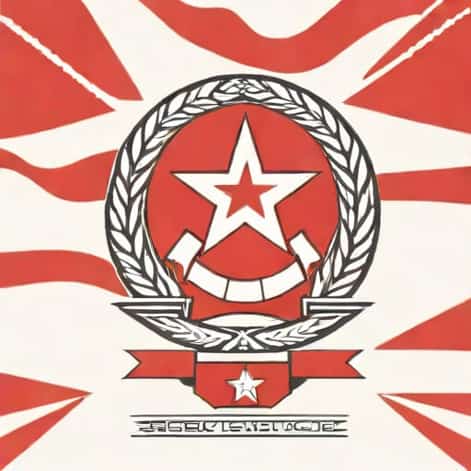
The Russian Soviet Federative Socialist Republic, often abbreviated as RSFSR, was the largest and most influential republic within the former Soviet Union. Spanning vast territories across Eastern Europe and northern Asia, it served as the political, cultural, and economic heart of the USSR for much of the twentieth century. Understanding the history of the RSFSR provides insight into the development of modern Russia, the dynamics of the Soviet Union, and the evolution of socialist governance. From its revolutionary origins to its transformation into the Russian Federation, the story of the RSFSR reflects a century of dramatic change, ideological struggles, and global influence.
Origins and Formation
The Russian Soviet Federative Socialist Republic was officially established on November 7, 1917, following the October Revolution led by the Bolsheviks. After the collapse of the Russian Empire, the Bolshevik Party, under the leadership of Vladimir Lenin, declared a new socialist state founded on the principles of Marxism-Leninism. The RSFSR emerged as the first constitutional socialist republic in the world and became the nucleus for the creation of the Union of Soviet Socialist Republics (USSR) in 1922.
At its founding, the RSFSR inherited the vast territories of the former Russian Empire, including diverse ethnic groups and geographic regions. It was conceived as a federative republic, meaning it was composed of various autonomous regions and republics that recognized the authority of the central Soviet government while maintaining some local autonomy. This federative structure reflected Lenin’s vision of a union of nationalities under the banner of socialism.
The Role in the Soviet Union
When the USSR was formed in December 1922, the RSFSR became the largest and most dominant member of the union. Covering roughly three-quarters of the Soviet territory and containing more than half of its population, the RSFSR was the political and economic engine of the entire Soviet project. Moscow, located within the RSFSR, served as both the capital of the republic and the capital of the Soviet Union, further emphasizing its central role in Soviet governance.
Government and Administration
The RSFSR was governed under the framework of a socialist state controlled by the Communist Party. Its highest legislative body was the Supreme Soviet of the RSFSR, which formally enacted laws and policies, though real political power rested with the Communist Party leadership. The executive branch was headed by the Council of Ministers, which managed economic planning, social programs, and internal administration.
Local government within the RSFSR was organized into oblasts, krais, and autonomous republics. Each administrative unit was designed to provide a measure of self-governance to the various ethnic and regional groups within the republic. However, in practice, the centralized policies of the Communist Party limited true autonomy and ensured that decisions aligned with the broader goals of the Soviet Union.
Economic Development
As the industrial core of the Soviet Union, the RSFSR played a critical role in implementing the centrally planned economy. During the early years of Soviet rule, the government pursued rapid industrialization and collectivization of agriculture. Major industrial centers such as Moscow, Leningrad (now St. Petersburg), and the Ural region became hubs of heavy industry, steel production, and technological innovation.
- IndustrializationMassive investments in factories, transportation, and infrastructure transformed the RSFSR into a global industrial power.
- Agricultural CollectivizationFarms were reorganized into collective and state-run enterprises, though this policy often resulted in food shortages and social unrest.
- Five-Year PlansEconomic development was guided by centralized plans that set production targets for key industries.
The RSFSR’s natural resources, including oil, gas, coal, and timber, fueled both domestic growth and the broader Soviet economy. Despite these achievements, economic planning often led to inefficiencies, shortages, and environmental degradation.
Cultural and Social Life
The RSFSR was not only the economic powerhouse of the USSR but also its cultural center. Russian language, literature, music, and art were heavily promoted as symbols of Soviet identity. Education was universal and free, with a strong emphasis on science and technology to support industrial growth. Health care was also provided as a state service, reflecting the socialist commitment to social welfare.
However, cultural policies were tightly controlled by the state. Writers, artists, and intellectuals were expected to adhere to the principles of socialist realism, a style of art that glorified the Soviet system and the working class. Religious practices were discouraged, and many churches were repurposed or destroyed in an effort to promote atheism as an official state ideology.
Political Repression
The RSFSR, like the rest of the Soviet Union, experienced periods of intense political repression. Under Joseph Stalin’s rule, purges, forced labor camps (Gulags), and widespread surveillance created a climate of fear. Millions of people were arrested, deported, or executed for perceived political crimes. While later leaders such as Nikita Khrushchev introduced reforms and limited liberalization during the period known as the Thaw, political dissent remained dangerous throughout much of the RSFSR’s history.
World War II and the Great Patriotic War
During World War II, known in Russia as the Great Patriotic War, the RSFSR bore the brunt of the Nazi invasion. Cities such as Stalingrad and Leningrad became symbols of Soviet resilience, enduring brutal battles and sieges. The republic’s industries were mobilized to produce weapons, tanks, and aircraft, while millions of soldiers fought on the front lines. Victory in 1945 solidified the RSFSR’s status as a major world power and strengthened the Soviet Union’s position in the emerging Cold War.
Postwar Era and Cold War
After World War II, the RSFSR entered a period of reconstruction and rapid technological advancement. It was at the forefront of the Soviet space program, launching the first artificial satellite, Sputnik, in 1957 and sending the first human, Yuri Gagarin, into space in 1961. These achievements highlighted the RSFSR’s scientific and industrial capabilities and became key symbols of Soviet superiority during the Cold War.
Decline and Transformation
By the 1980s, the Soviet Union, including the RSFSR, faced mounting economic stagnation, political corruption, and public dissatisfaction. Mikhail Gorbachev’s policies of perestroika (economic restructuring) and glasnost (openness) attempted to address these problems by introducing limited market reforms and greater freedom of expression. However, these changes also unleashed nationalist movements and calls for greater autonomy within the Soviet republics.
The RSFSR played a decisive role in the final collapse of the Soviet Union. Under the leadership of Boris Yeltsin, the RSFSR declared sovereignty in June 1990, asserting its authority over Soviet laws. By December 1991, the USSR officially dissolved, and the RSFSR was renamed the Russian Federation, becoming the independent nation known today as Russia.
Legacy of the RSFSR
The Russian Soviet Federative Socialist Republic left a lasting legacy that continues to shape modern Russia and the world. It provided the foundation for the Russian Federation’s political structure, economy, and international identity. Many of the RSFSR’s social policies, such as universal education and state-supported healthcare, influenced post-Soviet reforms, while its historical experiences continue to inform Russian political discourse and national pride.
- Political InfluenceThe RSFSR’s leadership paved the way for Russia’s emergence as an independent global power.
- Cultural ImpactRussian literature, music, and scientific achievements during the Soviet era remain celebrated worldwide.
- Historical LessonsThe RSFSR’s successes and failures offer important insights into the challenges of central planning and authoritarian governance.
The Russian Soviet Federative Socialist Republic was more than just a political entity within the Soviet Unionit was the driving force behind one of the most significant geopolitical experiments of the twentieth century. From its revolutionary birth to its transformation into the Russian Federation, the RSFSR shaped global politics, influenced economic models, and left a cultural legacy that endures today. Understanding its history is essential for grasping the complexities of modern Russia and the lasting impact of the Soviet era on world affairs.