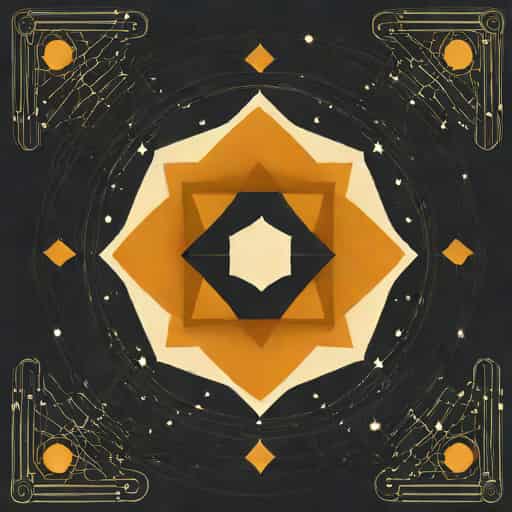
The universe has fascinated humanity for millennia, inspiring countless philosophical, scientific, and artistic explorations. Among these explorations, the concept of the ritualistic geometric design of the universe emerges as a compelling synthesis of spirituality, mathematics, and cosmology. This approach views the cosmos not merely as a physical space but as a structured, symbolic system where geometry reflects divine order and universal harmony. Geometric patterns, ranging from simple circles and triangles to intricate mandalas and fractals, have been used in rituals, sacred art, and architecture to connect humans with cosmic principles and to mirror the structure of existence itself.
Understanding the Concept of Geometric Design in the Universe
Geometric designs in the universe are not purely decorative; they often carry symbolic meanings and serve as tools for meditation, ritual, and contemplation. In many spiritual traditions, geometry represents balance, unity, and the interconnectedness of all things. The ritualistic use of geometric patterns emphasizes the idea that the universe is governed by orderly, predictable principles that can be understood through shapes, proportions, and symmetries.
Historical Significance of Geometry in Spirituality
Throughout history, civilizations have incorporated geometry into their spiritual practices. Ancient Egyptians used geometric alignments in pyramids to align with celestial bodies. Hindu mandalas, rich in complex geometrical patterns, were designed to guide meditation and illustrate the cosmos. Similarly, Islamic art often employs tessellations and repeated geometric patterns to symbolize infinite divine creation. In these traditions, geometry acts as a bridge between the human and the cosmic, reflecting the underlying structure of existence in visually symbolic forms.
Core Principles of Ritualistic Geometric Design
Ritualistic geometric design relies on several key principles that underscore its spiritual and symbolic relevance
- SymmetrySymmetry conveys balance and harmony, representing the equilibrium inherent in natural and cosmic systems.
- ProportionGeometric proportions, often reflecting mathematical constants like the golden ratio, indicate the intrinsic order of the universe.
- RepetitionRepeated patterns symbolize cycles, continuity, and the infinite nature of time and space.
- ConcentricityThe use of circles and concentric designs reflects unity, wholeness, and the layered complexity of the cosmos.
Symbolic Shapes and Their Meanings
Different geometric shapes hold specific symbolic meanings within ritualistic and spiritual contexts. For example
- CircleUnity, infinity, and the cyclical nature of life.
- TriangleStability, direction, and spiritual aspiration.
- SquareGroundedness, order, and material reality.
- SpiralsGrowth, evolution, and the journey of consciousness.
- HexagonHarmony, interconnectedness, and natural balance (as seen in honeycombs and crystal structures).
Ritualistic Applications of Geometric Patterns
Rituals often employ geometric designs as both practical and symbolic tools. Mandalas, labyrinths, and yantras are common examples. These patterns serve multiple purposes in spiritual practice, ranging from meditation aids to ritualistic offerings and ceremonial layouts.
Mandalas and Meditation
Mandalas are intricate circular designs used extensively in Hindu and Buddhist rituals. Practitioners focus on the symmetry and pattern of the mandala to induce a meditative state, facilitating inner reflection and alignment with cosmic order. The act of creating a mandala itself is considered a ritual, with each geometric element symbolizing a component of the universe.
Yantras in Ritual Practices
Yantras are geometric diagrams used in Hindu rituals, often representing deities and cosmic principles. These patterns are employed in ceremonies to invoke spiritual energies, balance the environment, and aid in meditation. The precision and geometry of a yantra are believed to amplify the ritual’s effectiveness by aligning the participant with universal forces.
Labyrinths and Spiritual Journeys
Labyrinths, although more linear than circular mandalas, are another form of geometric ritual design. Walking a labyrinth symbolizes a journey through life, reflection, and spiritual transformation. The geometric layout guides participants along a deliberate path, mirroring the ordered complexity of the universe and reinforcing the interconnectedness of human and cosmic experience.
Mathematics and the Sacred Geometry Connection
The connection between mathematics and the ritualistic geometric design of the universe is profound. Sacred geometry uses mathematical ratios and patterns to explore metaphysical principles. Shapes like the Flower of Life, Metatron’s Cube, and the Golden Spiral embody mathematical perfection and are believed to contain spiritual significance, representing how cosmic laws manifest in form and matter.
The Golden Ratio and Cosmic Harmony
The golden ratio, an irrational number often approximated as 1.618, appears in natural phenomena, from the arrangement of leaves to spiral galaxies. In ritualistic geometric designs, this ratio ensures that patterns mirror the proportions found in nature and the universe, enhancing their symbolic and meditative impact. By aligning human-made designs with these universal proportions, ritualists seek harmony with the cosmos.
Geometric Patterns in Architecture and Sacred Spaces
Many sacred spaces and architectural designs reflect ritualistic geometric principles. Temples, cathedrals, mosques, and pyramids often incorporate symmetry, proportion, and repetition to create a sense of order, awe, and spiritual resonance. These designs are not only visually striking but serve as tools for guiding the mind and spirit, connecting physical space with metaphysical principles.
Alignments with Celestial Bodies
Geometric designs in sacred architecture often align with celestial events, such as solstices, equinoxes, or the movement of stars. This alignment underscores the belief that the universe is a structured, interconnected system, and that ritual spaces should harmonize with cosmic rhythms. By designing these spaces with precise geometry, builders reflect universal order and provide participants with an immersive spiritual experience.
Contemporary Interpretations of Ritualistic Geometric Design
Modern artists, architects, and spiritual practitioners continue to explore ritualistic geometric design of the universe in innovative ways. Digital art, installations, and contemporary mandalas incorporate traditional symbolism with new technology and materials. These interpretations preserve the spiritual and meditative qualities of geometry while making it accessible to contemporary audiences.
Integration with Mindfulness Practices
Today, geometric designs are often used in mindfulness, yoga, and meditation practices. Coloring mandalas, constructing geometric patterns, or visualizing sacred geometry helps practitioners cultivate focus, awareness, and a sense of connection with the universe. The ritualistic aspect of creating or engaging with these designs reinforces their enduring spiritual significance.
The ritualistic geometric design of the universe bridges mathematics, spirituality, and art, providing a framework through which humans can understand and connect with cosmic order. From ancient mandalas and yantras to modern sacred geometry, these patterns symbolize harmony, balance, and the interconnection of all things. By engaging with geometric designs, individuals participate in a timeless tradition that reflects the universe’s underlying structure, supports meditation and ritual, and celebrates the profound relationship between form, meaning, and the cosmos.