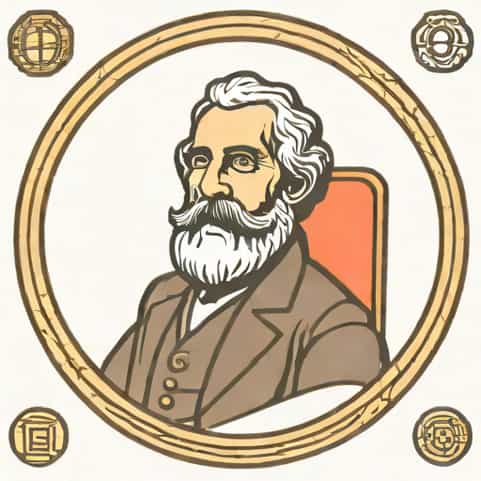
Ferdinand de Lesseps is remembered as one of the most influential figures in the history of engineering and international trade. His visionary work in the 19th century changed the way ships navigated between oceans, significantly shortening travel times and boosting global commerce. Born into a noble French family, de Lesseps’ life was marked by ambition, diplomatic skill, and an enduring legacy tied to one of the greatest engineering feats of his time. His name remains synonymous with the construction of the Suez Canal, a project that reshaped maritime history and facilitated global connectivity.
Early Life and Education
Ferdinand de Lesseps was born on November 19, 1805, in Versailles, France. Coming from a family with diplomatic ties, he was exposed to international affairs and political strategy from a young age. His father, Mathieu de Lesseps, served as a French diplomat, and this environment influenced Ferdinand’s understanding of negotiation, logistics, and cross-cultural communication. De Lesseps studied law, but his interests extended far beyond legal matters, encompassing engineering, commerce, and international diplomacy. This combination of education and upbringing provided the foundation for his later accomplishments in large-scale engineering projects.
Diplomatic Career
Before turning his attention fully to engineering, Ferdinand de Lesseps served in various diplomatic roles. His postings included assignments in Spain, Portugal, and Egypt, where he gained experience in negotiation, administration, and the management of complex projects across national boundaries. In Egypt, he observed the country’s strategic position and the potential for a canal linking the Mediterranean Sea to the Red Sea, an idea that would become central to his legacy. His diplomatic background enabled him to navigate political and financial obstacles, an essential skill for undertaking projects on a scale as ambitious as the Suez Canal.
The Suez Canal Project
The Suez Canal, a 120-mile waterway connecting the Mediterranean and Red Seas, is widely considered Ferdinand de Lesseps’ greatest achievement. The project was envisioned as a means to drastically reduce travel time between Europe and Asia, eliminating the need for long and dangerous voyages around the southern tip of Africa. De Lesseps secured support from both the Egyptian government and French investors, demonstrating his remarkable ability to persuade and organize international stakeholders.
Planning and Construction
Construction of the Suez Canal began in 1859, with de Lesseps leading the project as the head of the Suez Canal Company. The work faced significant technical and logistical challenges, including difficult desert terrain, water management, and labor coordination. Despite these obstacles, de Lesseps’ leadership and innovative approaches allowed the project to progress steadily. He emphasized careful planning, phased construction, and the use of both human and mechanical labor to achieve progress efficiently.
Completion and Impact
The canal was completed in 1869, after ten years of intensive effort. Its opening revolutionized global trade by providing a direct maritime route between Europe and Asia. Ships could now save thousands of miles of travel, drastically reducing transportation time and costs. The canal became a symbol of engineering ingenuity and international cooperation, cementing de Lesseps’ reputation as a visionary and capable leader. Beyond trade, the Suez Canal also had significant geopolitical implications, enhancing Egypt’s strategic importance and influencing European colonial ambitions.
Later Projects and Challenges
After the success of the Suez Canal, Ferdinand de Lesseps attempted to replicate his achievements with the Panama Canal project. He envisioned a similar waterway across Central America to connect the Atlantic and Pacific Oceans. Unfortunately, this venture was plagued by financial mismanagement, engineering difficulties, and tropical diseases such as malaria and yellow fever. Despite his previous success, the Panama project failed, leading to substantial financial losses for investors and tarnishing his personal reputation. This episode illustrated the immense challenges of large-scale engineering projects and highlighted the limitations even experienced leaders like de Lesseps could encounter.
Legacy and Recognition
Despite the failure in Panama, Ferdinand de Lesseps’ contributions to engineering and global trade remain significant. He demonstrated the potential of visionary projects to transform international commerce and infrastructure. De Lesseps received numerous accolades for his work, including recognition from governments and engineering societies worldwide. The Suez Canal continues to be a critical artery of global trade, a living testament to his vision and determination. His life also serves as a reminder of the interplay between ambition, diplomacy, and technical expertise in achieving groundbreaking achievements.
Lessons from Ferdinand de Lesseps’ Life
- Vision and PersistenceDe Lesseps’ foresight in recognizing the strategic value of the Suez Canal and his perseverance through immense challenges highlight the importance of long-term planning and commitment.
- Diplomacy and LeadershipHis success was not only technical but also political. Effective negotiation and the ability to unify diverse stakeholders were key to realizing ambitious projects.
- Learning from FailureThe Panama Canal project underscores that even the most successful innovators face setbacks. Adaptation and resilience are crucial in overcoming obstacles in complex ventures.
Ferdinand de Lesseps remains an iconic figure in history, primarily for his role in creating the Suez Canal. His achievements exemplify how vision, diplomacy, and leadership can combine to produce transformative outcomes. While not all of his endeavors were successful, his contributions to engineering, international trade, and global connectivity are undeniable. Today, the Suez Canal continues to facilitate commerce and serves as a symbol of human ingenuity, a lasting legacy of Ferdinand de Lesseps’ remarkable life and career.