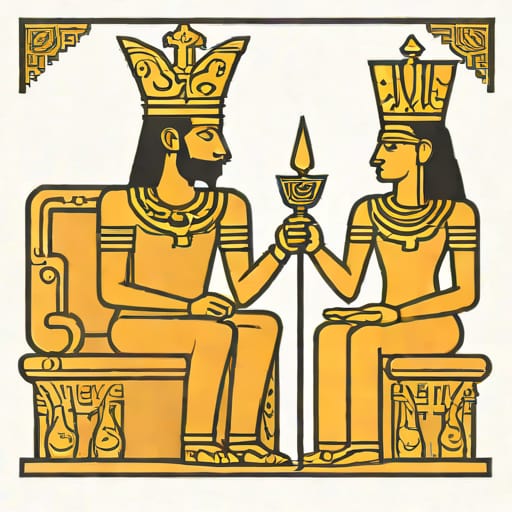
Queen Tiye and Amenhotep III are among the most fascinating figures of ancient Egypt, renowned for their powerful roles during the 18th Dynasty. Their reign represents a period of political stability, cultural richness, and monumental architectural achievements. Queen Tiye, as the Great Royal Wife of Amenhotep III, was not only a key partner in governance but also a significant influence in diplomacy and religious affairs. Their partnership redefined the concept of royal power, blending political authority, cultural patronage, and personal influence. The legacies of Queen Tiye and Amenhotep III continue to captivate historians, archaeologists, and enthusiasts of ancient Egyptian civilization, offering a window into a society that thrived on art, religion, and strategic leadership.
Background of Amenhotep III
Amenhotep III, also known as Amenophis III, ascended to the throne of Egypt around 1386 BCE and ruled for nearly four decades. His reign is often considered a golden age due to the prosperity, peace, and stability he achieved. Amenhotep III focused on strengthening Egypt’s international influence through strategic marriages, diplomacy, and military campaigns when necessary. He initiated extensive building projects, commissioning temples, palaces, and statues that celebrated both his divine status and Egypt’s cultural dominance.
Political and Cultural Achievements
- Maintained diplomatic relationships with neighboring kingdoms through correspondence and alliances.
- Expanded Egypt’s influence across Nubia and the Levant through both diplomacy and military power.
- Promoted the arts and religious architecture, including the famous Colossi of Memnon and numerous temples dedicated to the gods.
- Strengthened the centralized power of the monarchy while maintaining social stability and economic prosperity.
The Role of Queen Tiye
Queen Tiye was the daughter of Yuya and Thuya, influential figures within the Egyptian court. Her intelligence, political acumen, and charisma made her a significant force in her own right. Unlike many queens of the time, Tiye was deeply involved in state affairs, often advising Amenhotep III and participating in diplomatic negotiations. Her presence in religious and political life symbolized the merging of royal and divine authority, reflecting her status as both consort and influential advisor.
Political Influence
Queen Tiye’s political influence extended beyond ceremonial duties. She engaged in correspondence with foreign rulers, facilitated alliances, and may have played a role in shaping key decisions regarding Egypt’s domestic and international policies. Her involvement in state matters set a precedent for later queens and royal women, highlighting the importance of female authority in ancient Egypt’s political framework.
Religious and Cultural Impact
Tiye also held a central role in religious activities, often depicted participating in rituals and ceremonies. Her patronage of the arts and temples contributed to the flourishing of Egyptian culture during Amenhotep III’s reign. Statues and reliefs often portray her alongside the pharaoh, emphasizing her equal importance in both public and religious spheres. These depictions underline her status as a divine partner in the governance of Egypt.
The Relationship Between Queen Tiye and Amenhotep III
The partnership between Queen Tiye and Amenhotep III was remarkable for its collaboration and mutual respect. In many representations, Tiye appears almost as an equal to the pharaoh, suggesting that their marriage was not only a personal union but also a political and strategic alliance. Their correspondence with other kingdoms often included Tiye’s input, highlighting her active role in diplomacy. This partnership is frequently cited as an example of how royal marriages in ancient Egypt could consolidate power and promote political stability.
Collaborative Governance
- Queen Tiye advised Amenhotep III on matters of state, including diplomatic relations and administrative strategies.
- The queen’s influence extended to religious institutions, which she used to reinforce the monarchy’s authority.
- The couple worked together to promote arts, architecture, and cultural projects that reflected their shared vision for Egypt’s prosperity.
Legacy and Succession
The reign of Amenhotep III and Queen Tiye left an enduring legacy. Their son, Amenhotep IV, later known as Akhenaten, inherited the throne and continued many cultural and religious innovations initiated during his father’s reign. Queen Tiye’s influence persisted even after Amenhotep III’s death, demonstrating the lasting impact of her political and cultural contributions. The couple’s monuments, temples, and artistic representations continue to be studied as evidence of a golden age of Egyptian civilization.
Monuments and Cultural Contributions
- The Colossi of Memnon, massive statues representing Amenhotep III, symbolized the grandeur of their reign.
- Temples and shrines dedicated to both the pharaoh and Tiye illustrate their combined religious and political authority.
- Artistic depictions showcase Tiye’s prominence in Egyptian society, emphasizing her influence on culture, religion, and governance.
Historical Significance
The partnership of Queen Tiye and Amenhotep III is historically significant for several reasons. It highlights the power and influence that royal women could wield, challenging assumptions about gender roles in ancient Egypt. Their reign exemplifies the integration of political authority, cultural patronage, and religious legitimacy. Additionally, the prosperity and stability of Egypt during this period provide valuable insights into governance, diplomacy, and social organization in one of the world’s most advanced ancient civilizations.
Influence on Later Egyptian History
- Set a precedent for powerful queens who could influence political and religious affairs.
- Shaped the cultural and religious innovations of subsequent pharaohs, including Akhenaten.
- Enhanced understanding of the interplay between gender, politics, and religion in ancient Egypt.
Queen Tiye and Amenhotep III stand out as one of the most remarkable royal couples in ancient Egyptian history. Their reign marked a period of prosperity, cultural richness, and political stability, supported by a strong partnership that balanced authority, intelligence, and influence. Queen Tiye’s active role in diplomacy, governance, and religious life challenges traditional perceptions of queenship and highlights the potential for female leadership in ancient societies. Amenhotep III’s vision, combined with Tiye’s guidance and support, created a golden age that continues to inspire historians and enthusiasts alike. Their legacy, preserved through monuments, art, and historical records, underscores the enduring importance of their contributions to Egypt’s history and culture.