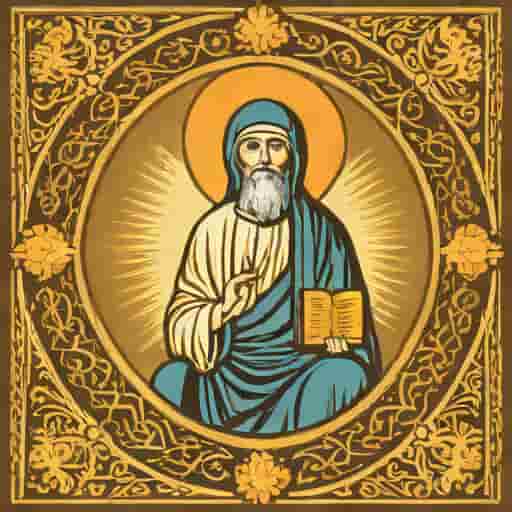
Pseudo-Dionysius the Areopagite remains one of the most enigmatic and influential figures in Christian mystical theology. His writings, often referred to collectively as the Corpus Dionysiacum, have profoundly shaped the development of medieval and modern Christian thought, particularly in areas of mysticism, metaphysics, and the understanding of God’s nature. Among his most studied works is Mystical Theology, which explores the ineffable experience of the divine and the process by which humans can approach God beyond rational understanding. The availability of resources like a PDF of Pseudo-Dionysius’ Mystical Theology allows scholars, theologians, and students to access his profound insights with ease, providing an essential tool for study and reflection in both academic and spiritual contexts.
Who Was Pseudo-Dionysius?
Pseudo-Dionysius, writing in the late 5th to early 6th century, adopted the name of Dionysius the Areopagite, a figure mentioned in the New Testament. While his exact identity remains unknown, the works attributed to him were highly influential, particularly in the Eastern Orthodox, Roman Catholic, and Western mystical traditions. His writings synthesize Neoplatonic philosophy with Christian theology, offering a unique perspective on the nature of God, the cosmos, and the spiritual ascent of the soul. Mystical Theology is especially significant because it systematically explores how humans can engage with the divine mystery through contemplation and negation, emphasizing the limits of human understanding in grasping the essence of God.
The Context of Mystical Theology
Mystical Theology forms part of Pseudo-Dionysius’ larger corpus, which includes treatises such as The Divine Names and The Celestial Hierarchy. This work is notable for its concise and highly philosophical style, focusing on the apophatic approach to theology, also known as negative theology. Apophatic theology emphasizes what cannot be said about God, guiding readers to transcend finite concepts and encounter the divine through silence, contemplation, and mystical union. The text was intended as a guide for advanced spiritual practitioners seeking direct experience of God beyond the limitations of language and rational thought.
Core Concepts in Mystical Theology
Mystical Theology addresses several key concepts central to Pseudo-Dionysius’ vision of the spiritual life
- Apophatic TheologyThis approach teaches that God surpasses all human understanding, and any attempt to define Him is inherently limited. By negating all finite descriptions, one can approach the divine more authentically.
- The Ascent of the SoulThe text describes a spiritual journey in which the soul ascends through stages of purification, illumination, and finally union with God, transcending ordinary consciousness.
- The Role of ContemplationMystical contemplation is central to experiencing God. It involves inner silence, reflection, and detachment from worldly distractions, enabling the soul to perceive divine reality indirectly.
- Union with the DivineThe ultimate goal of mystical theology is union with God, which transcends intellectual knowledge and enters the realm of experiential and ineffable reality.
Apophatic vs. Cataphatic Theology
Pseudo-Dionysius contrasts apophatic (negative) theology with cataphatic (positive) theology. While cataphatic theology speaks of God using affirmations such as God is love or God is wise, apophatic theology emphasizes that God’s true essence cannot be captured in words or concepts. This dual approach encourages the mystic to balance knowledge of God’s manifestations with acknowledgment of divine transcendence, fostering humility and spiritual receptivity.
The Influence of Mystical Theology
Pseudo-Dionysius’ Mystical Theology has had a profound impact on both Eastern and Western Christian thought. In the Eastern Orthodox tradition, his apophatic approach informed the practice of hesychasm, a mystical discipline focusing on contemplative prayer and inner silence. In the Western Church, figures such as Thomas Aquinas, Meister Eckhart, and John of the Cross engaged deeply with his ideas, integrating apophatic insights into scholastic and mystical frameworks. His emphasis on the ineffable and experiential dimensions of God challenged purely rational approaches to theology, inspiring generations of mystics and philosophers to explore the limits of human knowledge and the possibility of direct divine experience.
Modern Study and Accessibility
Today, Mystical Theology is studied in seminaries, universities, and religious communities worldwide. The availability of PDFs and digital editions has made the text more accessible to a global audience, allowing scholars and students to examine the original Greek alongside translations and commentaries. Digital access supports comparative studies, interdisciplinary research, and spiritual practice, enabling readers to engage with Pseudo-Dionysius’ thought in both academic and devotional contexts.
How to Approach Reading Mystical Theology
Engaging with Pseudo-Dionysius requires both intellectual effort and spiritual openness. Here are some tips for approaching the text
- Familiarize Yourself with NeoplatonismUnderstanding the philosophical background helps in interpreting concepts like emanation, hierarchy, and the ascent of the soul.
- Study CommentaryScholarly commentaries provide historical context, interpretive insights, and cross-references to other mystical works.
- Practice ContemplationApproaching the text with quiet reflection allows for experiential engagement with its teachings, complementing intellectual study.
- Read Slowly and CarefullyThe text is concise but dense. Thoughtful reading, often sentence by sentence, is essential for deep comprehension.
- Compare TranslationsDifferent translations can reveal nuances in meaning, making it easier to grasp complex theological concepts.
Relevance for Contemporary Readers
Mystical Theology remains relevant for contemporary readers interested in spirituality, philosophy, and theology. Its focus on apophatic contemplation offers a counterbalance to modern emphasis on rationalism and empirical knowledge, reminding readers of the limitations of human understanding. For those exploring interfaith dialogue, the text also provides insights into the mystical dimensions common across religious traditions, emphasizing the universal quest for transcendent experience and divine connection.
Pseudo-Dionysius’ Mystical Theology stands as a cornerstone of Christian mystical thought, offering profound insights into the nature of God, the spiritual journey, and the pursuit of union with the divine. Its apophatic approach challenges readers to transcend conventional understanding and embrace the ineffable reality of God. The availability of PDFs and digital resources has made this work more accessible than ever, allowing students, scholars, and spiritual seekers worldwide to engage deeply with his teachings. By studying and reflecting on Mystical Theology, readers can explore the intersections of philosophy, theology, and mysticism, gaining a deeper appreciation for the enduring legacy of Pseudo-Dionysius in shaping the spiritual and intellectual landscape of Christianity.