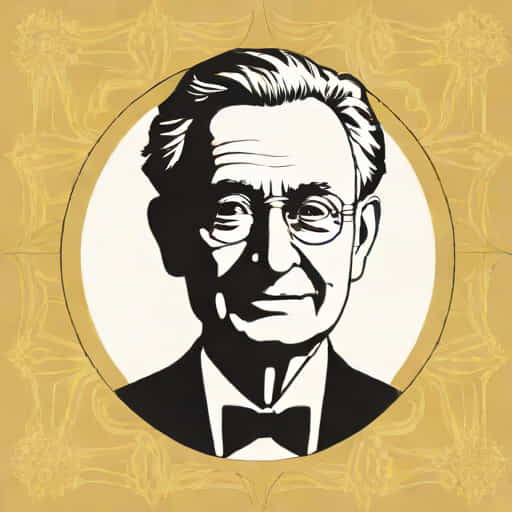
Paul Samuelson was a pioneering economist whose contributions fundamentally transformed the field of economics, earning him the Nobel Memorial Prize in Economic Sciences in 1970. Often regarded as one of the most influential economists of the twentieth century, Samuelson combined rigorous mathematical methods with deep insights into economic theory, creating frameworks that continue to guide research, policy, and education today. His work spanned multiple areas, including welfare economics, public finance, international trade, and macroeconomic theory, making him a central figure in modern economic thought. The recognition of his achievements with the Nobel Prize reflects not only his intellectual brilliance but also the lasting impact of his ideas on both academia and practical economic policy.
Early Life and Education
Paul Samuelson was born in 1915 in Gary, Indiana, into a family that valued education and intellectual curiosity. Showing an early aptitude for mathematics and analytical thinking, Samuelson pursued his undergraduate studies at the University of Chicago, where he developed a strong foundation in economic theory. He later attended Harvard University, where he earned his Ph.D. and deepened his understanding of economic modeling and mathematical analysis. During his academic formation, Samuelson was influenced by leading economists of the time, including Joseph Schumpeter and Alvin Hansen, which shaped his approach to integrating mathematical rigor into economic inquiry.
Early Career and Contributions
After completing his education, Samuelson joined the faculty at the Massachusetts Institute of Technology (MIT), where he would spend much of his career. His early work focused on applying mathematical tools to traditional economic problems, providing precise formulations of concepts that had previously been treated more qualitatively. Samuelson’s efforts bridged the gap between theoretical and empirical economics, demonstrating how abstract models could inform real-world economic understanding. His 1947 book,Foundations of Economic Analysis, is widely considered a seminal work, establishing methods that remain foundational in modern economics.
Nobel Prize Recognition
In 1970, Paul Samuelson was awarded the Nobel Memorial Prize in Economic Sciences for his groundbreaking contributions to economic theory and his ability to advance the scientific understanding of economics. The Nobel Committee recognized Samuelson for several key achievements, including his formalization of economic dynamics, his development of welfare economics, and his analysis of public policy using rigorous mathematical models. The prize highlighted Samuelson’s unique ability to blend theory, mathematics, and empirical analysis, setting a standard for future generations of economists.
Key Contributions Recognized by the Nobel Committee
- Foundations of Economic AnalysisSamuelson’s 1947 work applied rigorous mathematical methods to economic theory, formalizing many concepts and providing tools for analyzing dynamic economic behavior.
- Welfare EconomicsSamuelson developed theoretical frameworks to evaluate social welfare and public policy, establishing methods to analyze the allocation of resources and societal well-being.
- Public FinanceHis work provided insights into taxation, government expenditure, and fiscal policy, helping policymakers assess the impact of economic decisions on growth and equity.
- International TradeSamuelson contributed to trade theory by formalizing models of comparative advantage and factor-price equalization, offering a clearer understanding of global economic interactions.
- Macroeconomic TheoryHe integrated Keynesian concepts with mathematical rigor, influencing how economists study income, employment, and consumption over time.
Impact on Economics Education
Beyond his research, Paul Samuelson profoundly influenced economics education. His textbook,Economics An Introductory Analysis, first published in 1948, became one of the most widely used economics textbooks in the world. By presenting complex economic concepts in a clear and mathematically precise manner, Samuelson made advanced economic ideas accessible to students and professionals alike. The textbook went through multiple editions during his lifetime, incorporating new developments in economic theory and reflecting Samuelson’s commitment to educating future generations.
Bridging Theory and Policy
Samuelson’s work was not limited to academic theory; he actively engaged with policy issues, demonstrating how economic models could inform government decisions. His research on taxation, social welfare, and international trade provided frameworks that helped policymakers evaluate the effects of economic interventions. By integrating theory with practical considerations, Samuelson exemplified the role of economists as both scientists and advisors, influencing public policy decisions across multiple domains.
Legacy and Influence
Paul Samuelson’s legacy extends across the field of economics and beyond. He trained and inspired generations of economists, many of whom went on to receive their own recognition for contributions to theory and policy. His rigorous approach to economic analysis established the use of mathematics as a standard tool in the discipline, shaping research methods in microeconomics, macroeconomics, and international economics. The Nobel Prize in 1970 cemented his status as a leading figure in modern economic thought, highlighting both his intellectual achievements and his enduring influence on economic scholarship.
Recognition and Honors
- Nobel Memorial Prize in Economic Sciences (1970)
- Multiple honorary doctorates from leading universities
- Influence as an educator at MIT, shaping the curriculum for decades
- Author of seminal works, includingFoundations of Economic AnalysisandEconomics An Introductory Analysis
- Mentorship of numerous future economists who became leading scholars and policymakers
Continuing Relevance
The ideas introduced by Paul Samuelson continue to resonate in contemporary economic research and policy. Concepts such as welfare economics, comparative advantage, and the application of mathematical modeling remain central to both theoretical inquiry and practical decision-making. Economists continue to draw on Samuelson’s frameworks when analyzing market behavior, fiscal policy, and international trade, reflecting the enduring relevance of his contributions. The Nobel Prize serves as a testament to the significance of his work, which has helped shape the way economists understand and influence the world.
Influence on Modern Economic Thought
Samuelson’s integration of rigorous mathematical techniques with broad economic insight created a model for future research in the discipline. His methods provided clarity and precision in areas that were previously qualitative and descriptive. Today, economists continue to use tools and concepts pioneered by Samuelson to address issues ranging from economic growth and inequality to policy evaluation and global market analysis. His work remains a foundation upon which modern economic theory and practice are built.
Paul Samuelson’s Nobel Prize in Economic Sciences recognized a lifetime of achievement that fundamentally shaped the field of economics. His combination of mathematical rigor, theoretical insight, and practical application set new standards for research and education. Samuelson’s contributions to welfare economics, public finance, international trade, and macroeconomic theory continue to influence the discipline, guiding both scholarly inquiry and policy decisions. Beyond his technical achievements, his role as an educator and mentor ensured that his ideas would continue to inspire generations of economists. The Nobel Prize not only honored his accomplishments but also celebrated his enduring impact on the study and practice of economics worldwide.