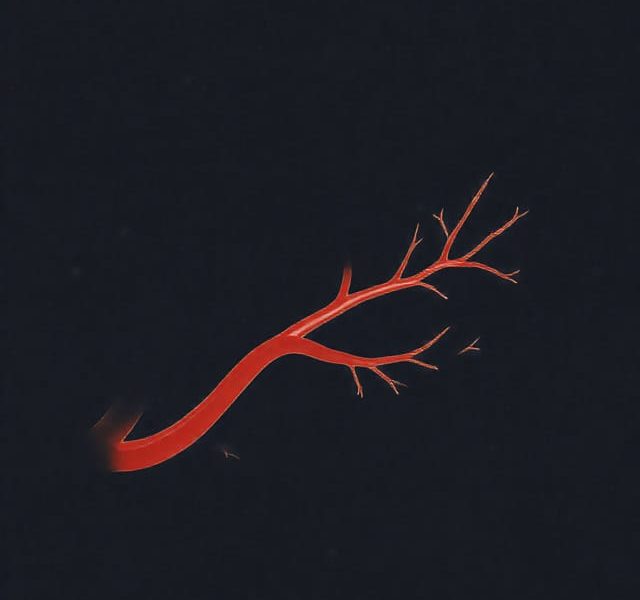
The internal pudendal artery is a key blood vessel that supplies oxygenated blood to the structures of the perineum and external genitalia. Its origin, pathway, and branches are essential for understanding how the pelvic and perineal regions receive their blood supply. This artery plays a major role in the function of muscles and tissues involved in urination, defecation, and reproduction. To fully appreciate the significance of the internal pudendal artery, it is important to examine where it originates and how it connects to other arteries in the pelvic vascular system.
Basic Overview of the Internal Pudendal Artery
Definition and Function
The internal pudendal artery is a branch of the internal iliac artery. It is considered the main artery of the perineum, responsible for delivering blood to the anal canal, perineal skin, external genitalia, and related muscles. Because it serves such vital areas, any compromise in its flow can affect a wide range of pelvic functions.
Origin of the Internal Pudendal Artery
Primary Source
The internal pudendal artery originates from the anterior division of the internal iliac artery. The internal iliac artery itself is one of two terminal branches of the common iliac artery, which arises from the bifurcation of the abdominal aorta at the level of the fourth lumbar vertebra (L4).
Specifically, the internal pudendal artery typically arises in the pelvis, below the level of the sacroiliac joint, along with other anterior branches of the internal iliac artery such as:
- Inferior gluteal artery
- Obturator artery
- Vaginal or uterine artery (in females)
- Middle rectal artery
It is important to note that the exact branching pattern of the internal iliac artery can vary among individuals, but the internal pudendal artery is generally consistent in its origin from the anterior division.
Pathway of the Internal Pudendal Artery
Course Through the Pelvis and Perineum
After originating from the internal iliac artery, the internal pudendal artery follows a curved and complex path:
- It leaves the pelvic cavity through the greater sciatic foramen, passing below the piriformis muscle.
- It then curves around the sacrospinous ligament and reenters the pelvis through the lesser sciatic foramen.
- From there, it enters the pudendal canal (also known as Alcock’s canal), a sheath formed by the fascia of the obturator internus muscle.
Position Relative to Nerves
The internal pudendal artery travels alongside the pudendal nerve and the internal pudendal vein throughout its course. These three structures together form a neurovascular bundle critical for perineal function.
Branches of the Internal Pudendal Artery
Key Branches
As the internal pudendal artery travels through the pudendal canal and into the perineum, it gives rise to several important branches:
- Inferior rectal artery: Supplies the lower anal canal and perianal skin.
- Perineal artery: Provides blood to the superficial perineal muscles and scrotum or labia.
- Artery of the bulb: Supplies the bulb of the penis or vestibule of the vagina.
- Deep artery of the penis or clitoris: Penetrates the erectile tissue (corpora cavernosa).
- Dorsal artery of the penis or clitoris: Runs along the dorsal surface to supply the skin and glans.
Functional Role of Branches
Each branch serves a distinct purpose, contributing to the vascular integrity of the pelvic and perineal organs. For example, the dorsal and deep arteries play crucial roles in erectile function, while the perineal and inferior rectal arteries support skin and sphincter structures.
Anatomical Relationships and Clinical Significance
Relation to Neighboring Structures
Because the internal pudendal artery curves around several ligaments and bones, it lies in close proximity to the sacrotuberous and sacrospinous ligaments, as well as to the ischial spine. This anatomical positioning is important for surgical procedures, especially during operations involving the pelvic floor or perineal area.
Clinical Applications
- Pudendal nerve block: Knowledge of the artery’s location is vital to avoid vascular injury during anesthetic injections for childbirth or minor surgeries.
- Trauma or laceration: Injury to the internal pudendal artery can result in severe bleeding due to its deep and protected position.
- Impotence and erectile dysfunction: Vascular insufficiency involving the internal pudendal artery can be a contributing factor in some cases of erectile dysfunction in males.
- Pelvic imaging: During angiography or MRI, identifying the path of this artery helps in diagnosing vascular or pelvic floor disorders.
Variation and Anatomical Differences
Common Variations
Although the internal pudendal artery usually follows a consistent path, variations in its branching pattern and origin can occur. In some individuals, it may share a common trunk with the inferior gluteal artery. In others, the size and direction of its branches may differ.
Such anatomical variations are significant in surgical planning and diagnostic imaging. Vascular surgeons, gynecologists, and urologists often need to be aware of these possibilities to avoid accidental damage or misinterpretation during procedures.
Role in Reproductive and Urinary Systems
Male Reproductive Function
In males, the internal pudendal artery provides critical blood supply to the penis, perineum, and associated glands. The artery of the bulb, deep artery of the penis, and dorsal artery of the penis are responsible for vascularizing the erectile tissue and surrounding structures, making this artery essential for normal sexual function.
Female Reproductive Function
In females, the internal pudendal artery supplies the clitoris, labia, and vestibular glands. Its branches contribute to the rich vascular network that supports sexual arousal, lubrication, and tissue health in the external genitalia.
Urinary Support
Both in men and women, the artery supports nearby structures of the urethra and external urethral sphincter, playing a role in maintaining urinary continence and healthy bladder function.
Summary of the Internal Pudendal Artery Origin
- Source: Anterior division of the internal iliac artery
- Pathway: Exits pelvis via greater sciatic foramen → wraps around sacrospinous ligament → enters perineum via lesser sciatic foramen
- Main regions supplied: Perineum, anal canal, external genitalia
- Key branches: Inferior rectal, perineal, artery of bulb, deep and dorsal arteries of the penis or clitoris
The origin of the internal pudendal artery from the anterior division of the internal iliac artery marks the beginning of its vital journey to supply the perineum and external genitalia. With its complex path and essential branches, it serves as a central artery in both the male and female reproductive and urinary systems. Recognizing the anatomy and clinical importance of this artery not only aids in medical practice but also deepens our understanding of how vascular supply supports essential pelvic functions.