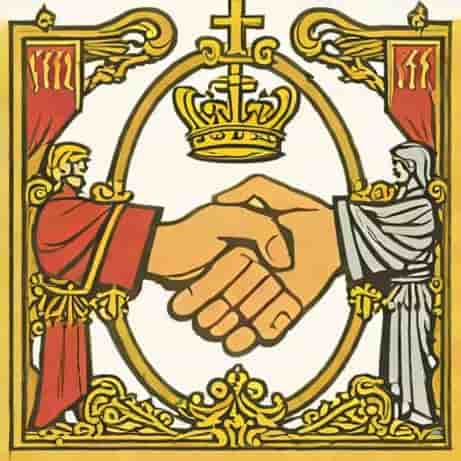
The oath of fealty was a central element of the feudal system in the Middle Ages, representing a formal pledge of loyalty and service from a vassal to a lord. This ritual, deeply embedded in medieval society, was both a personal and legal commitment that defined relationships between different layers of authority, land ownership, and military obligation. In a period where central governance was often weak or fragmented, the oath of fealty provided a structure through which trust, protection, and mutual obligation could be formalized. The practice reflected the complex interplay of power, social hierarchy, and personal honor, forming the backbone of feudal society and influencing political, military, and social interactions across medieval Europe.
Origins and Historical Context
Feudalism and the Need for Loyalty
The medieval period was characterized by the widespread practice of feudalism, a system in which land, protection, and service were exchanged among different social classes. Kings and high-ranking nobles often lacked the resources to maintain a large standing army or centralized authority, so they relied on local lords to manage territories and provide military support. In this context, the oath of fealty became an essential tool for establishing trust between a lord and his vassals. By swearing loyalty, the vassal promised not only military service but also counsel, assistance in legal matters, and the defense of the lord’s interests. In return, the lord guaranteed protection, land rights, or income, creating a mutually beneficial relationship that maintained social order in a decentralized world.
Religious and Ceremonial Influences
Religion played a significant role in the formalization of oaths of fealty. The Church often sanctioned these promises, lending spiritual weight to what might otherwise have been purely contractual agreements. During the ceremony, the vassal would kneel and sometimes place his hands between the lord’s hands, swearing loyalty in the presence of witnesses, often with a religious invocation. By incorporating religious elements, such as invoking God as a witness, the oath carried moral as well as legal consequences. Breaking the oath was not only a breach of contract but also a sin, heightening the personal and social significance of fealty.
Components of the Oath
Declaration of Loyalty
The core element of any oath of fealty was the verbal declaration of loyalty from the vassal to the lord. This pledge explicitly stated the vassal’s commitment to serve the lord faithfully, follow his commands, and protect his interests. The language used in these oaths was often formal and standardized, emphasizing the seriousness of the promise. Such declarations created a clear understanding of responsibilities and expectations, reducing potential conflicts and establishing the basis for hierarchical relationships within the feudal system.
Obligations of the Vassal
The vassal’s obligations extended beyond simple verbal promises. Military service was often the most prominent duty, requiring the vassal to provide armed support during conflicts or to defend the lord’s lands. In addition, vassals might be called upon to offer counsel, assist in legal matters, or provide financial support in times of need. These obligations were not only practical but symbolic, reinforcing the vassal’s role as a trusted agent of the lord. The extent and nature of duties varied depending on the rank of the vassal, the size of the fief, and local customs, but the underlying principle of loyalty remained consistent.
Obligations of the Lord
While the oath primarily focused on the vassal’s loyalty, it also implied reciprocal duties on the part of the lord. Lords were expected to protect their vassals, grant land or income, and ensure justice within their territories. This reciprocal nature of fealty helped stabilize the hierarchical system, as both parties had vested interests in maintaining trust and fulfilling obligations. Failure by the lord to provide protection or honor the terms of the agreement could undermine authority and lead to disputes, emphasizing that the oath was a two-way relationship rather than a one-sided demand for service.
Ceremonial Practices
The Ritual of Homage
Oaths of fealty were often accompanied by the ritual of homage, a formal ceremony in which the vassal physically demonstrated submission and loyalty. This act typically involved kneeling before the lord, clasping hands, and reciting the oath aloud. Witnesses, including other nobles or local officials, were present to attest to the commitment, providing a public record of the agreement. The ceremonial aspect reinforced the social and moral weight of the oath, making it not only a contractual agreement but also a public declaration of honor and duty.
Symbolic Gestures
Various symbolic gestures were integrated into the oath-taking ceremony to emphasize its seriousness. The touching of hands, the raising of the right hand, or the presentation of a token, such as a sword or ring, symbolized the vassal’s pledge. In some cases, the vassal would swear on religious relics or a Bible, underscoring the spiritual dimension of the commitment. These gestures made the oath tangible and memorable, reinforcing the psychological and cultural significance of fealty within medieval society.
Impact on Medieval Society
Political Stability
The oath of fealty played a crucial role in maintaining political stability during the Middle Ages. By formalizing relationships between lords and vassals, it created a network of mutual obligations that helped manage territories, enforce laws, and mobilize military resources. In regions where central authority was weak, the system of oaths ensured that power was exercised through personal loyalty rather than bureaucratic control. This decentralized but structured approach allowed medieval kingdoms to function effectively despite the challenges of communication, travel, and governance.
Social Hierarchy and Class Structure
Fealty also reinforced social hierarchy, establishing clear roles and expectations for different classes. Nobles, knights, and vassals were bound by oaths to serve their superiors, while peasants and serfs were indirectly affected through the obligations imposed on their lords. The oath of fealty created a chain of accountability, linking individuals and families through formalized commitments. By defining relationships and responsibilities, it strengthened the feudal system and provided a framework for loyalty, honor, and authority that permeated all levels of society.
Military Organization
Military organization in the Middle Ages relied heavily on the network of oaths. Lords could call upon vassals to raise troops for defense or war, and these commitments were guaranteed through the oath of fealty. Knights and soldiers who swore loyalty to a lord were bound to serve, providing a predictable source of manpower. This system allowed medieval armies to be mobilized quickly and effectively, demonstrating how fealty was not only a social or moral obligation but also a practical tool for military readiness and territorial defense.
Decline and Legacy
Transition to Centralized Authority
As monarchies became stronger and more centralized in the late Middle Ages, the traditional system of oaths of fealty gradually declined. Kings increasingly relied on standing armies, bureaucratic governance, and legal institutions rather than personal loyalty networks. Nevertheless, the principles of fealty influenced the development of legal and social contracts in later periods, leaving a lasting legacy in the concepts of allegiance, duty, and contractual obligation that extend beyond the medieval context.
Enduring Cultural Influence
The oath of fealty continues to hold symbolic importance in literature, historical studies, and popular culture. Stories of knights, lords, and vassals often center on themes of loyalty, honor, and obligation, reflecting the moral and social significance of fealty in medieval times. The rituals and values associated with the oath have shaped modern perceptions of chivalry, personal responsibility, and hierarchical loyalty, highlighting the enduring influence of this medieval practice.
The oath of fealty in the Middle Ages was more than a simple pledge; it was a cornerstone of the feudal system, connecting individuals and families through a complex web of loyalty, duty, and obligation. Its impact on political stability, social hierarchy, and military organization was profound, shaping the structure of medieval society. Through ceremonial practices, symbolic gestures, and moral and legal weight, the oath of fealty established trust and accountability in a decentralized world. Even as centralized monarchies emerged and feudal obligations evolved, the cultural and historical significance of the oath of fealty continues to resonate, offering insight into the intricate relationships that defined the Middle Ages.