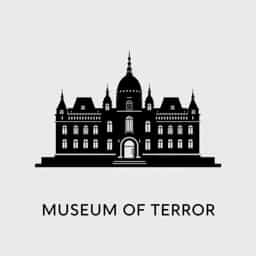
In the heart of Budapest, Hungary, stands a somber yet significant institution known for preserving the painful memory of two totalitarian regimes that shaped the nation’s history. The Museum of Terror is not just a traditional historical exhibition but a powerful reminder of the oppression and suffering endured during both the Nazi and Communist eras. Housed in a building that once served as headquarters for both the Arrow Cross Party and later the State Protection Authority (ÃVH), the museum serves as a monument to victims and a reflection on the destructive power of authoritarian rule.
Historical Background of the Museum
The building at 60 Andrássy Avenue in Budapest holds a dark legacy. Originally constructed in the 19th century, it became infamous during World War II and the Cold War. In 1944, the fascist Arrow Cross Party used it as a base for arresting, torturing, and executing Jews and political dissidents. After the war, the building was taken over by the Communist secret police (ÃVH), who continued similar tactics of fear, surveillance, and brutality.
The Museum of Terror was established in 2002 as a way to commemorate the memory of those who were imprisoned, tortured, and killed under these regimes. It functions as both a museum and a memorial, aiming to educate future generations about the importance of freedom and the dangers of political extremism.
Exhibits and Layout
Structure and Flow
The museum is structured in a way that leads visitors through a chronological journey of Hungary’s turbulent 20th-century history. Starting with the rise of fascism and moving through Nazi occupation, Soviet domination, and the 1956 Hungarian Uprising, the exhibits aim to immerse visitors in each period’s oppressive atmosphere.
- Basement cells and torture chambers are preserved to show the brutal reality of political imprisonment.
- Multimedia installations, including videos, audio recordings, and personal testimonies, enhance the emotional impact.
- Historical artifacts such as uniforms, weapons, and documents help contextualize the exhibits.
Permanent Exhibitions
The permanent exhibition of the Museum of Terror is divided into several key thematic areas, each designed to convey the ideologies and actions of the regimes it explores.
- The Arrow Cross Era: Focuses on the rise of fascism in Hungary and the atrocities committed during Nazi occupation.
- Communist Dictatorship: Highlights surveillance, propaganda, and repression during Soviet-controlled Hungary.
- The 1956 Revolution: Documents the resistance against the Soviet regime and the brutal crackdown that followed.
Visitors often describe the museum as emotionally intense. The immersive atmosphere is deliberate it aims to make people feel the fear, uncertainty, and dehumanization suffered by countless Hungarians.
Educational and Memorial Functions
Raising Awareness
Beyond preserving historical artifacts, the Museum of Terror plays a key educational role. School groups, international visitors, and scholars come to learn about totalitarianism and its effects. The museum offers guided tours, translated exhibit texts, and educational programs for students of all ages.
One of the most impactful parts of the museum is the ‘Hall of Tears,’ a solemn area that honors the victims. Here, portraits line the walls, and the names of those who died are remembered with deep respect.
Symbolism and Reflection
The museum’s very design emphasizes the symbolism of remembrance. For example, the wall of victims features thousands of names etched in memory. A tank sits ominously in the center of the museum, symbolizing the brute force used to silence dissent. The dark lighting and quiet atmosphere evoke a sense of mourning and reflection.
Controversy and Criticism
While widely respected for its commemorative purpose, the Museum of Terror has also faced criticism. Some scholars and critics argue that the museum places too much emphasis on anti-communist sentiment while comparatively underplaying the crimes committed during the fascist period. Others have debated its political alignment, noting that it aligns closely with certain conservative narratives within Hungarian society.
Despite this, the museum continues to attract thousands of visitors annually. Many appreciate its bold and unflinching presentation of history, even if aspects of its interpretation are debated.
Impact on Hungarian Society
The Museum of Terror has become a central part of Hungary’s efforts to come to terms with its past. It not only preserves memory but also serves as a tool for national reflection. Through exhibitions and public programs, the museum fosters dialogue about democracy, justice, and national identity.
In recent years, the museum has also become a focal point during commemorations such as Holocaust Memorial Day and the anniversary of the 1956 revolution. Politicians, educators, and citizens gather to honor those lost and to emphasize the importance of remembering history to prevent its repetition.
Visitor Experience
Practical Information
The Museum of Terror is located at 60 Andrássy Avenue, easily accessible in central Budapest. Open throughout the week except Mondays, the museum is a recommended visit for those interested in history, politics, and human rights.
- Languages: Most displays offer Hungarian and English text. Audio guides in various languages are available.
- Duration: Visitors typically spend 1.5 to 2 hours exploring the museum.
- Accessibility: The building is partially accessible for visitors with mobility challenges.
Emotional Impact
Visitors should prepare for a heavy and sometimes disturbing experience. The Museum of Terror does not shy away from graphic realities. Those who tour the basement, for instance, are directly confronted with the horrors of imprisonment and execution. Many visitors leave deeply moved, and some find it helpful to reflect in nearby public spaces afterward.
The Museum of Terror in Budapest is more than a historical site it is a space of memory, grief, education, and warning. It speaks to the resilience of the human spirit and the necessity of safeguarding democracy and human rights. Through its carefully curated exhibitions and preserved spaces, the museum gives voice to the victims and urges every visitor to remember, reflect, and never forget. In a world where authoritarianism still threatens freedom, such institutions remain essential in shaping an informed and empathetic society.