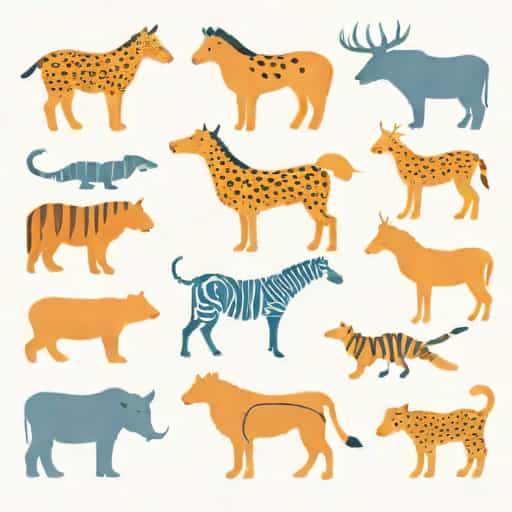
The morphological species concept (MSC) has long served as a foundational approach in biology for classifying and identifying species. It relies primarily on observable physical traits such as size, shape, color, and anatomical features to distinguish one species from another. For centuries, taxonomists and naturalists depended heavily on this concept to catalog biodiversity, especially in environments where other methods of analysis were not available. While the morphological species concept offers simplicity and immediate visual cues, it is increasingly recognized that relying solely on morphology has significant limitations. These limitations can hinder accurate species identification and affect broader biological research, conservation efforts, and ecological understanding.
Understanding the Morphological Species Concept
The morphological species concept is grounded in the idea that members of a species share a set of structural characteristics that are distinct from those of other species. In practical terms, scientists examine organisms’ physical attributes and group individuals with similar traits into the same species. This approach is widely used in paleontology, botany, and zoology, especially in cases where genetic information is unavailable. By focusing on morphological differences, researchers can make rapid assessments of biodiversity, identify new species, and create taxonomic classifications that are visually intuitive.
Advantages of the Morphological Approach
- Accessibility Morphological traits can be observed without specialized equipment, making it easier for field researchers and amateur naturalists to identify species.
- Historical foundation Many species were originally described using morphology, providing a vast catalog for comparison.
- Practical for fossils In paleontology, where DNA and reproductive data are absent, morphology remains the primary tool for species identification.
Key Limitations of the Morphological Species Concept
Despite its historical importance, the morphological species concept faces several inherent challenges. Morphology alone can be misleading due to factors such as phenotypic variation, convergent evolution, and cryptic species. Understanding these limitations is critical for accurate species identification and for preventing errors in ecological and evolutionary studies.
Phenotypic Variation Within Species
One major limitation of the morphological species concept is the occurrence of significant phenotypic variation within a single species. Individuals of the same species may exhibit differences in size, coloration, or shape due to environmental influences, age, sex, or developmental stage. For example, butterflies of the same species may have varying wing patterns depending on geographic location or seasonal changes. If a researcher relies solely on morphology, they may mistakenly classify these variations as separate species, leading to taxonomic inflation and confusion.
Convergent Evolution and Morphological Similarity
Convergent evolution poses another challenge for the morphological species concept. This phenomenon occurs when unrelated species independently evolve similar physical traits as adaptations to comparable environmental pressures. For instance, the streamlined body shapes of dolphins and sharks resemble one another despite belonging to entirely different taxonomic groups mammals and fish, respectively. Morphological similarity in such cases can obscure true evolutionary relationships, causing misidentification if morphology is the sole criterion for classification.
Cryptic Species and Hidden Diversity
The existence of cryptic species is a critical limitation of relying on morphology. Cryptic species are groups of organisms that are genetically distinct yet appear nearly identical in their external traits. Traditional morphological methods often fail to distinguish these species, resulting in underestimation of biodiversity. For example, many amphibians and insects thought to be a single species based on physical appearance have been revealed as multiple distinct species through genetic analysis. Ignoring these hidden species can have implications for conservation, as management plans may inadvertently neglect certain populations.
Hybridization and Morphological Overlap
Hybridization between species further complicates morphological classification. In cases where closely related species interbreed, their offspring may exhibit intermediate traits that do not fit neatly into either parent species category. This overlap challenges the reliability of morphology as a sole criterion for species identification. Botanists, in particular, encounter this issue frequently, as hybrid plants can display a blend of morphological traits from two different species, making accurate classification difficult without genetic testing.
Environmental Influence on Morphology
The environment can significantly influence an organism’s morphology, sometimes creating misleading variations. Factors such as diet, temperature, humidity, and habitat conditions can affect physical traits, a phenomenon known as phenotypic plasticity. For example, fish living in different water conditions may develop distinct body shapes or coloration, even though they belong to the same species. Researchers relying only on morphological characteristics may erroneously classify these environmentally induced variations as different species, highlighting a key limitation of the MSC.
Implications for Taxonomy and Biodiversity Research
The limitations of the morphological species concept have important implications for taxonomy, biodiversity research, and conservation biology. Misidentification or oversimplification of species boundaries can affect ecological studies, resource management, and policy decisions. For example, underestimating species diversity due to cryptic species can lead to inadequate protection measures, potentially putting vulnerable populations at risk. Similarly, overestimating diversity because of morphological variation may result in redundant classifications and inefficient allocation of conservation resources.
Integration with Other Species Concepts
Given its limitations, the morphological species concept is increasingly used in combination with other species concepts. Modern taxonomy often integrates morphological data with genetic, ecological, and reproductive information to achieve more accurate classifications. DNA barcoding, molecular phylogenetics, and ecological niche modeling provide additional layers of evidence that help overcome the constraints of morphology alone. By using a multi-faceted approach, scientists can better capture the true diversity of life and reduce errors in species identification.
While the morphological species concept remains a useful tool for identifying and classifying organisms, its limitations are significant and well-documented. Phenotypic variation, convergent evolution, cryptic species, hybridization, and environmental influences can all obscure accurate species recognition. Reliance solely on morphological traits risks misclassification and can compromise scientific research and conservation efforts. The integration of morphology with molecular, ecological, and reproductive data offers a more robust approach, allowing scientists to understand biodiversity more comprehensively. Recognizing the strengths and weaknesses of the morphological species concept is essential for informed decision-making in taxonomy, ecology, and conservation.
Ultimately, the morphological species concept represents a starting point rather than a definitive method for species identification. As technology advances and our understanding of genetics and evolutionary biology deepens, morphology alone may no longer suffice. Nevertheless, it continues to provide valuable insights, particularly in fieldwork and paleontology, where other data may be inaccessible. Balancing morphological analysis with modern techniques ensures that biodiversity is accurately documented and preserved for future generations.