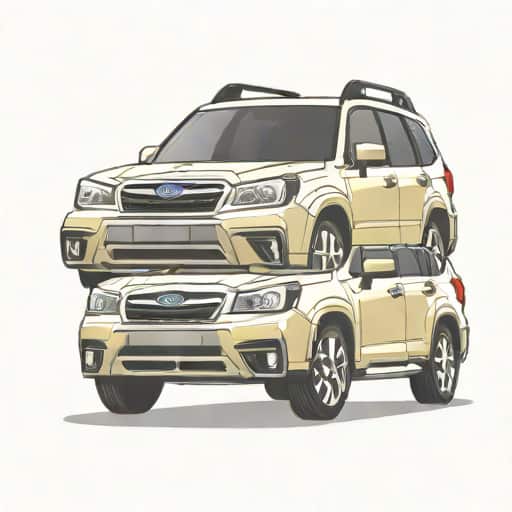
The Subaru Forester has become a popular choice among compact SUV enthusiasts due to its blend of practicality, reliability, and off-road capability. One aspect that often comes under consideration when choosing a vehicle is its size, particularly the length of the vehicle. The length of a car affects parking, maneuverability, cargo space, and interior room, all of which are important factors for families, outdoor enthusiasts, and daily commuters. Over the years, the Subaru Forester has seen several generational changes, with each version offering slight adjustments to its dimensions, including length. Understanding the length of the Subaru Forester across its various models can help buyers make informed decisions when evaluating its fit for their lifestyle.
Overview of Subaru Forester Dimensions
The Subaru Forester is categorized as a compact crossover SUV, which places it between smaller hatchbacks and larger SUVs in terms of size. One of its main advantages is that it balances interior space with drivability in urban and suburban environments. The overall length of the Subaru Forester has varied slightly across its five generations, but it generally falls within the range of approximately 4.5 to 4.6 meters, or about 177 to 181 inches. This length contributes to its reputation for spacious interiors while maintaining manageable exterior dimensions for everyday use.
First Generation (1997 2002)
The first-generation Subaru Forester marked the introduction of Subaru’s compact SUV approach, combining features of the Subaru Impreza with a higher ride height and all-wheel drive. The length of the first-generation Forester was approximately 4,420 millimeters (about 174 inches). Despite being shorter than later models, this Forester offered a surprisingly spacious cabin relative to its size. Its compact length made it highly maneuverable in city traffic while still providing decent cargo space for small families or outdoor activities.
Second Generation (2002 2008)
The second-generation Forester saw an increase in dimensions to improve passenger comfort and cargo capacity. The length was extended to around 4,515 millimeters (approximately 178 inches). This increase allowed for more legroom, particularly for rear-seat passengers, and slightly larger cargo space. The additional length did not compromise the Forester’s ability to navigate tight urban streets, maintaining its appeal for drivers seeking both practicality and comfort.
Third Generation (2008 2013)
The third-generation Subaru Forester continued the trend of incremental growth, reaching a length of roughly 4,595 millimeters (about 181 inches). This model emphasized interior flexibility and cargo versatility, with a taller roofline and a slightly longer wheelbase. The increase in length contributed to improved stability on highways and better handling off-road, all while retaining the Forester’s reputation as a practical, family-friendly SUV.
Fourth Generation (2013 2018)
The fourth-generation Forester focused on safety, technology, and styling updates while maintaining dimensions similar to the previous generation. Its length was approximately 4,595 millimeters (181 inches), similar to the third generation. This consistency in size reflected Subaru’s satisfaction with the Forester’s balance between cabin space and overall maneuverability. Enhancements during this period included more efficient engines, updated infotainment systems, and advanced safety features, but the vehicle’s footprint remained ideal for urban and suburban driving.
Fifth Generation (2019 Present)
The current, fifth-generation Subaru Forester has a length of around 4,625 millimeters (182 inches). This latest model emphasizes safety, fuel efficiency, and technology integration. The slightly increased length provides more interior space, especially for rear passengers and cargo, while continuing to offer excellent all-wheel-drive capability for off-road adventures. Its longer body also improves highway stability and ride comfort. Despite the growth, the Forester remains compact enough to navigate parking areas and city streets without difficulty.
Impact of Vehicle Length on Practical Use
The length of the Subaru Forester has practical implications for daily use, particularly for families, commuters, and adventure enthusiasts. A longer vehicle can provide more interior space and a smoother ride but may reduce maneuverability in tight spaces.
Parking and Urban Maneuverability
While the Forester has grown slightly with each generation, it remains one of the more manageable SUVs for city driving. Its length, which ranges from approximately 4.42 meters to 4.625 meters, allows drivers to navigate narrow streets and fit into most standard parking spaces comfortably. The combination of a compact footprint and elevated seating provides excellent visibility for urban environments.
Cargo and Interior Space
The incremental increases in length over the generations have contributed to expanded cargo capacity and interior room. For families or individuals who frequently transport sports gear, groceries, or luggage, the Forester’s longer body allows for more storage options. Features like foldable rear seats and adjustable cargo floors further enhance the practical use of interior space.
Highway Stability and Comfort
A longer wheelbase and body length improve stability at higher speeds, providing a smoother and more comfortable ride on highways. The fifth-generation Forester benefits from these dimensional improvements, allowing for confident handling on both paved roads and light off-road terrain. Longer vehicles typically offer a better balance between comfort and control, which is evident in Subaru’s evolution of the Forester.
Comparing Subaru Forester Length to Competitors
When comparing the Subaru Forester’s length to other compact SUVs, it falls in the mid-range. Vehicles like the Honda CR-V and Toyota RAV4 have similar lengths, generally between 4.5 to 4.7 meters. This places the Forester in a competitive position, providing ample interior space without becoming unwieldy. Its dimensions make it appealing for buyers seeking a vehicle that is versatile enough for daily commuting, family needs, and recreational use.
Advantages of Forester’s Length
- Balance between interior space and maneuverability
- Suitable for both urban and suburban driving
- Enhanced stability on highways and off-road conditions
- Compatibility with standard parking dimensions
Considerations for Buyers
- Although manageable, longer models may require extra attention in tight parking lots.
- Smaller garages or compact urban spaces may influence preference for earlier generation models.
- Length is one of several factors; width, height, and turning radius should also be considered.
The Subaru Forester has evolved over five generations, gradually increasing in length from approximately 4.42 meters in the first generation to around 4.625 meters in the current model. These incremental changes have improved interior space, cargo capacity, stability, and overall comfort while maintaining the SUV’s renowned maneuverability. Understanding the length of the Forester is crucial for buyers evaluating its fit for parking, urban driving, and overall usability. With its balanced dimensions, the Forester continues to be a popular choice among compact SUV buyers who value practicality, comfort, and Subaru’s signature all-wheel-drive performance.