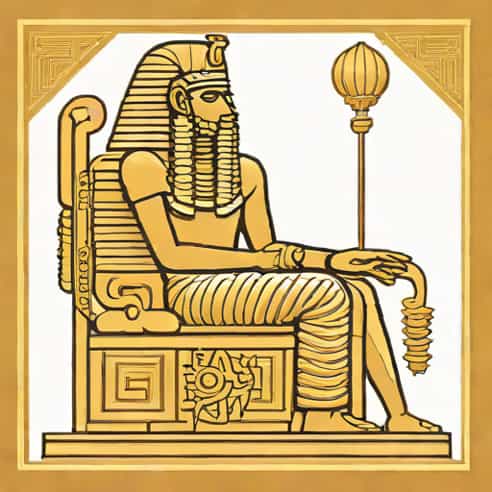
The funerary complex of King Djoser, located in the ancient city of Saqqara in Egypt, represents one of the most significant achievements of early Egyptian architecture. Built during the 27th century BCE, this complex is famous for its Step Pyramid, which is considered the earliest colossal stone building in Egypt and a precursor to the later smooth-sided pyramids. The complex reflects not only the grandeur of Djoser’s reign but also the religious and cultural innovations of the Third Dynasty, marking a turning point in how ancient Egyptians honored their kings in death. Visitors to Saqqara today can explore the remarkable layout, which includes courtyards, temples, and ceremonial structures that reveal the sophisticated planning and symbolic meaning behind royal tomb construction.
Historical Context of King Djoser
King Djoser ruled during Egypt’s Third Dynasty, a period marked by political consolidation and architectural experimentation. Unlike his predecessors, Djoser sought to establish a lasting legacy that combined religious devotion with monumental architecture. The funerary complex was designed not only as a tomb but also as a place for performing rituals to ensure the king’s eternal life. The complex reflects the early development of pyramid construction and showcases the transition from traditional mastaba tombs to more complex stone structures.
The Architect Imhotep
Djoser’s funerary complex owes much of its design to Imhotep, the royal vizier and architect. Imhotep’s innovative use of stone and his vision for a stepped structure transformed Egyptian architecture. He conceived the Step Pyramid as a series of six mastaba-like layers stacked on top of each other, reaching an estimated height of 62 meters. Imhotep’s design emphasized both durability and symbolic significance, as the step-like form was believed to help the king ascend to the heavens and join the gods.
Layout of the Funerary Complex
The King Djoser funerary complex is extensive, covering approximately 15 hectares and surrounded by a massive limestone wall. The layout is carefully planned to integrate religious symbolism and ceremonial function. Visitors can observe the multiple components that make this complex unique and historically significant.
The Step Pyramid
The central feature of the complex is the Step Pyramid itself. Built in six rectangular steps, it stands on a rectangular base that originally measured about 109 meters by 125 meters. This structure was revolutionary because it marked a shift from mudbrick construction to limestone, ensuring its durability over millennia. The pyramid contained underground chambers, corridors, and the burial chamber, where Djoser was laid to rest. These subterranean spaces were richly decorated with reliefs depicting the king’s achievements and divine journey.
The Mortuary Temple
Adjacent to the pyramid, the mortuary temple played a crucial role in the rituals for Djoser’s afterlife. The temple allowed priests to perform daily offerings and ceremonies, which were believed to sustain the king’s ka, or spiritual essence. The temple’s design included open courtyards, chapels, and intricate wall carvings depicting the king’s power, military victories, and religious devotion.
The Courtyards and Chapels
The complex features several courtyards surrounded by chapels and ceremonial structures. These open spaces were used for public rituals and celebrations. Some of the chapels were dedicated to various deities, reflecting the religious diversity of ancient Egypt. The courtyards were carefully aligned with the cardinal points, demonstrating the Egyptians’ advanced knowledge of astronomy and its significance in religious architecture.
Symbolism and Religious Significance
The funerary complex of King Djoser is rich with symbolic meaning. Every aspect of the design was intended to ensure the king’s successful journey to the afterlife. The step pyramid itself symbolized a stairway to the heavens, enabling the king to ascend and join the sun god Ra. Additionally, the layout of the complex reflected the Egyptians’ belief in order, harmony, and divine kingship. The walls and reliefs depicted rituals, offerings, and scenes of Djoser’s power, reinforcing his status as both a mortal ruler and a divine figure.
The Serdab and Statue of the King
One of the most intriguing features of the complex is the serdab, a small enclosed chamber housing a statue of King Djoser. This statue allowed the king’s ka to observe the rituals performed outside the chamber. Tiny openings in the serdab ensured the ka could see and participate in the ceremonial activities, emphasizing the ancient Egyptians’ complex understanding of life, death, and spiritual presence.
Innovation in Architecture
King Djoser’s funerary complex set a precedent for later pyramid construction. The use of large limestone blocks, the introduction of multiple layers, and the careful alignment of the structures influenced the design of subsequent pyramids, including those at Giza. Imhotep’s architectural methods demonstrated advanced engineering skills and a deep understanding of religious symbolism, bridging the gap between functional tomb construction and monumental art.
Excavation and Preservation
The funerary complex of King Djoser has been the subject of extensive archaeological study. Excavations have revealed much about Third Dynasty Egypt, including burial practices, religious ceremonies, and construction techniques. Preservation efforts have focused on stabilizing the pyramid and surrounding structures, which have suffered from centuries of erosion and environmental damage. Today, the site is a major tourist attraction and an invaluable resource for historians and archaeologists studying early Egyptian civilization.
Modern Visitor Experience
Visitors to Saqqara can walk through the massive limestone walls, explore the courtyards, and enter parts of the Step Pyramid itself. Informational displays provide insight into the history, construction, and religious significance of the complex. The experience allows modern audiences to appreciate the ingenuity of ancient Egyptian architecture and the enduring legacy of King Djoser.
Legacy of King Djoser’s Funerary Complex
King Djoser’s funerary complex remains a testament to early Egyptian innovation in architecture and religious practice. It represents the beginning of monumental stone construction and set the foundation for the iconic pyramids of the Fourth Dynasty. Beyond its physical presence, the complex illustrates the cultural and spiritual priorities of ancient Egypt, emphasizing the connection between kingship, religion, and the afterlife. Its enduring influence continues to inspire scholars, architects, and visitors from around the world.
Significance in Egyptian History
- Introduced the step pyramid as a new architectural form.
- Demonstrated advanced construction techniques using stone.
- Reflected religious beliefs about the afterlife and divine kingship.
- Influenced the design of later pyramids, including those at Giza.
- Provided insight into Third Dynasty Egypt through archaeological study.
The funerary complex of King Djoser stands as a landmark achievement in ancient Egyptian history. Its combination of architectural innovation, religious symbolism, and ceremonial function showcases the vision of both King Djoser and his architect Imhotep. As the earliest example of a monumental stone pyramid, it bridges the gap between tradition and experimentation, offering a window into the cultural and spiritual life of Egypt more than 4,500 years ago. Today, it remains a powerful reminder of human creativity, ambition, and devotion to legacy.