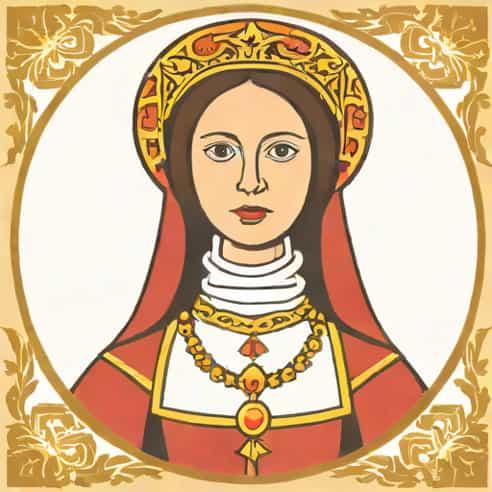
Joan II, Countess of Burgundy, was one of the remarkable women of medieval Europe whose life intertwined with politics, royalty, and the complex feudal systems of her time. She lived during a period of dynastic alliances and territorial disputes, where noble titles carried immense power. As a noblewoman of the 13th and 14th centuries, Joan II played a vital role in the history of France and the region of Burgundy, leaving behind a legacy shaped by wealth, lineage, and influence. Her story offers insight into the challenges faced by women of noble birth and their place in European history.
Early Life and Background
Joan II of Burgundy, also known as Jeanne II, was born around 1292 into one of the most prominent noble families of France. She was the daughter of Otto IV, Count of Burgundy, and Mahaut, Countess of Artois. Her lineage connected her to some of the most powerful dynasties in medieval Europe, giving her both privilege and responsibility from an early age.
Growing up in the late 13th century, Joan was educated in the customs of the aristocracy. Noblewomen at that time were often trained in household management, diplomacy, and religion rather than warfare, but they still played crucial roles in securing political alliances through marriage. Joan’s family ensured she was well-prepared for the duties that came with her noble birth.
Marriage and Political Alliances
In the medieval world, marriages among nobility were rarely based on love but rather on strengthening political ties. Joan II was married to Philip, the son of King Philip IV of France, who later became Philip V, King of France and Navarre. Their marriage represented a strategic union that linked Burgundy more closely to the French crown, helping consolidate royal influence over the region.
The marriage elevated Joan’s position significantly. As the wife of the future king, she moved into the highest circles of power, surrounded by courtiers, advisors, and royal responsibilities. When Philip ascended to the throne in 1316, Joan became Queen of France and Navarre, holding the title until her husband’s death in 1322.
Joan as Queen of France and Navarre
As Queen Consort, Joan II held an influential role in courtly affairs. While the political environment of medieval France was dominated by men, queens were not without power. They often served as advisors, patrons of religious institutions, and mediators in political disputes. Joan was known for her intelligence and for maintaining close ties with her family in Burgundy, ensuring that her homeland remained significant in royal affairs.
During her time as queen, France faced various internal struggles, including financial pressures and shifting alliances. Though little documentation exists detailing her personal involvement in these events, Joan’s role as consort meant she was deeply embedded in the administration of the realm and in managing court relations.
The Scandal of the Tour de Nesle
One of the most famous episodes associated with Joan II’s life was the so-called Tour de Nesle affair. This scandal erupted around 1314 when accusations arose that several princesses of the royal family had been unfaithful to their husbands. The accused included Blanche of Burgundy and Margaret of Burgundy, both sisters-in-law of Joan. Although Joan herself was not directly implicated, the scandal deeply affected the royal family’s reputation and created significant tension within the court.
Joan was initially suspected of being complicit or aware of the alleged infidelities, but she was ultimately acquitted due to lack of evidence. Her husband Philip stood by her, and her name was cleared. Nevertheless, the affair left a stain on the family’s honor and had long-term political consequences. It also reflected the precarious position of women in power, whose reputations could easily be damaged by court intrigue and gossip.
Countess of Burgundy and Artois
After the death of her husband in 1322, Joan II returned to her role as Countess of Burgundy and Artois, titles she inherited from her family. These territories were economically prosperous and strategically important, lying between France and the Holy Roman Empire. As countess, Joan was responsible for administering justice, managing finances, and maintaining peace among her vassals.
Joan’s rule was marked by efforts to strengthen her territories and maintain autonomy while preserving loyalty to the French crown. Her leadership demonstrated her capability as a ruler in her own right, not merely as the widow of a king. She proved adept at handling disputes and defending her inheritance, ensuring that the lands of Burgundy and Artois remained stable under her governance.
Family and Succession
Joan and Philip had several children, but their reign was relatively short. Their daughters, including Joan III of Burgundy, would go on to play important roles in continuing the family’s influence. Through these connections, the House of Burgundy maintained its significance in European politics long after Joan’s death.
Succession during the medieval period was often complicated by questions of inheritance, gender, and legitimacy. Joan ensured that her children and descendants retained their claims and positions, contributing to the continued prominence of the Burgundian line in later centuries.
Political and Historical Significance
Joan II’s life offers a window into the world of medieval politics, where alliances were formed through marriage and territories were governed through a combination of diplomacy and force. As a woman of noble birth who became both a queen and a countess, Joan navigated a world where female rulers were rare and often underestimated.
Her ability to maintain power after her husband’s death highlights her strength and intelligence. While her reign did not involve dramatic conquests or wars, her steady management of Burgundy and Artois ensured the economic and political stability of these regions. She represented a model of governance that relied on careful balance rather than aggression.
Legacy and Death
Joan II, Countess of Burgundy, died in 1330. By the time of her death, she had secured her place as one of the most respected noblewomen of her generation. Her descendants continued to hold significant titles, and her family’s influence would shape the political landscape of France for centuries to come.
Although she is not as widely remembered as some of her contemporaries, Joan’s story remains an important chapter in the history of medieval Europe. Her life reflects the challenges faced by noblewomen who were both pawns and players in the complex game of medieval politics. Through resilience and intellect, she managed to preserve her power and legacy during one of the most turbulent periods in French history.
Joan II, Countess of Burgundy, stands out as a figure who bridged the roles of queen and independent ruler. Born into privilege but tested by scandal, political responsibility, and personal loss, she demonstrated a quiet strength that earned her respect among her peers. Her stewardship of Burgundy and Artois helped sustain their prosperity, while her role as Queen of France tied her permanently to the legacy of the Capetian dynasty. In studying her life, we gain a deeper appreciation of how women of the medieval aristocracy shaped their world, often working behind the scenes to influence politics, inheritance, and power. Joan’s story is one of resilience, intelligence, and enduring legacy – qualities that continue to define her place in European history.